Conducting Global Value Chain Analysis
Introduction to Global Value Chains
What is a Global Value Chain?
Think about the smartphone in your pocket or the coffee you drank this morning. Where did it come from? The answer is almost never a single place. Your phone’s processor might be designed in California, its memory chips made in South Korea, its screen assembled in China, and its software developed in India. This international production process is a global value chain (GVC).
Global Value Chain
noun
The full range of activities, including design, production, marketing, distribution, and support, that are divided among different companies and workers across various countries to bring a product or service from its conception to its end use.
A GVC breaks up the production process so that different steps can be carried out wherever the necessary skills and materials are available at a competitive cost. It’s not just about raw materials from one country and assembly in another. It also includes research, design, marketing, and customer service. Each step adds value to the final product, creating a “chain” of activities that spans the globe.
Essentially, a GVC is the worldwide assembly line for the modern economy, connecting businesses, workers, and consumers from all corners of the planet.
How GVCs Evolved
Global trade has existed for centuries, but GVCs are a more recent phenomenon. For a long time, international trade mostly involved finished goods. One country would make a product, like a car, and sell it to another country. This is known as “trade in goods.”
The shift began in the late 20th century. Three major forces accelerated the growth of GVCs:
- Technological Advances: The internet, faster communication, and improved data processing made it possible to coordinate complex production processes across vast distances. It became easier to share design files, manage inventory, and track shipments in real time.
- Lower Trade Barriers: Many countries reduced tariffs and other trade restrictions, making it cheaper and simpler to move components and finished products across borders.
- Improved Logistics: Innovations in shipping, such as containerization, and the growth of air freight made transportation faster, more reliable, and less expensive.
This combination of factors allowed companies to “unbundle” their production. Instead of doing everything in one place, they could find the best location in the world for each specific task. This new model is called “trade in tasks,” and it’s the engine of modern GVCs.
Who is Involved?
GVCs involve a wide range of actors, each playing a crucial role. The most prominent are multinational enterprises (MNEs), which often act as the lead firms that design products and coordinate the entire chain.
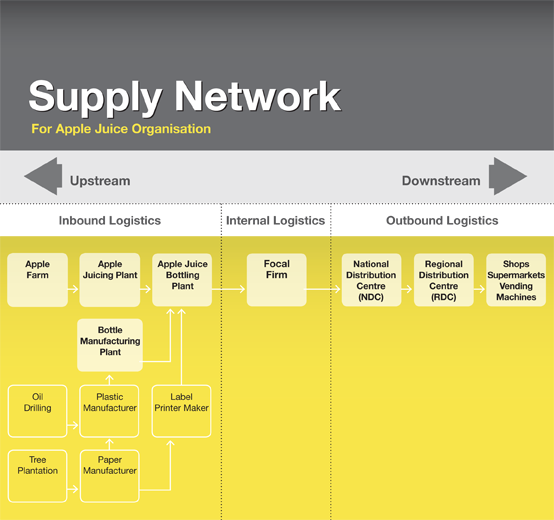
Beyond the lead firms, the key stakeholders include:
- Suppliers: These are the companies that provide raw materials, components, or finished products to other firms in the chain. A single product can have hundreds of suppliers at different tiers.
- Service Providers: These companies don’t make physical goods but provide essential services like logistics, finance, marketing, and IT support.
- Workers: The individuals employed at every stage of the chain, from factory workers to engineers and designers. Their skills and labor are the foundation of the GVC.
- Governments: They set the rules for trade, investment, and labor. Their policies can either support or hinder the functioning of GVCs.
- Consumers: The final link in the chain. Their demand drives the entire process, and their purchasing decisions influence what gets made and how.
Understanding these relationships is key to seeing the big picture. The success of a GVC depends on the smooth coordination of all these different stakeholders, often separated by geography, language, and culture.
Let's check your understanding of these foundational ideas.
What is the primary characteristic of a Global Value Chain (GVC)?
The rise of GVCs was driven by the shift from "trade in goods" to what modern model?
By breaking down production into a series of tasks performed around the world, GVCs have transformed how goods and services are made and have become a central feature of the global economy.