Computers Transforming Industries
Introduction to Computer Technology
Hardware and Software
Every computer, from the smartphone in your pocket to the servers that power the internet, is built around two fundamental ideas: hardware and software.
Hardware is all the physical stuff you can touch. Think of the screen, keyboard, processor, and memory chips. It's the collection of electronic components that form the machine itself. Software, on the other hand, is the set of instructions that tells the hardware what to do. You can't touch software, but you interact with it every time you use a device.
An easy analogy is a kitchen. The hardware is the oven, the mixing bowls, and the ingredients. The software is the recipe you follow to turn those ingredients into a meal.
The Core Hardware Team
While a computer has many parts, four are essential for it to function. These components work together constantly, passing information back and forth at incredible speeds.
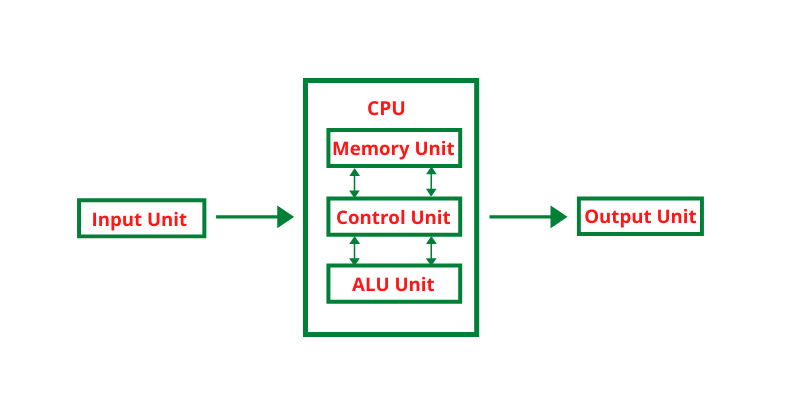
The first key player is the Central Processing Unit (CPU). This is the computer's brain. It performs calculations and executes commands, carrying out the instructions given by the software. The speed of the CPU is a major factor in how fast a computer feels.
Next is memory, which comes in two main flavors. Random Access Memory (RAM) is the computer's short-term workspace. When you open an application, it gets loaded into RAM for quick access by the CPU. It's like a workbench: you put the tools and materials you need right now on it. But RAM is volatile, meaning it forgets everything when the power is turned off.
That's where Storage comes in. This is the long-term memory, like a hard drive or a solid-state drive (SSD). It's where your files, applications, and the operating system are kept permanently. Unlike RAM, storage holds onto its data even when the computer is off. It's the filing cabinet where you keep everything for later.
Finally, we have Input and Output (I/O) Devices. Input devices are how you give the computer information. A keyboard, mouse, microphone, and touchscreen are all input devices. Output devices are how the computer gives information back to you, like a monitor, speakers, or a printer.
The Software that Runs the Show
Hardware is just a collection of circuits without software to guide it. Software can be broken down into two main categories.
Operating System (OS): This is the master program that manages all the hardware and software resources. It's the foundation on which everything else is built. The OS handles tasks like managing files, running applications, and controlling input and output devices. Common examples are Microsoft Windows, Apple's macOS and iOS, and Android.
Application Software: These are the programs you use to perform specific tasks. Your web browser, word processor, video games, and photo editor are all applications. They rely on the operating system to function.
How Computers Process Information
At its core, a computer's job is to process information. This process follows a simple, four-step cycle: Input, Processing, Output, and Storage.
- Input: You provide data to the computer, for example, by typing on a keyboard or clicking a mouse.
- Processing: The CPU takes that input and, following instructions from a program, performs calculations or manipulations.
- Output: The computer presents the result of the processing, perhaps by displaying it on the screen or playing a sound.
- Storage: If needed, the result is saved to storage for future use.
Imagine you type the letter 'H' on your keyboard. The keyboard sends a signal (input) to the computer. The CPU (processing) receives this signal, identifies it as the letter 'H', and instructs the graphics system to draw the shape of that letter on your monitor (output). If you're typing in a document, you can then save it (storage).
To a computer, everything is just numbers. All data, from text and images to videos and music, is ultimately broken down into a series of 1s and 0s. This two-digit system is called binary.
Binary
noun
A system of numerical notation that has 2 as its base. It uses only two symbols: typically 0 (off) and 1 (on).
Understanding these building blocks—hardware, software, and the basic processing cycle—is the first step to seeing how computer technology accomplishes its incredible range of tasks.
Which of the following is the best analogy for the relationship between computer hardware and software?
What is the primary function of the Central Processing Unit (CPU)?