Computer Vision Fundamentals
Introduction to Computer Vision
What Do Computers See?
When you look at a photo of a cat, your brain instantly recognizes it. You see its fur, whiskers, and pointy ears. But when a computer looks at the same photo, it doesn't see a 'cat.' It sees data. Specifically, it sees a grid of tiny dots called pixels.
Computer vision is a branch of artificial intelligence (AI) that enables machines to interpret and analyze visual data from the world around them.
The goal of computer vision is to teach computers to process and understand visual information just like humans do. It's about bridging the gap between seeing pixels and understanding the story they tell, whether it's identifying a stop sign in a self-driving car's camera feed or spotting a tumor in a medical scan.
The Building Blocks of Sight
Every digital image, from a simple icon to a high-resolution photograph, is made of pixels. Think of a pixel as a single tile in a massive mosaic. Each pixel has a specific location and color. When you put millions of these tiny, single-colored squares together, a coherent image emerges.
To a computer, an image is just a large grid of numbers. For a simple black-and-white image, each pixel can be represented by a single number, like 0 for black and 255 for pure white, with shades of gray in between.
Color images are a bit more complex. They typically use a model called RGB, which stands for Red, Green, and Blue. Each pixel's color is defined by a combination of these three primary colors. By mixing different amounts of red, green, and blue light, we can create millions of different colors. A computer stores these as three separate numbers for each pixel, one for each color channel.
| Color | Red Value | Green Value | Blue Value |
|---|---|---|---|
| Black | 0 | 0 | 0 |
| Red | 255 | 0 | 0 |
| Green | 0 | 255 | 0 |
| White | 255 | 255 | 255 |
| Magenta | 255 | 0 | 255 |
From Summer Project to Industry
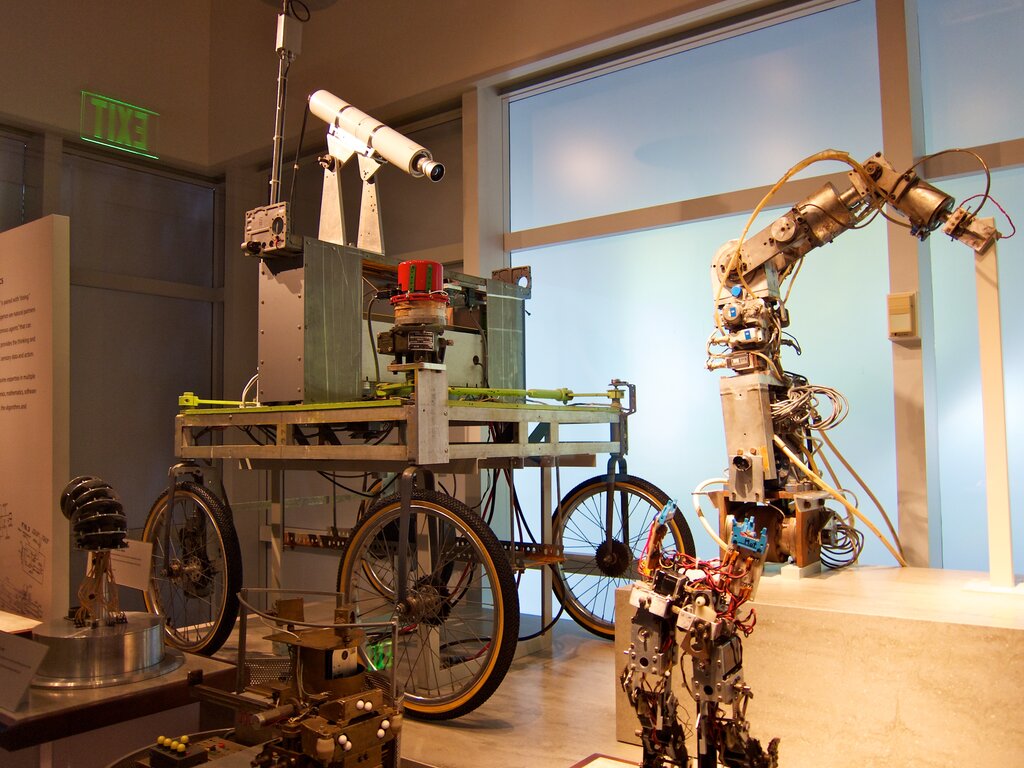
The field of computer vision began in the 1960s with a bold, and famously optimistic, idea. A group of professors at MIT believed they could solve the problem of computer vision over a single summer. This "summer vision project" aimed to build a system that could analyze a scene and identify the objects within it. They quickly discovered the problem was far more difficult than they imagined.
Early work focused on simple tasks, like detecting edges in an image or recognizing basic shapes. Progress was slow for decades. It wasn't until the rise of machine learning and deep learning, fueled by massive datasets and more powerful computers, that computer vision truly took off.
Today, computer vision is everywhere. It’s the technology that lets your phone unlock with your face. In manufacturing, it spots defects on assembly lines with superhuman speed and accuracy. In agriculture, it helps drones monitor crop health from the sky. Retailers use it to analyze store traffic, and medical professionals use it to find patterns in X-rays and MRIs.
What started as an academic challenge has become a transformative technology, changing how we interact with the world and how machines help us understand it.
Ready to test your understanding of the basics?
What is the primary goal of computer vision?
In a standard RGB color model, how does a computer store the color information for a single pixel?
Now that we've covered the what, how, and why of computer vision, we can start to explore the specific techniques that make it all possible.