Computer Vision for Inventory Automation
Introduction to Computer Vision
What Do Computers See?
Humans see the world through their eyes, effortlessly recognizing faces, reading text, and navigating complex environments. Computer vision is the field of artificial intelligence that trains computers to interpret and understand the visual world in a similar way. Using digital images from cameras and videos, machines can identify and process objects to then react to what they “see.”
Essentially, computer vision gives machines the power of sight and the ability to make sense of it.
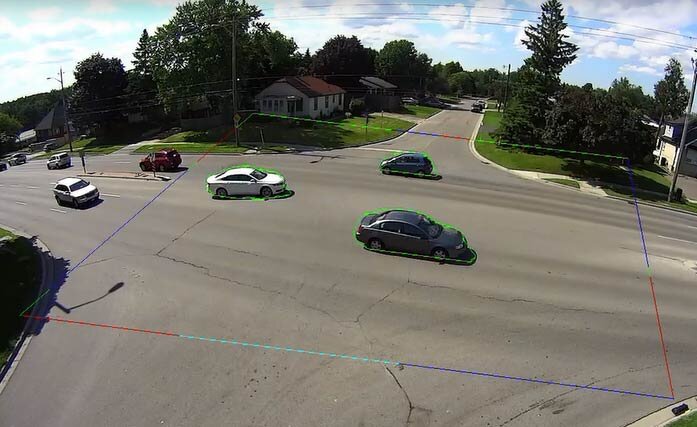
This technology is already all around us. It's how your phone's camera detects faces to focus, how a self-driving car navigates through traffic, and how security systems can spot an intruder. The goal is to enable computers to not just capture an image, but to comprehend its content.
From Pictures to Pixels
A computer doesn't see a photograph of a flower; it sees a grid of numbers. Every digital image is made up of a grid of tiny dots called pixels. Each pixel has a value that represents its color and brightness. For a color image, this is often a combination of three numbers representing Red, Green, and Blue (RGB) values.
Image processing involves applying algorithms to this grid of numbers to make changes. For instance, to make an image brighter, you might increase the value of every pixel. To convert it to black and white, you could average the R, G, and B values for each pixel. These basic operations are the first step in helping a computer analyze visual information.
Finding Important Features
Simply looking at millions of individual pixel values isn't very useful for understanding what's in an image. A computer needs to identify important characteristics, or features. Think about how you recognize a car. You don't analyze every single speck of paint; you look for wheels, windows, and its overall shape.
Feature extraction is the process of identifying these key components. Algorithms scan the image for things like:
- Edges: Lines where there's a sharp change in brightness.
- Corners: Points where two edges meet.
- Textures: Repeating patterns, like the weave of a fabric or the bark of a tree.
- Shapes: Combinations of edges that form circles, squares, or other recognizable forms.
These features act as a simplified summary of the image, filtering out irrelevant noise and highlighting the important information. It's the difference between describing a house brick-by-brick versus describing its doors, windows, and roofline.
Recognizing Patterns
Once features are extracted, the final step is pattern recognition. This is where the computer takes the collection of extracted features—the edges, shapes, and textures—and tries to match them to patterns it has learned.
To learn these patterns, a model is trained on a vast library of labeled images. For example, it might be shown thousands of pictures of cats. The model learns the common arrangement of features (pointy ears, whiskers, specific eye shape) that constitutes the pattern of a "cat." When it sees a new image, it extracts the features and checks if they match this learned pattern.
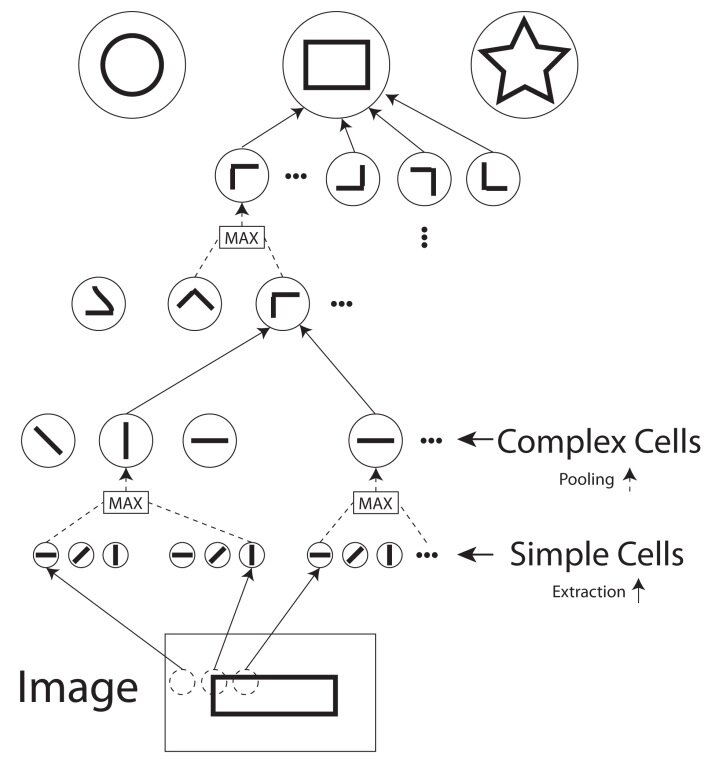
This process of processing pixels, extracting key features, and recognizing patterns forms the foundation of computer vision. By breaking down visual information into understandable parts, computers can begin to see and interpret the world.
Now, let's test your understanding of these core ideas.