Computer Systems and Architecture
Instruction Cycle Dynamics
The Heartbeat of the CPU
A Central Processing Unit (CPU) runs a program by working through a list of instructions, one by one. This process isn't a chaotic scramble; it's a highly organized, relentless loop called the instruction cycle, often known as the Fetch-Decode-Execute cycle. Think of it as the fundamental rhythm that drives all computation.
The CPU repeatedly fetches instructions from memory, decodes them, executes them, and stores the results-a process called the fetch-decode-execute cycle.
This cycle is the workhorse behind everything your computer does, from opening a file to rendering a video. It breaks down every complex task into a sequence of simple, manageable steps. Let's walk through how it works.
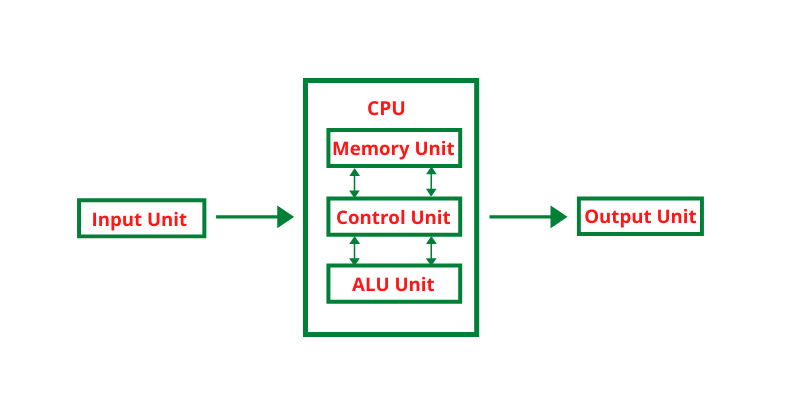
Fetch, Decode, Execute
The cycle has three main stages that happen in a precise order, orchestrated by different parts of the CPU.
1. Fetch The CPU needs to know which instruction to grab next. That's the job of the Program Counter (PC), a special register that holds the memory address of the next instruction. The CPU copies this instruction from memory and places it into another register, the Instruction Register (IR). Once the instruction is fetched, the Program Counter automatically increments to point to the next instruction in line, getting ready for the next cycle.
2. Decode Now that the instruction is in the IR, it's just a string of binary data. The CPU's Control Unit takes over. It decodes, or interprets, this binary string to understand what operation needs to be performed (like adding two numbers) and what data is needed. It then prepares the other CPU components for the task, like signaling the arithmetic unit that a calculation is coming.
3. Execute This is where the action happens. The Control Unit passes the decoded instruction to the appropriate component. If it's an arithmetic or logic operation, the Arithmetic Logic Unit (ALU) performs the calculation. It might involve fetching values from other registers, performing addition or subtraction, and then storing the result in another register or memory location. Once the execution is complete, the cycle begins again with the fetch stage for the next instruction.
Keeping the Beat
This whole cycle doesn't happen at its own pace. It's driven by a precise, rhythmic signal from the system clock. Think of the clock as a metronome for the CPU. Each tick, or clock cycle, signals the hardware to perform its next tiny step. Fetching an instruction might take one clock cycle, decoding another, and executing might take one or more, depending on the complexity.
The speed of this clock, measured in gigahertz (GHz), determines how many cycles the CPU can perform per second. A 3 GHz processor, for example, goes through 3 billion clock cycles every second. However, faster clock speed doesn't always mean better performance. The amount of work done in each cycle is also critical.
So how do you get more work done without cranking up the clock speed? One of the most important techniques is instruction pipelining an innovation that works like a factory assembly line.
The CPU Assembly Line
In a simple processor, the CPU must finish all three stages for one instruction before it can start fetching the next one. This is inefficient, leaving parts of the CPU idle. The decode and execute units are waiting while a fetch happens, and the fetch unit is waiting during decode and execute.
Instruction pipelining solves this by overlapping the stages. While one instruction is being executed, the next one is being decoded, and the one after that is being fetched. All parts of the processor are kept busy.
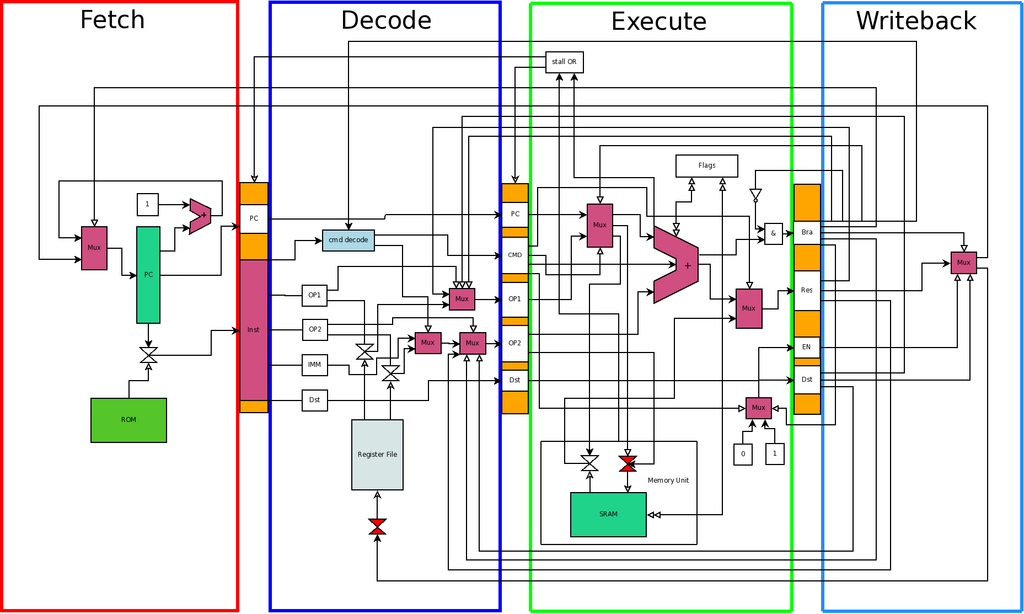
Imagine an assembly line for cars. Instead of one worker building an entire car from start to finish, one worker installs the engine, another attaches the wheels, and a third paints the body. They work on three different cars simultaneously. Similarly, a pipelined CPU works on multiple instructions at different stages of completion at the same time.
This parallelism dramatically increases the CPU's throughput, allowing it to execute programs much faster without needing a higher clock speed.
Of course, this assembly line approach can have complications, known as hazards, such as when one instruction depends on the result of a previous one that isn't finished yet. Modern processors have sophisticated logic to manage these situations, ensuring the final result is always correct.
What are the three stages of the CPU instruction cycle, in the correct order?
What is the primary role of the Program Counter (PC) in the instruction cycle?