Computer Programming Fundamentals
Introduction to Programming
What Is Programming?
Think about following a recipe to bake a cake. The recipe gives you a list of ingredients and a set of step-by-step instructions. If you follow them precisely, you end up with a cake. If you miss a step or misunderstand an instruction, you might end up with a mess.
A computer program is a lot like a recipe. It's a set of very specific instructions that you give to a computer to make it perform a task. The computer is your very literal, very obedient cook. It will do exactly what you tell it to, in the exact order you tell it to. It can't guess what you mean or fill in any gaps.
Programming
noun
The process of writing instructions for a computer to execute. These instructions, collectively called code, tell the computer what to do.
These instructions are written in special languages that act as a bridge between human thoughts and the computer's logic. Just like humans have thousands of languages, so do computers. But the core idea is always the same: providing clear, sequential commands to achieve a goal.
The Role of a Programmer
A programmer is the person who writes these instructions. They are part translator, part architect, and part problem-solver. Their job is to take a human idea—like "I want an app that tracks my daily steps"—and break it down into tiny, logical steps that a computer can understand and execute.
This involves more than just writing code. A programmer must first understand the problem, design a logical plan to solve it, write the instructions in a programming language, and then test the program to make sure it works correctly and doesn't produce any unexpected messes.
How Computers Follow Instructions
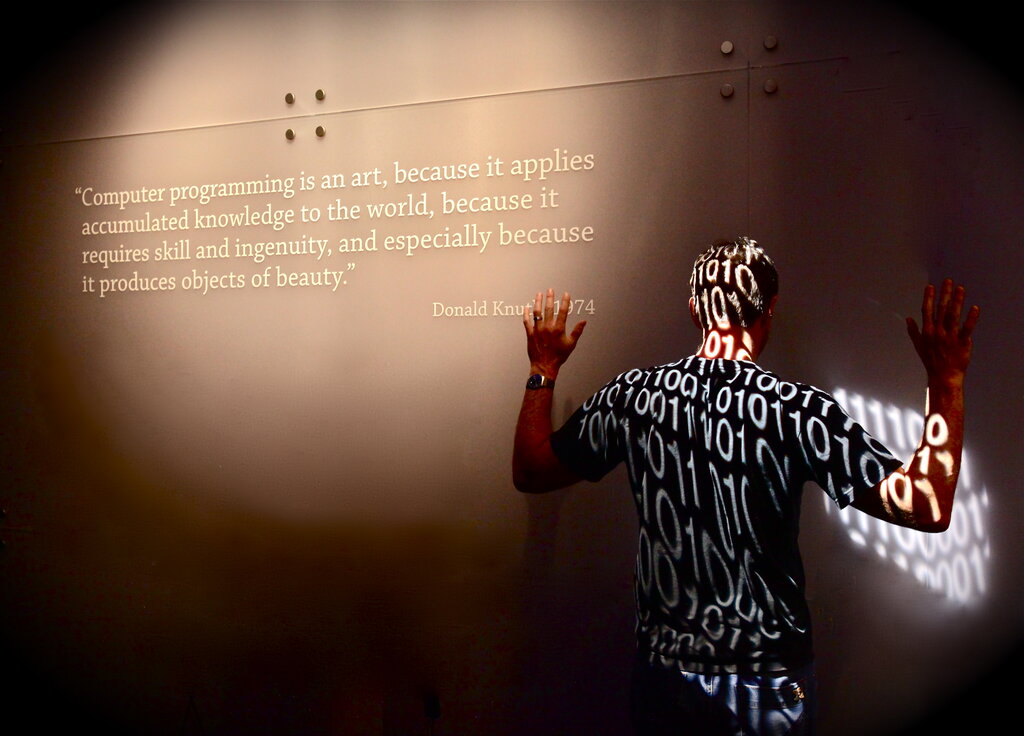
A computer's processor, or CPU, doesn't understand programming languages the way a programmer writes them. The code you see in a text editor looks somewhat like English, but a computer's native language is much simpler. It's called machine code, and it consists entirely of ones and zeros.
So how does the computer understand the program? A special program, called a compiler or an interpreter, acts as a translator. It takes the programmer's code and converts it into the ones and zeros of machine code that the CPU can execute.
Once translated, the CPU can finally read and execute the instructions one by one. It might perform a calculation, display text on the screen, or retrieve a piece of information from memory. All the complex things computers do are just the result of executing billions of these simple instructions very, very quickly.
Programming is essentially the art of telling a computer how to solve a problem. You provide the recipe, and the computer does the baking.
Time to check your understanding of these core concepts.
Based on the analogy provided, what is a computer program most like?
What is the name of the program that translates human-readable code into machine code (ones and zeros)?
In essence, programming is a powerful tool for communication. It allows us to give clear instructions to machines, turning our ideas into useful and interactive software.