Computer Networking Fundamentals
Networking Basics
What Is a Network?
At its core, a computer network is just a group of devices connected together so they can share things. The 'things' could be an internet connection, a file, a printer, or access to a streaming service. The main purpose is to make it easy to share resources and information.
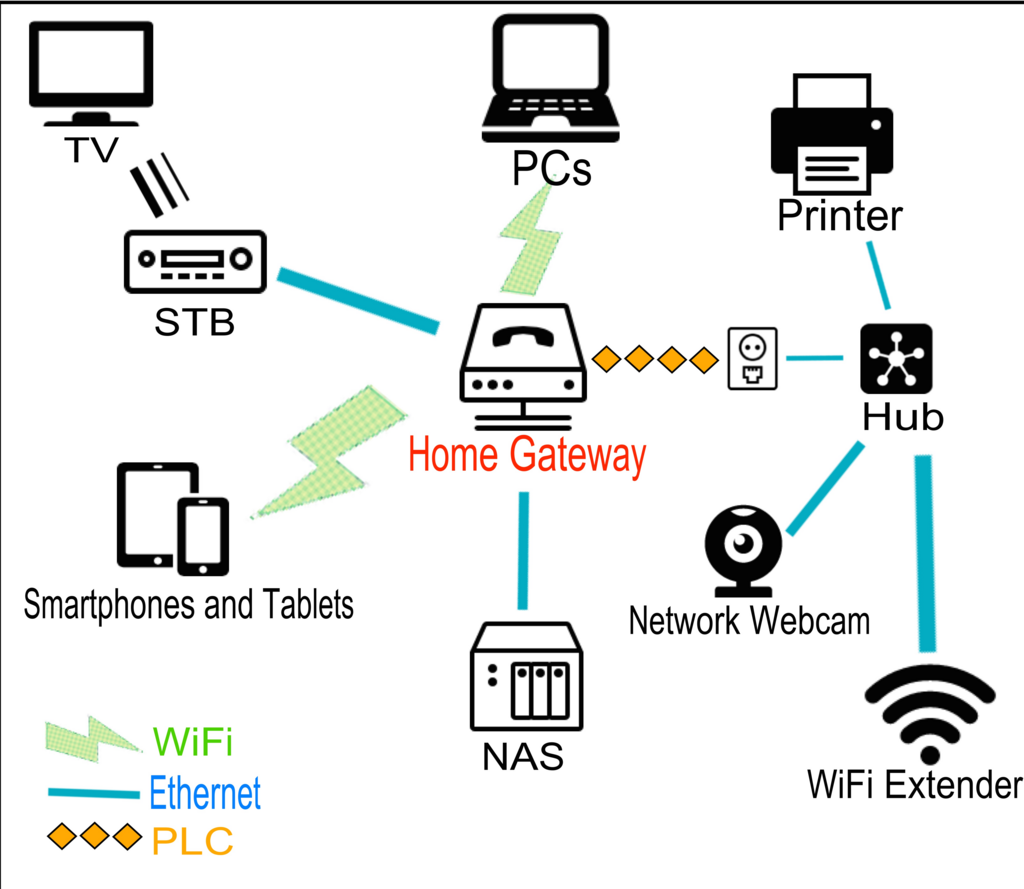
Think about your home. You might have a laptop, a smartphone, and a smart TV all connected to your Wi-Fi. That's a network. It lets your phone cast a video to your TV and allows your laptop to print a document without needing a cable. All these devices are communicating with each other through a central point, your router.
The Language of Networks
For devices to communicate effectively, they need a common set of rules and identifiers. A few key terms pop up again and again in networking.
Node
noun
Any device on a network that can send, receive, or forward information.
A node is the most basic unit of a network. If a device has an address and can talk to other devices, it's a node. Your computer, your phone, a network printer, and even your smart refrigerator can all be nodes.
Protocol
noun
A set of rules that governs how data is formatted, transmitted, and received in a network.
Protocols are like the grammar and etiquette of a conversation. They ensure that when one device sends a message, the receiving device understands what to do with it. Without protocols, data sent across a network would be a chaotic mess. The Internet Protocol (IP) and Transmission Control Protocol (TCP) are two of the most important protocols that make the internet work.
Think of an IP address as a unique mailing address for a device on a network. It tells data packets exactly where to go.
Every node on a network needs a unique identifier, which is its IP address (Internet Protocol address). It's a string of numbers, like 192.168.1.1, that pinpoints a specific device. When your computer wants to fetch a webpage, it sends a request to the server's IP address, and the server uses your computer's IP address to send the webpage back.
Networks Big and Small
Networks are categorized based on the geographical area they cover. While there are many types, three of the most common are LAN, MAN, and WAN.
Local Area Network (LAN): This is the smallest and most common type of network. It connects devices within a limited area, like a single home, school, or office building. Your home Wi-Fi is a perfect example of a LAN.
Metropolitan Area Network (MAN): A MAN covers a larger area than a LAN, such as a city or a large campus. It's essentially a collection of interconnected LANs. A city might use a MAN to connect its various government offices, schools, and libraries.
Wide Area Network (WAN): A WAN spans a very large geographical area, often a country or even the entire globe. It connects multiple LANs and MANs. The most famous example of a WAN is the internet itself, which connects billions of devices worldwide.
What is the primary purpose of a computer network?
Your smartphone, laptop, and a network-enabled printer are all connected to your home Wi-Fi. In networking terms, what is each of these devices considered?
Understanding these basic building blocks—what a network is, its key terms, and its different sizes—is the first step to making sense of our connected world.