Computer Networking Fundamentals
Introduction to Computer Networks
What Is a Computer Network?
At its most basic, a computer network is a group of two or more devices connected together. The whole point of connecting them is to allow them to communicate and share resources. Think about your own home. Your laptop might connect to a printer without a cable, or your phone might stream a video from the internet. Both of these are possible because of a network.
The purpose of networking is to make our digital lives easier and more connected. Networks let us send emails, share files, print documents from across the room, and access the vast ocean of information on the web. Without them, every device would be an isolated island.
A computer network connects devices so they can share information and resources.
To understand how networks work, we need to know their two fundamental building blocks: nodes and links.
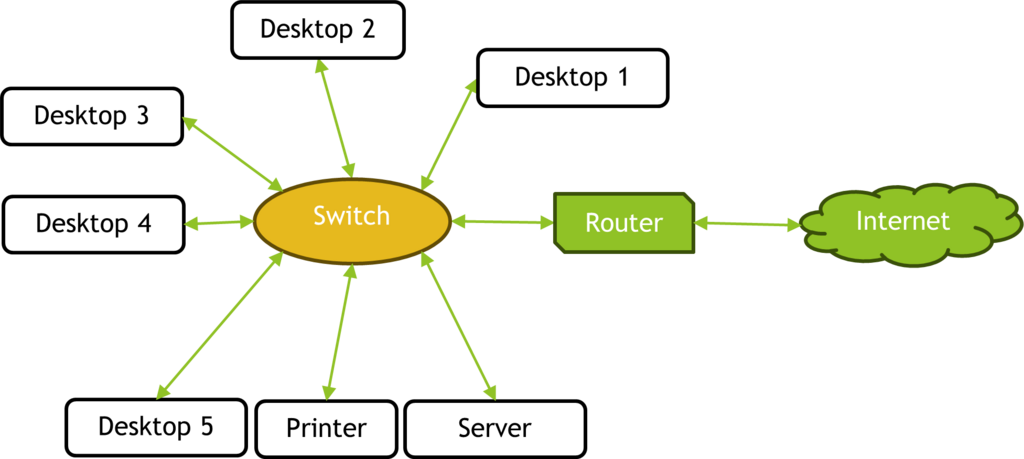
A node is any device on a network that can send, receive, or forward information. This isn't just limited to computers. Your smartphone, printer, smart TV, and gaming console are all nodes. Even the server that stores a website's data is a node.
A link is the connection that allows these nodes to communicate. Links are the pathways for data. They can be physical, like an Ethernet cable plugging your computer into the wall, or they can be wireless, using radio waves like Wi-Fi or Bluetooth.
The Rules of Communication
Simply connecting a bunch of devices isn't enough. For them to understand each other, they need to speak the same language. In networking, this common language is called a protocol.
A protocol is a set of rules that governs how data is formatted, transmitted, and received. Think of it like the rules of grammar for human language. We agree that a sentence starts with a capital letter and ends with a period. This structure helps us understand each other's messages clearly.
Network protocols are the rules that allow different devices, made by different companies, to communicate flawlessly.
These rules ensure that a message sent from an iPhone can be understood by an Android phone, or that a webpage requested on a Windows PC is delivered correctly from a Linux server. Protocols handle everything from making sure data arrives in the right order to checking that no information was lost along the way. Without them, the internet would be a chaotic mess of misunderstood signals.
What is the primary purpose of a computer network?
Which of the following is the best example of a network 'node'?