Computer Networking Fundamentals
Introduction to Computer Networks
What Is a Computer Network?
At its heart, a computer network is simple: it's just a group of two or more computers connected so they can communicate and share things. Think of it like a conversation. For you to talk to a friend, you need a way for your voice to travel between you, like the air. Computers are the same. They need a connection to exchange information.
The main goal of networking is to share resources. This could be anything from a file or a document to a physical device like a printer. Instead of every computer needing its own printer, a single printer can be shared across an entire network. This sharing also extends to services, like access to the internet.
The core purpose of a network is to connect devices so they can share information and resources efficiently.
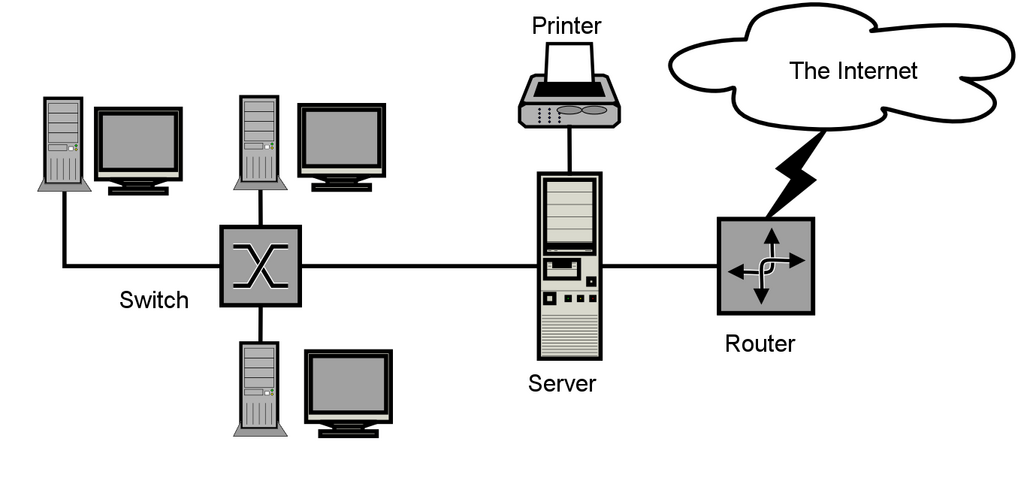
The Building Blocks
Every network, from a small office setup to the global internet, is built from the same fundamental parts. Understanding these basic components is the first step to understanding how networks function.
node
noun
Any device on a network that can send, receive, or forward information.
Nodes are connected by links. A link is the pathway that allows data to travel from one node to another. Together, nodes and links form the basic structure of any network.
The links themselves are made of a transmission medium. This is the physical material that carries the data signals. It can be a physical cable, like the Ethernet cables that plug into your computer, or it can be wireless, using radio waves to send signals through the air, like Wi-Fi or Bluetooth.
How Data Travels
When you send an email or stream a video, you're sending a large amount of data across a network. But this data doesn't travel in one giant, continuous stream. Instead, it's broken down into small, manageable pieces.
Imagine trying to send a thousand-page book through the mail. Sending it all in one massive box would be slow and risky. If the box got lost, the entire book would be gone. A better way is to send it one page at a time, with each page numbered. If one page gets lost, you only need to resend that single page, not the whole book.
Networks do something similar. They chop data into small segments called packets. Each packet contains a small piece of the data, along with information about where it's going and how it fits back together with the other packets. This process allows for more reliable and efficient communication across busy networks.
Breaking data into small packets makes transmission faster and more resilient to errors.
The importance of networking in modern life is hard to overstate. The internet itself is a global network of networks, connecting billions of devices around the world. It enables everything from instant communication and e-commerce to cloud computing and remote work.
Every time you check social media, watch a show on a streaming service, or use a navigation app on your phone, you are using a computer network. Understanding these basic principles is the first step toward understanding the digital world we live in.
Ready to check your understanding? Let's review what we've covered.
What is the primary goal of computer networking?
Data is broken down into small, manageable pieces for transmission across a network. What are these pieces called?
With these fundamentals in place, you're ready to explore more complex networking concepts.