Computer Networking Fundamentals
Networking Basics
What Is a Computer Network?
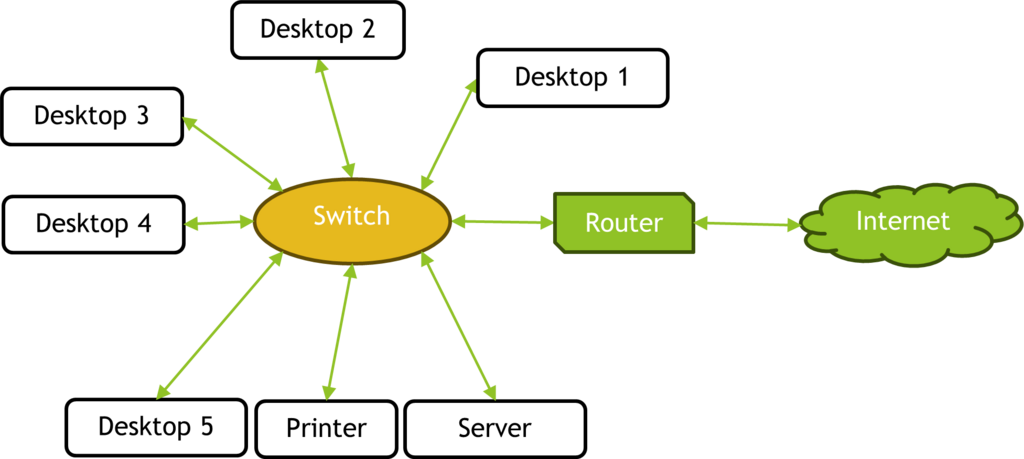
At its core, a computer network is simple: it's a group of two or more computers linked together. This connection allows them to communicate, share information, and use shared resources.
Think of it like a study group. Instead of each person having their own separate set of notes, everyone can access a shared folder, use the same printer to print handouts, and discuss ideas directly. A network does the same for computers.
The main purpose of a network is to make sharing easier. This could mean sharing a file with a coworker, printing a document from your laptop to a printer in another room, or accessing the internet, which is itself a giant network of networks. By connecting devices, we create a more efficient and collaborative environment.
Networks Big and Small
Networks are not all the same size. They're categorized based on the geographical area they cover. The three main types are LAN, WAN, and MAN.
LAN
noun
Stands for Local Area Network. A network confined to a relatively small area, such as a single building, office, or home. They are typically high-speed and privately owned.
A Wide Area Network (WAN) spans a large geographical area, often a country or continent. A WAN connects multiple LANs together. The most famous example of a WAN is the internet, which connects billions of devices worldwide.
A Metropolitan Area Network (MAN) sits between a LAN and a WAN. It typically covers a larger area than a LAN, such as a city or a large university campus, but is smaller than a WAN. A MAN might be used to connect the different office buildings of a company across a city.
| Type | Geographic Area | Example |
|---|---|---|
| LAN | Small (Room, Building) | Home Wi-Fi, school network |
| MAN | Medium (City, Campus) | A cable TV network in a city |
| WAN | Large (Country, Global) | The Internet |
How Networks Are Arranged
The way computers are physically or logically arranged in a network is called its topology. Think of it as the layout or map of the network. Different layouts have different strengths and weaknesses.
Here are four common topologies:
Bus: All devices share a single communication line. It's simple to set up, but if the main cable fails, the entire network goes down.
Ring: Devices are connected in a circular fashion. Data travels from one device to the next in the ring. A single break in the cable can disrupt the whole network.
Star: All devices are connected to a central hub. This is the most common topology in homes and offices today. If one connection fails, it only affects one device, but if the central hub fails, the network is down.
Mesh: Every device is connected to every other device. This creates a highly reliable network because there are many paths for data to travel. However, it's expensive and complex to set up.
The choice of topology depends on a network's needs, balancing cost, ease of installation, and reliability.
Now that you understand the basic building blocks of what a network is, its different sizes, and how it can be structured, let's test your knowledge.
What is the primary purpose of creating a computer network?
A university has several buildings spread across a city and wants to connect them all into a single network. Which network category best describes this setup?
Understanding these fundamentals provides the foundation for exploring more advanced networking concepts.