Computer Network Fundamentals
Introduction to Computer Networks
What Is a Computer Network?
At its core, a computer network is just a group of two or more computers or other electronic devices connected together. This connection allows them to communicate with each other and share resources.
Think of it like a conversation. One person can't have a conversation alone. But with two or more people, they can share ideas, ask questions, and work together. A network does the same thing for our devices, letting them share information and tools.
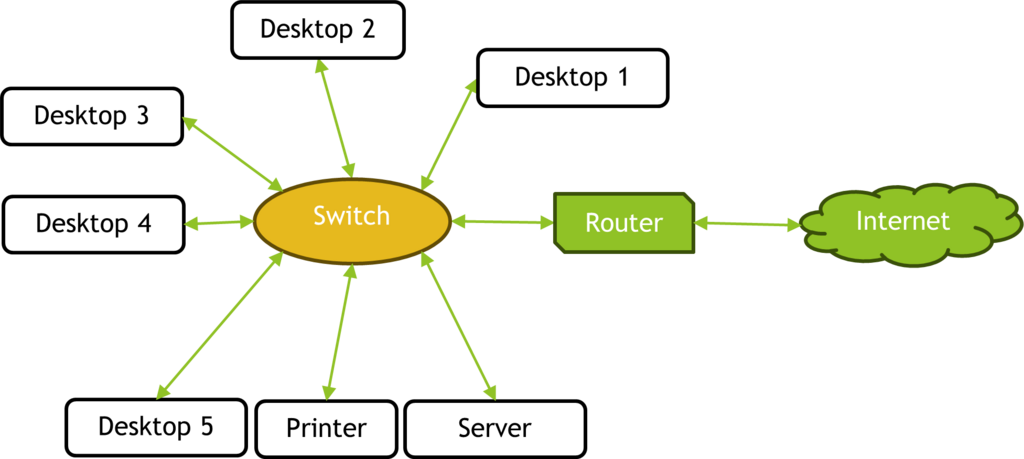
These connections can be physical, like an Ethernet cable plugged into your laptop, or invisible, like the Wi-Fi signal that connects your phone to the internet. The size of a network can range from a couple of devices in your home to the billions of devices that make up the global internet.
The Benefits of Connecting
So why do we connect everything? The main reason is sharing. Networks allow many users to share a single resource, which saves time, money, and effort.
One common example is a printer in an office. Instead of buying a separate printer for every employee, the office can connect one printer to the network. Now, everyone can print to it from their own computer. The same principle applies to sharing files. A team can work on the same documents stored on a central server, rather than emailing different versions back and forth.
Networks also enable powerful communication. Email, video calls, and instant messaging all depend on devices being connected to a network. They allow for instant communication across the office or across the world.
The Language of Networks
To understand how networks function, it helps to know a few basic terms. These are the fundamental building blocks of any network, big or small.
Node
noun
Any individual device connected to a network.
A node is just a technical name for any of the devices on the network. Your laptop, your tablet, a smart TV, and even a smart thermostat can all be nodes. If it can connect to the network and send or receive data, it's a node.
Link
noun
The communication pathway that connects two or more nodes.
Links are the roads of the network. They are the physical or wireless connections that data travels across to get from one node to another. An Ethernet cable is a physical link, while a Wi-Fi or Bluetooth connection is a wireless link.
Finally, we have the information itself. When your computer sends a file to another device, it doesn't send it all in one giant piece.
Data Packet
noun
A small unit of data that is routed between an origin and a destination on the internet or any other packet-switched network.
The network breaks the file down into smaller, manageable chunks called data packets. Think of it like sending a large book through the mail. Instead of trying to stuff the whole thing into one giant box, you tear out each page, put it in a separate envelope, and mail them one by one. Each envelope is like a data packet. This process makes sending large amounts of information more efficient and reliable. If one packet gets lost, only that small piece needs to be sent again, not the entire file.
What is the primary purpose of connecting devices into a network?
In networking, what is the technical term for any device connected to the network, such as a laptop or a smart TV?