Computer History and Evolution
Analytical Engine Architecture
Separating Math from Memory
Early calculating devices, like Charles Babbage's own Difference Engine, were marvels of mechanical engineering. Yet, they were fundamentally limited. They were single-purpose machines, built to execute one specific, complex calculation. To solve a different problem, you needed to build a different machine. The Analytical Engine shattered this paradigm by introducing a radical new architecture.
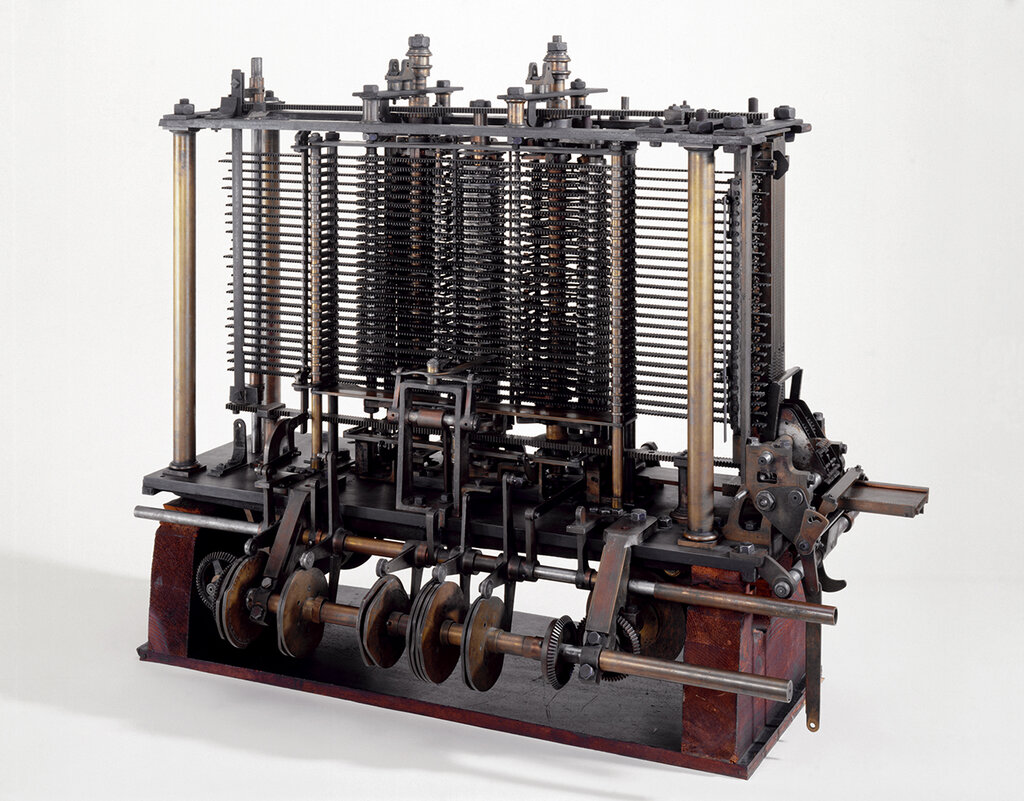
Babbage's key insight was to separate the components for processing from the components for storage. He called the processing unit the “Mill” and the memory unit the “Store.” The Mill was the engine's arithmetic heart, capable of performing addition, subtraction, multiplication, and division. The Store, a collection of vertical columns with counter wheels, held the numbers—both the initial data and the results from the Mill's calculations. Numbers were passed back and forth between the Store and the Mill via an intricate system of gears and levers.
This division mirrors the modern CPU (the Mill) and RAM (the Store). It was the first conceptual leap toward a general-purpose computer.
This design meant the machine's hardware was no longer hardwired to a single task. The physical structure was fixed, but its behavior could be changed. This laid the groundwork for the fundamental computer cycle: fetching data from storage, processing it, and placing the result back into storage. It was a precursor to the that would define electronic computers a century later.
Instructions on Punch Cards
If the Mill was the engine's brawn, its brain was a system borrowed from the textile industry. Babbage adapted the technology of Jacquard's punched cards to direct the machine's operations. A hole in a specific position on a card represented a command or a number, creating the first rudimentary programming language.
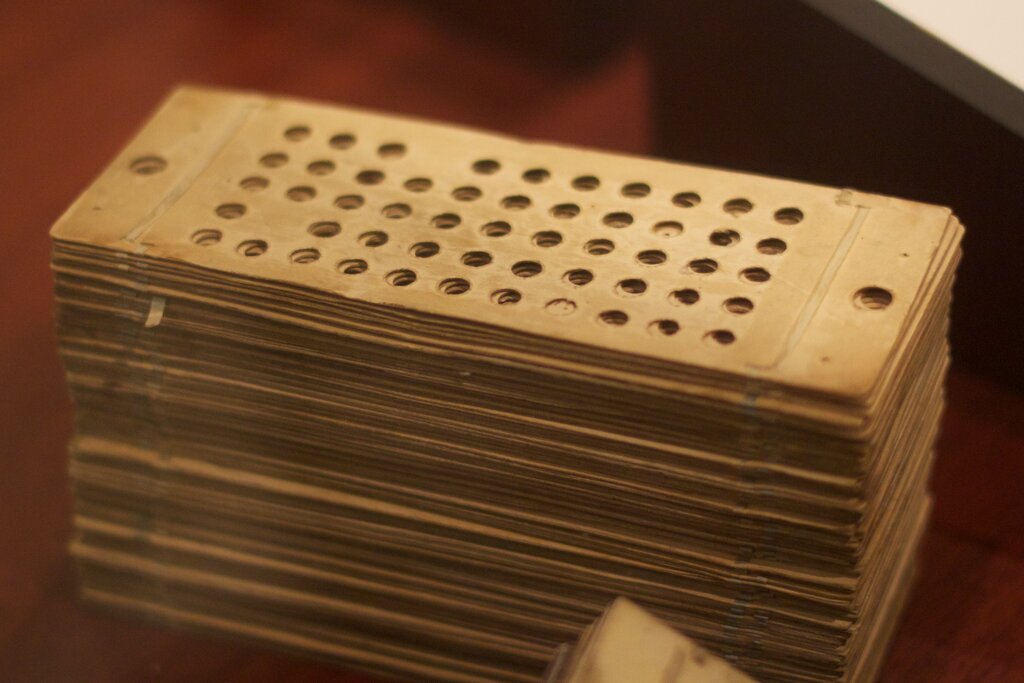
There were two main types of cards:
- Operation Cards: These specified the action for the Mill to perform, such as 'multiply' or 'divide'.
- Variable Cards: These dictated which columns in the Store to get numbers from and where to put the results.
A sequence of these cards formed a program, allowing for complex calculations without altering the machine's physical structure. This was the birth of software—a layer of abstract instructions controlling physical hardware.
His design envisaged ‘programs’ written using loops of punched cards inspired by the Jacquard Loom.
Mechanical Decision-Making
Perhaps the most sophisticated feature of the Analytical Engine was its ability to perform conditional branching. The machine could test a condition—for example, whether a number in the Store was positive or negative—and alter its sequence of operations based on the result. This was accomplished by having the Mill mechanically move the card reader forward or backward, skipping a set of instruction cards if a condition was met.
This ability to make decisions is a cornerstone of computing. It allows a program to react to changing data and follow different logical paths. Without it, computers would be little more than powerful but inflexible calculators. Babbage had conceived of not just a calculator, but a machine capable of algorithmic logic.
By separating hardware (Mill/Store) from software (punch cards) and introducing logical control flow, the Analytical Engine established the architectural principles that, in abstract form, govern every computer in use today. It was the blueprint for computation.