Computer History and Architectural Evolution
Early Electronic Transitions
From Gears to Glass
Early electronic computers represented a monumental leap from their mechanical predecessors. Instead of clunky gears and relays, they used a new kind of switch: the vacuum tube. A vacuum tube is a glass bulb containing electrodes that can control the flow of electrons. By turning this flow on or off, the tube could represent a binary 1 or 0, forming the basis of digital logic.
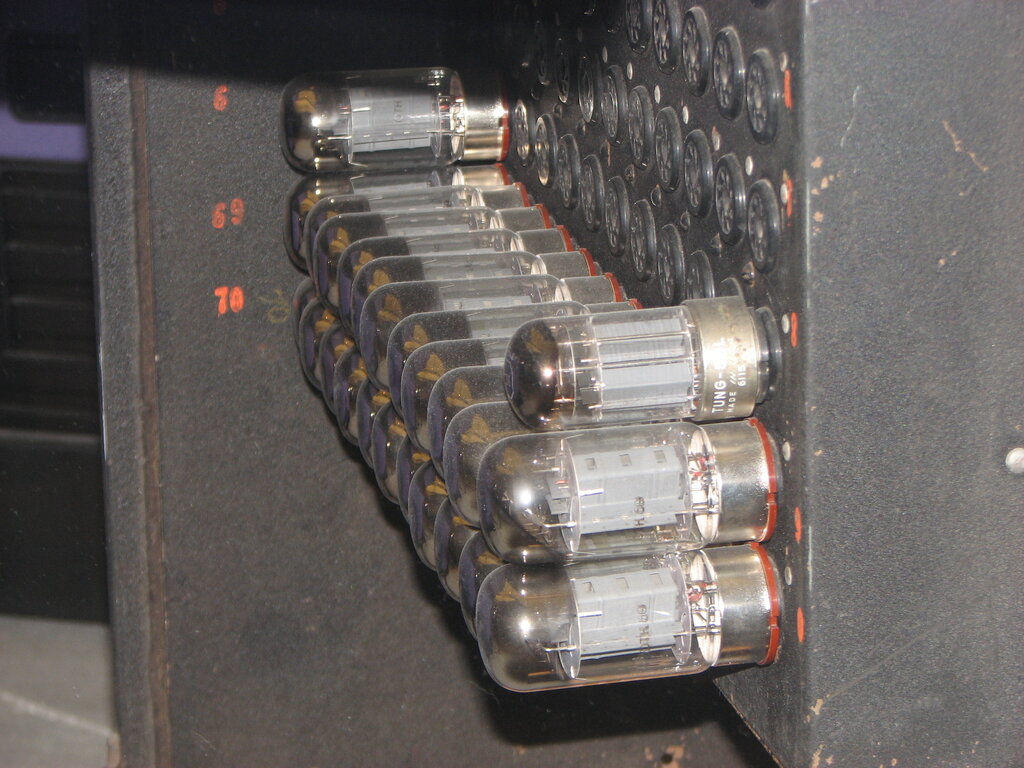
The most famous of these machines, the ENIAC, used about 18,000 vacuum tubes. It could perform calculations a thousand times faster than any mechanical device before it. But this power came at a steep price. The tubes generated immense heat, requiring massive cooling systems. They were large, meaning the computer occupied an entire room. Worst of all, they were unreliable. A tube could burn out at any moment, bringing the entire system to a halt and forcing engineers to hunt for the single failed component among thousands.
The first generation of computers was built around vacuum tubes — glass bulbs that controlled the flow of electrical current to perform logic operations.
A Smarter Way to Program
Beyond the hardware challenges, early computers had a fundamental design flaw: their programs were fixed in the hardware itself. To give a machine like the ENIAC a new task, technicians had to physically reconfigure it by unplugging and replugging a dizzying array of cables and setting thousands of switches. This process could take days or even weeks. It was more like rewiring a building than running a new app.
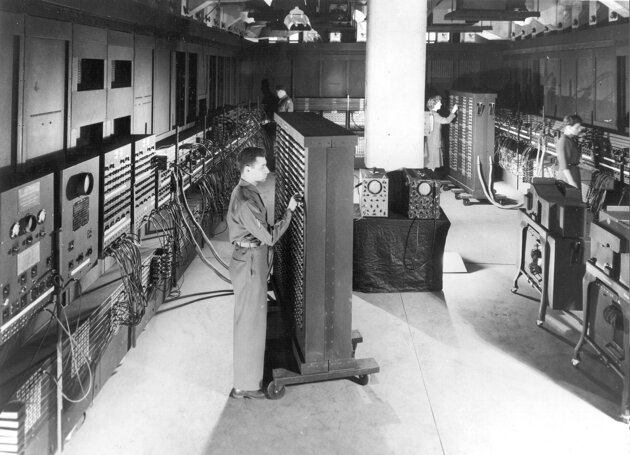
The solution came from mathematician John von Neumann, who proposed the stored-program computer. The core idea, now known as the Von Neumann architecture, was revolutionary: a computer should store its program instructions in the same memory as its data. This meant the computer's task could be changed simply by loading a new program into memory, without any physical rewiring.
The EDVAC (Electronic Discrete Variable Automatic Computer) was one of the first machines designed around this principle. While still built with vacuum tubes, its architectural flexibility set the standard for every modern computer that followed. The distinction between hardware and software became clear, paving the way for the age of programming.
The Transistor Revolution
Even with better architecture, computers were still held back by the heat, size, and fragility of vacuum tubes. A new component was needed. In 1947, a team at Bell Labs provided the answer: the transistor.
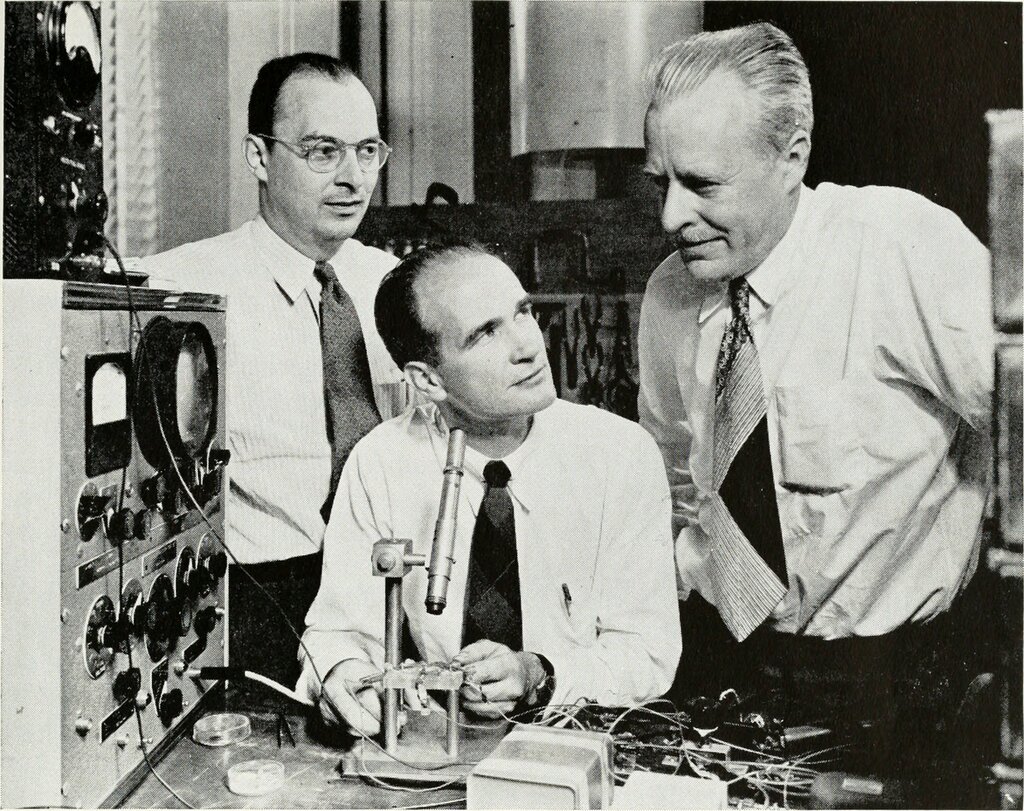
A transistor is a solid-state device, typically made from silicon, that can act as an electronic switch or an amplifier. Unlike a vacuum tube, it has no moving parts, no filament to heat up, and no glass to break. It performs the same logical function but is orders of magnitude smaller, more energy-efficient, and far more reliable. The first design was the fragile point-contact transistor, but it was quickly superseded by the more robust junction transistor.
This shift from vacuum tubes to discrete transistors marked the second generation of computers. Machines became smaller, faster, and cheaper. They were still large by today's standards, often filling cabinets instead of entire rooms, but they were reliable enough to be used in business and industry, not just specialized government labs. The transistor was the catalyst that made computing practical and set the stage for the next great leap: the integrated circuit.
Let's review the key concepts from this transition.
Now, test your understanding of this critical period in computing history.
What was the primary switching component used in first-generation electronic computers like the ENIAC?
The main problem with programming early computers like the ENIAC was that changing the program required physically rewiring the machine.
The move from vacuum tubes to transistors was more than just a component swap; it was a fundamental shift in what was possible, paving the way for the digital world we know today.