Computer Hardware Essentials
Computer System Overview
The Anatomy of a Computer
At its heart, a computer system is a team of specialized components working together. Think of it like a chef's kitchen. You have the chef who thinks and directs (the processor), a countertop for active work (memory), a pantry for ingredients (storage), and ways to get ingredients in and send dishes out (input and output).
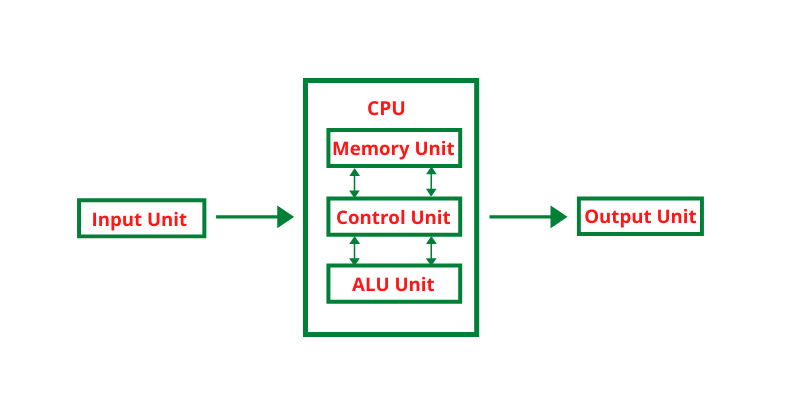
Each part has a distinct job, but none can function alone. They constantly communicate to turn your clicks and keystrokes into actions on the screen. Let's look at the key players on this team.
The Brain and Its Workspace
The Central Processing Unit, or CPU, is the computer's brain. It's a powerful chip that carries out instructions from programs, performing all the calculations that make your computer run. When you open an app or save a file, the CPU is the one executing the commands.
CPU
noun
The Central Processing Unit; the primary component of a computer that executes instructions.
But the CPU needs a place to work. That's where memory, specifically Random Access Memory (RAM), comes in. RAM is like the CPU's countertop. It’s a temporary, super-fast storage space where the computer holds the data and programs it's actively using. The more RAM you have, the more tasks your computer can handle at once without slowing down. When you turn off the computer, everything in RAM is cleared, just like clearing off a countertop at the end of the day.
Storage and Communication
If RAM is the temporary workspace, storage is the long-term pantry. This is where your files, applications, and operating system are kept permanently, even when the power is off. Storage comes in forms like a hard disk drive (HDD) or a solid-state drive (SSD).
So how do we get information into and out of this system? Through input and output (I/O) devices.
| Input Devices | Output Devices |
|---|---|
| Keyboard | Monitor |
| Mouse | Speakers |
| Microphone | Printer |
| Webcam | Headphones |
Input devices send data to the computer, while output devices receive data from it. These devices connect to the computer through ports, which are the physical connection points like USB or HDMI sockets. They are the doors and windows of the computer, allowing it to interact with the outside world.
How They Work Together
Let's trace a simple action: opening a music app.
- Input: You use your mouse to double-click the app's icon.
- Processing: The CPU receives this command. It finds the app's files in the long-term storage (your hard drive or SSD).
- Memory: The CPU copies the necessary parts of the app from storage into the fast, temporary RAM.
- Processing: The CPU runs the app's instructions from RAM.
- Output: The app's window appears on your monitor, and music plays through your speakers.
This cycle of input, processing, and output happens billions of times per second, forming the basis of everything you do on a computer. Now, let's check your understanding of these core components.
In the 'chef's kitchen' analogy, what computer component is best represented by the chef who thinks and directs all the work?
What is the key difference between RAM and a hard drive (storage)?
Understanding these fundamental parts is the first step to seeing how a complex machine like a computer really works.