Computer Fundamentals Explained
Introduction to Computers
What Is a Computer?
At its core, a computer is a machine that follows instructions. Think of it like a very obedient, incredibly fast chef. You give it a recipe (a program) and ingredients (data), and it follows the steps exactly to produce a meal (the result).
Computer
noun
An electronic device for storing and processing data, typically in binary form, according to instructions given to it in a variable program.
This definition holds true for everything from a supercomputer that predicts weather patterns to the smartphone in your pocket. They all take in information, work with it, and produce some kind of result. The main difference between a simple calculator and a computer is that a computer can be programmed to perform a huge variety of tasks.
The Four Basic Functions
No matter how complex, every computer performs four fundamental jobs. This cycle is the basis of everything a computer does.
Here's what each part of the cycle means:
- Input: This is how the computer receives data. When you type on a keyboard, click a mouse, or speak into a microphone, you're giving the computer input.
- Processing: This is the 'thinking' part. The central processing unit (CPU) acts like the computer's brain, taking the input data and following instructions to manipulate it.
- Output: After processing the data, the computer shows you the result. This is the output, which could be text on a screen, sound from speakers, or a printed page.
- Storage: Computers need a way to save information for later. This is storage. Data is saved to a hard drive or other memory device so it can be accessed again.
Everything a computer does follows this pattern: take something in, work on it, show the result, and save it if needed.
A Quick Trip Through Time
Computers haven't always been the sleek, portable devices we know today. The journey from then to now is one of rapid miniaturization and explosive growth in power.
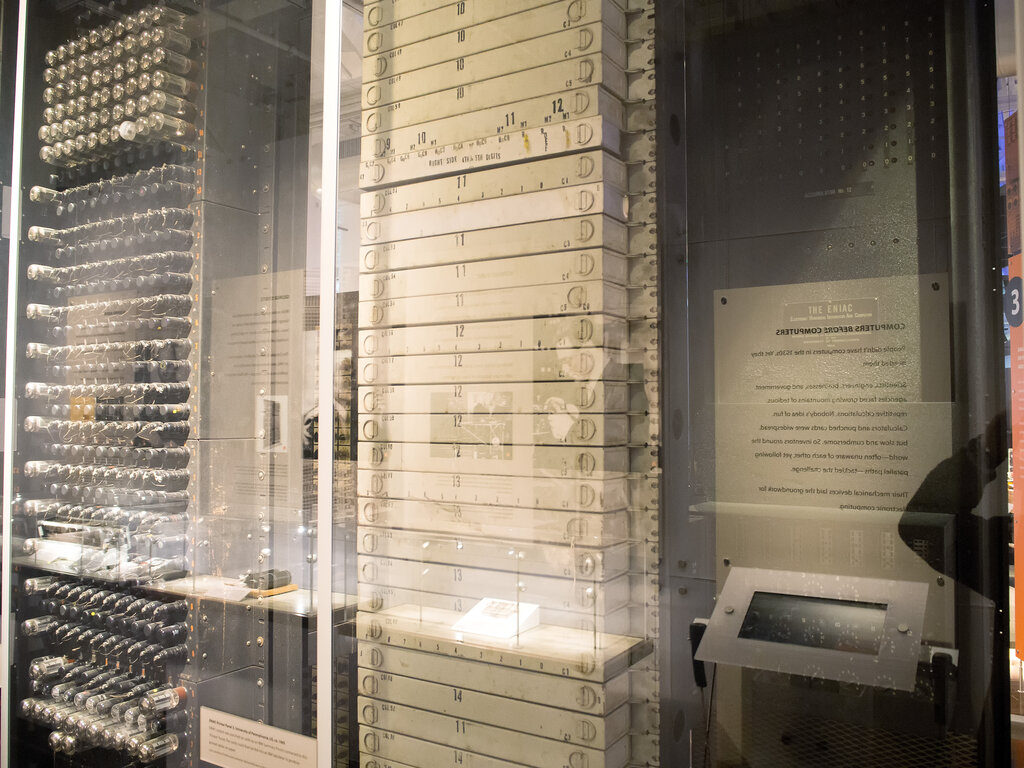
The earliest electronic computers, built in the 1940s, were massive machines that took up entire rooms. They were used for complex calculations, like military ballistics and scientific research. These machines used thousands of bulky, unreliable vacuum tubes to process information.
A major breakthrough came with the invention of the transistor in the 1950s, which replaced vacuum tubes. Transistors were smaller, faster, and more reliable, allowing for smaller and more powerful computers.
This trend continued with the development of the integrated circuit in the 1960s, which packed many transistors onto a single tiny chip. By the 1970s and 80s, this technology had advanced enough to create the microprocessor, a complete CPU on a single chip. This innovation paved the way for personal computers (PCs) that could fit on a desk, bringing computing into homes and offices for the first time.
From room-sized calculators to devices that fit in our hands, the history of the computer is a story of making technology smaller, faster, and more accessible. Each step built on the last, leading to the connected digital world we live in today.
What is the fundamental role of a computer?
You've just finished typing a report and saved it to your hard drive. Which of the four fundamental computer operations corresponds to saving the file?