Computer Fundamentals Explained
Introduction to Computers
What Is a Computer?
At its heart, a computer is a machine that follows instructions. Think of it as an incredibly fast and obedient assistant. Its main job is to take in information, do something with it, and then produce a result. This process is the foundation of everything computers do, from playing movies to sending emails to the other side of the world.
computer
noun
An electronic device for storing and processing data, typically in binary form, according to instructions given to it in a variable program.
The information it works with is called data. The instructions it follows are called programs, or software. Without programs, a computer is just a box of electronics with no purpose. The software tells the hardware what to do, step by step.
The Core of Computing
All computing boils down to a simple, three-step cycle: Input, Process, and Output. This is a fundamental principle that applies to any computer, from the simplest calculator to the most powerful supercomputer.
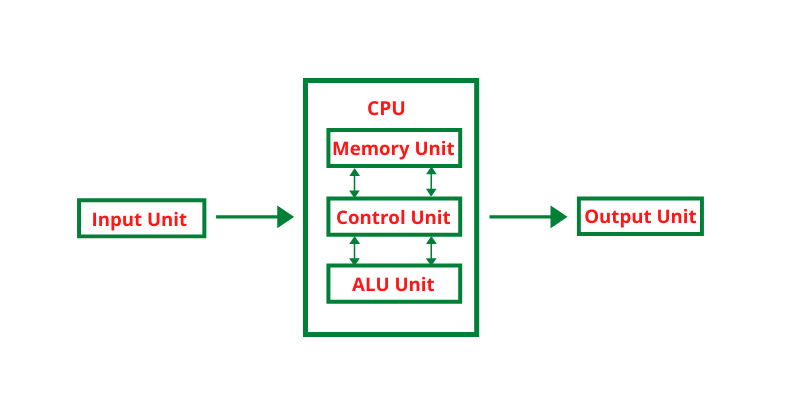
Let's break it down:
-
Input: This is how the computer receives data and instructions. When you type on a keyboard, click a mouse, or tap on a screen, you're providing input.
-
Process: This is where the magic happens. The computer's brain, the Central Processing Unit (CPU), takes the input and follows the program's instructions to manipulate the data. It might perform a calculation, sort a list, or change a color in an image.
-
Output: After processing the data, the computer presents the result. This could be text appearing on your screen, a sound playing through speakers, or a document being sent to a printer.
A simple calculator is a perfect example. You press the keys 2, +, 2, and = (Input). The calculator performs the addition (Process). It then shows the number 4 on its display (Output).
Data vs. Instructions
It's crucial to understand the difference between data and instructions. Data is the raw material, while instructions are the recipe.
Imagine you're baking a cake. The ingredients—flour, sugar, eggs—are your data. The recipe that tells you how to combine them, in what order, and for how long to bake them is the set of instructions, or the program.
The computer is the chef. It can't think for itself, but it can follow the recipe perfectly and incredibly quickly. It takes the ingredients (data) and follows the steps (instructions) to produce the final cake (output).
A computer executes instructions. It doesn't 'understand' them in a human way. It just performs a sequence of simple actions, like adding two numbers or moving a piece of data from one location to another.
This step-by-step execution is the essence of how computers work. Every complex task, from editing a video to running a video game, is broken down into millions or even billions of these tiny, simple instructions that the computer carries out one by one at lightning speed.
What is the fundamental three-step cycle that all computers follow to perform any task?
In the analogy of baking a cake, the recipe that tells you how to combine the ingredients represents the computer's ________.
This basic cycle of input, process, and output, guided by instructions, is the key concept behind all of modern computing.