Computer Fundamentals Demystified
Introduction to Computers
What Is a Computer?
At its core, a computer is an electronic device that takes in raw data, follows a set of instructions to process it, and then produces a result. Think of it like a very fast and obedient cook. You give it ingredients (data) and a recipe (a program), and it gives you a finished dish (information).
The key is the transformation of data into information. Data is just raw, unorganized facts, like the number 72 or the word "sunny." By itself, it doesn't mean much. Information is data that has been processed to be useful. For example, knowing the temperature is 72 degrees and it's sunny helps you decide to wear a t-shirt. The computer's job is to make that conversion happen.
A computer takes raw facts (data), processes them according to a set of instructions, and provides meaningful results (information).
This entire process, no matter how complex the computer, can be broken down into four basic operations. Every single task, from sending an email to playing a video game, follows these same fundamental steps.
The Four Basic Operations
Everything a computer does follows a cycle: input, processing, storage, and output. Understanding this cycle is the first step to understanding how computers work.
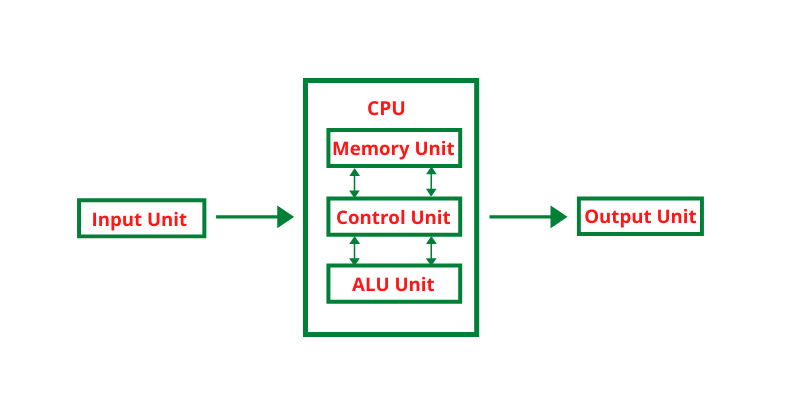
1. Input This is how you get data into the computer. When you type on a keyboard, click a mouse, tap on a touchscreen, or speak into a microphone, you are providing input. The computer receives this data and gets it ready for the next step.
2. Processing This is the brain of the operation. The computer takes the input data and uses a program—a set of instructions—to manipulate it. If you input $2 + 2$, the processing step is where the computer actually performs the addition. This work is done by the Central Processing Unit, or CPU, which acts as the computer's command center.
3. Storage After processing, the result can be stored. Storage is the computer's memory. There are two main types. Short-term memory holds data while the computer is actively working on it. Long-term storage saves data for later, even after the computer is turned off. Saving a document or downloading a photo are examples of using long-term storage.
4. Output This is how the computer presents the processed information back to you. The most common form of output is the display on your screen. Other examples include sound from speakers, a document from a printer, or a vibration from your phone.
Let's trace a simple task through this cycle. Imagine you're using a calculator app to add 5 and 10.
- Input: You type '5', '+', '10', and '='.
- Processing: The CPU receives these inputs. It follows the calculator program's instructions to add the numbers 5 and 10 together to get 15.
- Output: The number '15' appears on your screen.
- Storage: If you save this result or the calculation history, it's written to the device's storage for you to access later.
Every action you take on a computer, from the simplest calculation to the most complex video edit, is a combination of these four fundamental steps working together in a continuous loop.