Computer Fundamentals
Introduction to Computers
What is a Computer?
At its heart, a computer is a machine that processes information. It takes raw data as input, follows a set of instructions to manipulate that data, and then produces a result as output. Think of it as an incredibly fast and versatile assistant.
Input → Process → Output
This simple flow is the foundation of everything a computer does, from adding two numbers together to streaming a movie. Unlike a simple calculator that can only perform mathematical operations, a computer is a general-purpose machine. This means that with the right instructions, it can perform an almost limitless variety of tasks.
The Two Sides of Computing
Every computer system is made of two fundamental parts: hardware and software. They are completely different from each other, but they are both essential and cannot function alone.
Hardware
noun
The physical components of a computer system that you can see and touch.
Hardware is the collection of tangible objects. It includes everything from the screen and keyboard to the tiny circuits and wires inside the computer's case. It's the physical machinery.
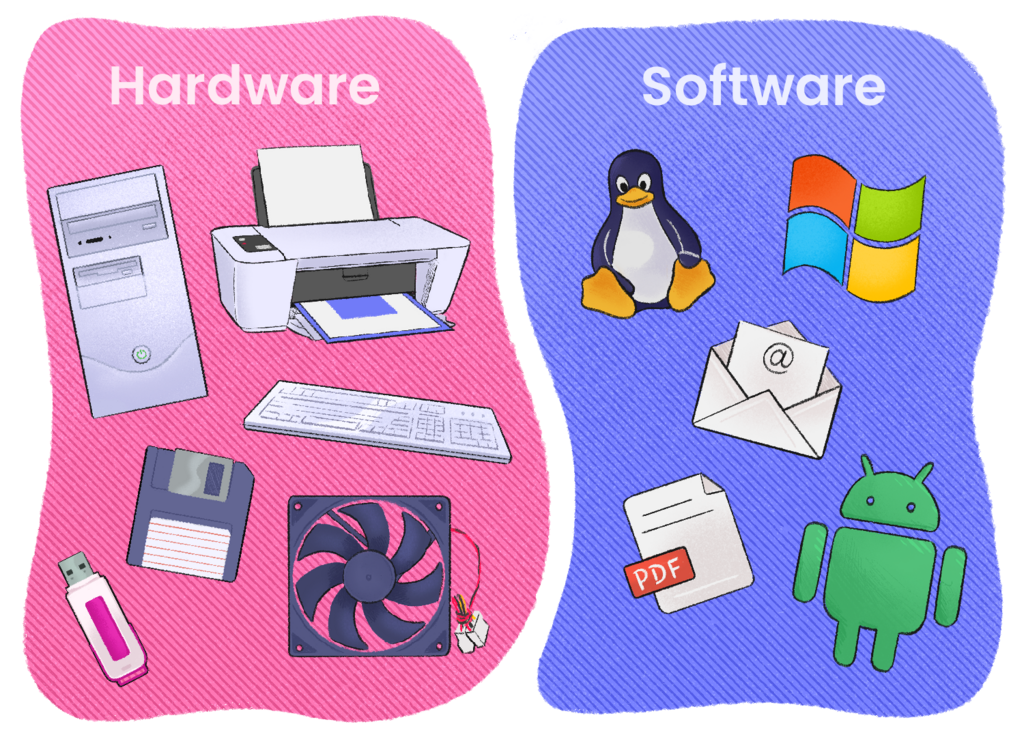
But hardware on its own is just a collection of plastic and metal. It doesn't know what to do. That's where software comes in.
Software
noun
The set of instructions, programs, and data that tells the computer's hardware what to do.
Software is the intangible part of the computer. It’s the collection of programs, applications, and operating systems that guide the hardware. If hardware is the body, software is the brain that gives it commands and purpose. Without software, your computer would just be a box of electronics.
How Computers Think
So how does a computer actually process information? It follows a cycle that involves fetching an instruction, decoding it, and then executing it.
First, the computer's processor fetches an instruction from memory. This instruction is a command, written in a language the computer understands, telling it to perform a specific action, like adding two numbers or moving a piece of data.
Next, the processor decodes the instruction. It figures out what the command means and what parts of the hardware need to be used to carry it out.
Finally, the processor executes the command. This is the step where the action happens. The data is processed, a calculation is made, or information is sent to the screen. This cycle happens billions of times every second, allowing computers to perform complex tasks with incredible speed. It is the fundamental rhythm that powers all of modern computing.
What is the fundamental flow of how a computer processes information?
If computer hardware is the 'body', what is the software?