Computer Evolution and Architecture History
Early Mechanical Logic
From Gears to Logic
The journey toward modern computing didn't start with silicon, but with brass and iron. In the 19th century, Charles Babbage, an English mathematician, grew frustrated with the error-prone, hand-calculated mathematical tables of his time. His solution was a machine.
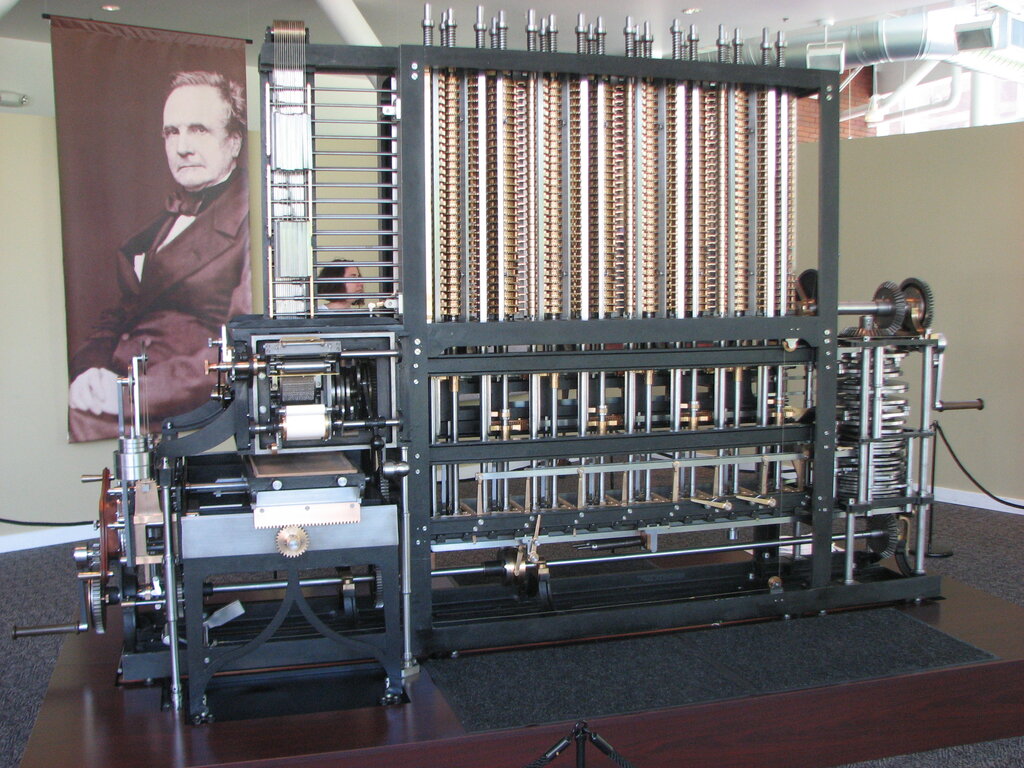
His first major design was the Difference Engine. This massive mechanical calculator was a special-purpose device, engineered to do one thing very well: solve polynomial functions through a method called the method of finite differences. Its logic was literally forged into its structure. Each gear, lever, and rod was physically arranged to execute a fixed sequence of additions and subtractions. It was a marvel of engineering, but it was fundamentally a calculator, not a computer. It couldn't be reprogrammed to solve a different kind of problem.
The Difference Engine's design was hard-wired for a single task. To change the task, you would have to rebuild the machine.
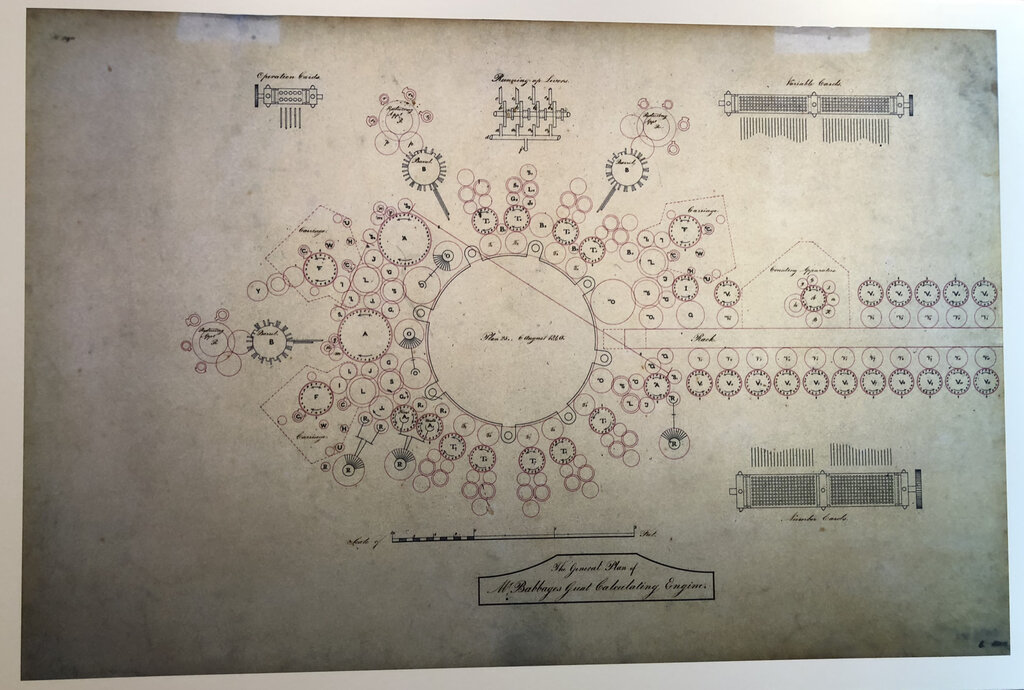
Babbage's ambitions grew beyond single-purpose calculation. He envisioned a far more revolutionary machine: the Analytical Engine. This was the conceptual leap from a calculator to a general-purpose computer. The key innovation was separating the part that did the math (the "mill") from the part that held the instructions (the "store").
To feed instructions into this machine, Babbage borrowed an idea from the Jacquard loom, which used punched cards to weave complex patterns into fabric. The Analytical Engine would read instructions from similar cards, allowing it to perform any sequence of operations. This meant the machine's function was no longer fixed in its physical structure. It could be programmed. A collaborator, Ada Lovelace, understood this potential so deeply that she wrote what is now considered the first algorithm intended for the machine, designed to calculate Bernoulli numbers.
The Limits of Mechanics
Neither of Babbage's engines was fully built in his lifetime. The manufacturing precision required was staggering for the era, and the costs were astronomical. But even if they had been completed, purely mechanical computers faced fundamental physical limits.
Friction is a major enemy of complex machinery. With thousands of interlocking gears, the cumulative drag would have been immense, requiring significant force to operate. Wear and tear would degrade the components over time, leading to inaccuracies. Most importantly, mechanical systems are slow. The inertia of moving parts puts a hard cap on calculation speed. A gear can only turn so fast before it flies apart.
Despite these limits, the concepts were sound. The 'mill' of the Analytical Engine, with its arrangements of gears and linkages to perform addition, subtraction, multiplication, and division, was a direct mechanical precursor to a modern processor's Arithmetic Logic Unit (ALU). The logic was implemented physically, where the state of the machine—the position of its gears—represented numbers, and the movement of those gears executed mathematical operations.
A Spark of Genius
To overcome the limits of mechanics, the next leap required a different technology: electromagnetism. In the late 1930s and early 1940s, German engineer created a series of calculators that replaced complex gears with electromechanical relays.
A relay is a simple device: a switch that is opened or closed by an electromagnet. When a current flows through the coil, it creates a magnetic field that pulls a metal armature, flipping a switch from one position to another. With no current, a spring pulls it back. This binary (on/off) nature was a perfect match for the binary arithmetic used in computing.
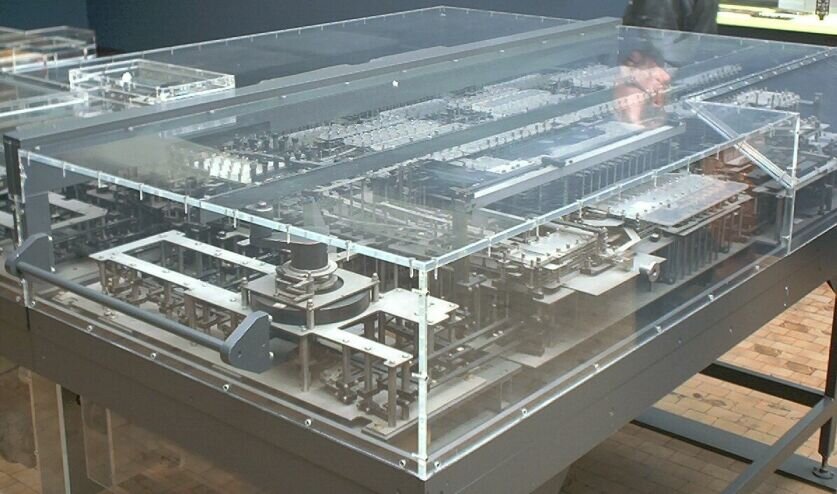
Zuse's Z3 machine, completed in 1941, used about 2,000 relays to perform calculations. Relays were much faster than mechanical gears, more reliable because they had fewer moving parts, and far less prone to wear. While still noisy and bulky by today's standards, they represented a huge step forward. They could be combined in series or parallel to create logic gates—the fundamental building blocks of all digital circuits. For example, two relays in series create an AND gate; the output is only on if the first relay AND the second relay are on. This moved logical operations from the physical shape of gears to the abstract flow of electricity.
This electromechanical approach bridged the gap between Babbage's mechanical world and the fully electronic computers that would emerge just a few years later, paving the way for the digital revolution.
What was the primary limitation of Charles Babbage's Difference Engine that distinguished it from his later Analytical Engine concept?
Who is credited with writing the first algorithm intended for the Analytical Engine?
The shift from gears to relays marked a pivotal moment, setting the stage for the speed and complexity of modern electronics.