Computer Evolution: Abacus to AI
Mechanical Logic Evolution
From Counting to Calculating
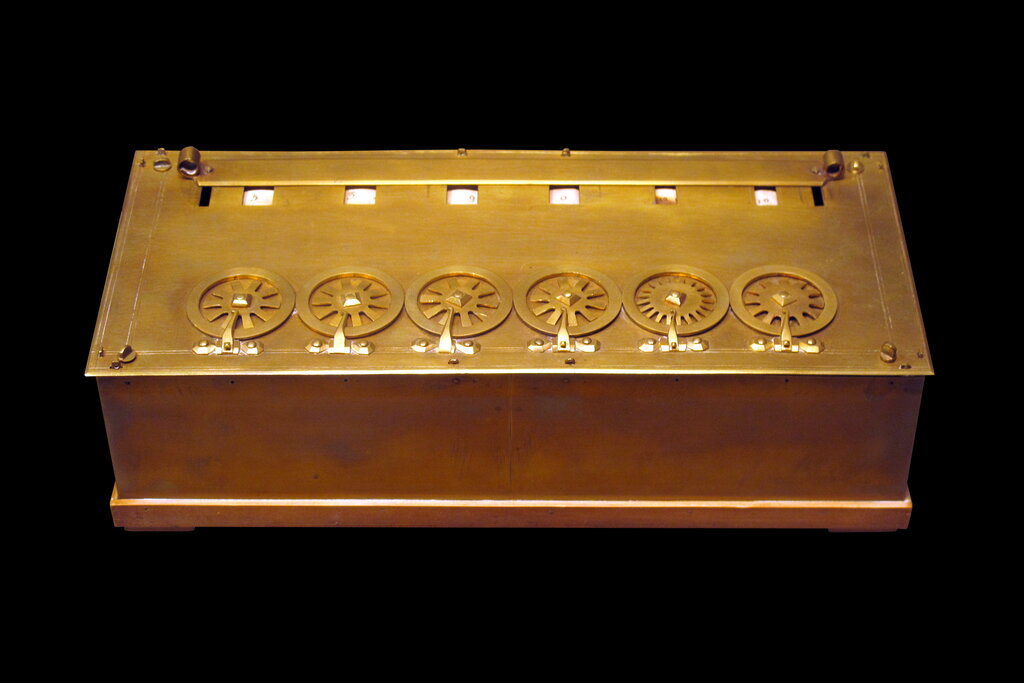
Before electronic computers, there were gears. The first significant leap from simple counting aids like the abacus came in the 17th century with machines that could perform arithmetic mechanically. Blaise Pascal, a French mathematician, created the Pascaline in 1642. It used a series of interlocked gears and wheels, where each wheel represented a digit (ones, tens, hundreds). Turning a wheel by a certain number of notches would perform addition. When a wheel made a full rotation from 9 back to 0, it would automatically advance the next wheel by one position, a process for handling the 'carry' operation.
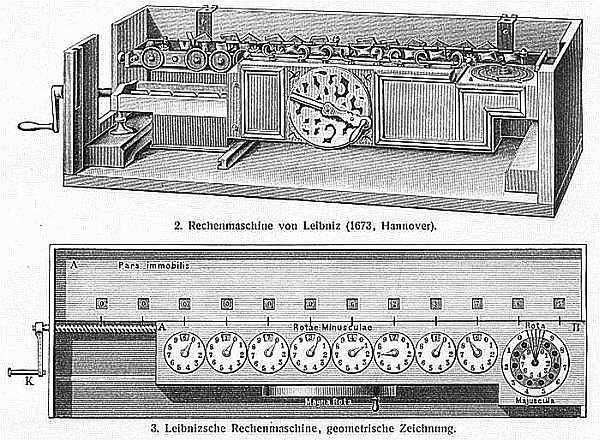
A few decades later, Gottfried Wilhelm Leibniz expanded on this idea with his Stepped Reckoner It was more ambitious than the Pascaline, designed to handle multiplication and division in addition to addition and subtraction. It used a special type of gear called a stepped drum. The position of a smaller gear along this drum determined which number was being multiplied. While brilliant in concept, the manufacturing technology of the time wasn't precise enough to make these devices reliable. They were prone to jamming and errors, limiting their practical use.
Babbage's Automated Tables
The next major breakthrough came from the mind of English mathematician Charles Babbage in the 19th century. He wasn't just trying to build a better calculator; he wanted to automate the entire process of creating mathematical tables, which were essential for navigation, science, and engineering but notoriously full of human errors. His solution was the a massive mechanical calculator designed to tabulate polynomial functions automatically.
The machine operated on a principle called the Method of Finite Differences. This mathematical trick allows for the calculation of polynomial values using only addition, which was much easier for mechanical gears to handle than multiplication or division.
Essentially, the method finds a constant difference between a series of values derived from the polynomial. By repeatedly adding this constant, the machine could generate the next values in the sequence without ever performing complex multiplication.
Now, let's look at the differences between these results. The first differences are $4-1=3$, $11-4=7$, and $22-11=11$. These are not constant. So, we find the differences of the differences. The second differences are $7-3=4$ and $11-7=4$. This is a constant value.
The Difference Engine was designed with stacks of numbered wheels to represent these columns of numbers. By turning a crank, the machine would mechanically add the constant second difference to the first difference, then add that new first difference to the value of P(x) to compute the next term in the sequence. The logic was fixed in the physical arrangement of its thousands of gears and levers.
The Dawn of Programmability
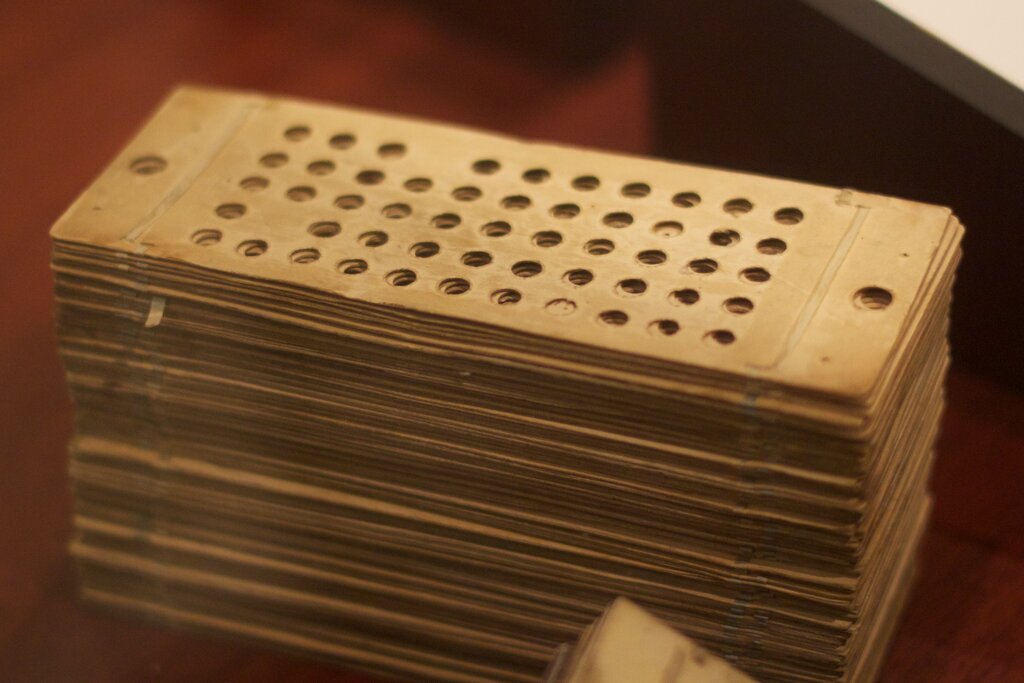
While the Difference Engine was a marvel of fixed automation, it could only perform one task. The real pivot towards modern computing came from an unlikely source: the textile industry. The invented in 1804, used a series of punched cards to control the weaving of complex patterns in fabric. Each card corresponded to one row of the design, and the holes in the card dictated which threads were raised or lowered.
Babbage saw the genius in this system. He realized that punched cards could be used to provide instructions to a calculating machine, not just data. This idea was the cornerstone of his next, even more ambitious design: the Analytical Engine. It was a conceptual leap from a calculator to a general-purpose computer.
The Analytical Engine was to have been a general-purpose mechanical digital computer.
This new machine would have a "mill" (the processor) and a "store" (the memory), and it could be programmed with punched cards to perform any sequence of calculations. It was the first design for a Turing-complete computer, but it was far too complex to be built with 19th-century technology. The physical constraints were immense. Crafting the thousands of identical, high-precision gears required was beyond the capabilities of the era. The accumulation of tiny imperfections in each part would lead to system-wide failure. Mechanical computing had hit a wall, and it would take the advent of electronics nearly a century later to realize Babbage's vision.
Now, let's test your understanding of these early mechanical computers.
What was the primary function of Blaise Pascal's Pascaline?
The key innovation that Leibniz's Stepped Reckoner aimed to introduce over the Pascaline was the ability to perform multiplication and division.
The journey from geared wheels to the concept of a programmable engine laid the essential logical groundwork for the electronic computers that would follow.