Comprehensive Textile Mastery
Spinning and Yarn Engineering
From Fiber to Thread
A pile of raw cotton or wool is just a fluffy mass. To turn it into the fabric for a t-shirt or a suit, those individual fibers must be transformed into a strong, continuous strand called yarn. This engineering process takes the raw characteristics of a fiber, like its staple length and fineness, and builds them into a structure with specific performance goals.
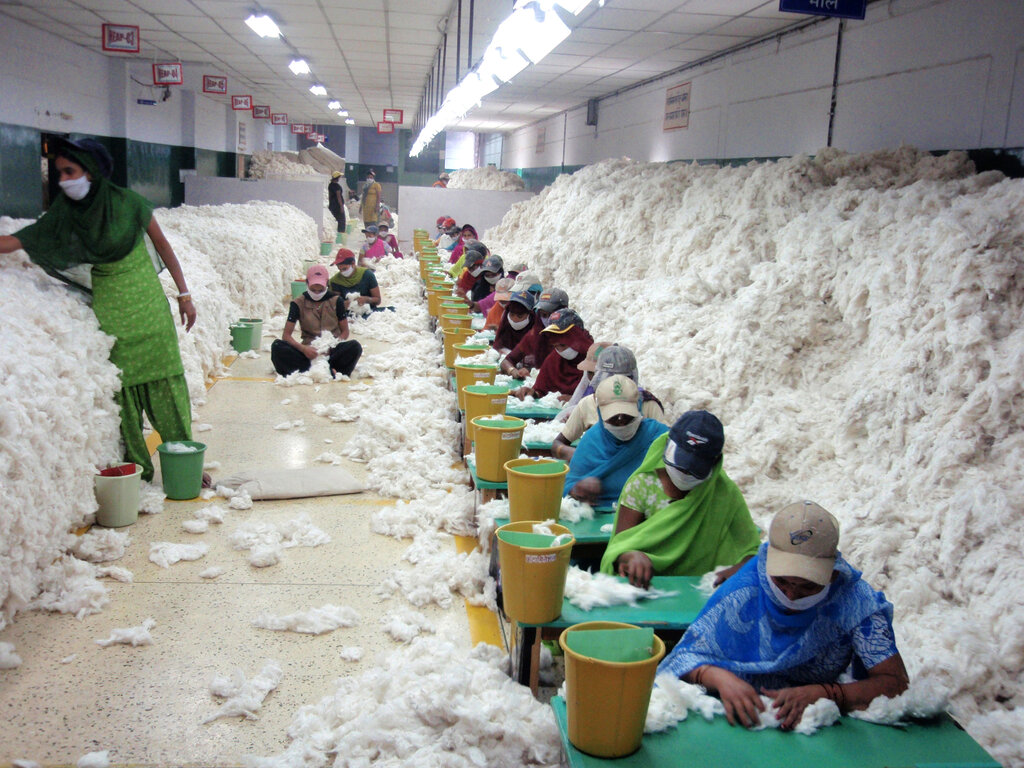
The journey begins with opening and cleaning, where compressed bales of fiber are broken up and any dirt, leaves, or other debris is removed. Once clean, the fibers are ready to be aligned.
Creating Order
The first step in aligning fibers is carding, a process that passes the fiber through wire-covered rollers. Think of it like brushing tangled hair. It detangles the fibers and arranges them into a roughly parallel web, which is then gathered into a thick, soft rope called a sliver.
For most everyday textiles, carding provides enough alignment. The resulting yarns, often called woolen-spun in the context of wool, are fuzzy, airy, and warm because they trap air well. A cozy flannel shirt is a classic example of a fabric made from carded yarns.
For a smoother, more durable yarn, an additional step is required: combing. Just as a fine-toothed comb removes short hairs, the combing process uses fine metal teeth to remove shorter fibers from the sliver and further align the longest ones. This creates a more uniform and lustrous sliver.
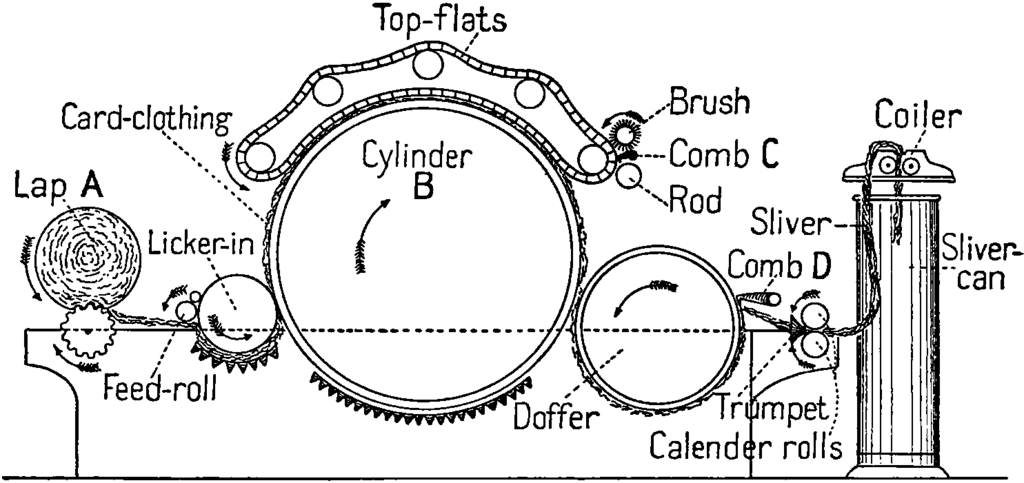
Yarns made from combed fibers are called worsted-spun. They are smoother, stronger, and more compact than their woolen counterparts. Think of the crisp fabric of a tailored suit or the smooth surface of high-quality bedsheets. The final preparatory step is drawing, where several slivers are blended and stretched together to improve consistency even further.
| System | Process | Yarn Characteristics | Common End Use |
|---|---|---|---|
| Woolen | Carded only | Fuzzy, soft, bulky, warm | Cozy sweaters, flannel, blankets |
| Worsted | Carded and Combed | Smooth, strong, crisp, lustrous | Suits, dress shirts, fine fabrics |
The Magic of Twist
An untwisted sliver has very little strength; you could easily pull it apart. The secret to creating strong yarn is twist. By twisting the aligned fibers around each other, friction is created between them, locking them together into a stable structure. The amount of twist is a critical engineering decision.
Twist Per Inch (TPI)
noun
The number of full turns the yarn makes within one inch of its length. TPI directly influences the yarn's properties.
The direction of the twist also matters. Yarns have either an 'S' twist (spiraling up to the left) or a 'Z' twist (spiraling up to the right). This becomes important when plying yarns together and can affect the final fabric's drape and appearance.
Finally, the thickness of the yarn must be precisely measured. Two systems dominate:
- Yarn Count: Used for staple fibers like cotton and wool. This is an indirect system. A higher number means a finer yarn (e.g., 80s cotton is much finer than 20s cotton).
- Denier: Used for synthetic filaments like polyester and nylon. This is a direct system based on weight. A higher denier means a thicker, heavier yarn. One denier means 9,000 meters of the filament weighs one gram.
Modern Spinning Methods
While the principles are ancient, the methods are modern marvels of mechanical engineering. Three systems produce the vast majority of the world's yarn.
In the ring spinning process, the fiber strand comes from the draft zone which is flat, and almost all fibers are parallel to the twisting axis of the strand at this time.
Ring Spinning is the oldest, slowest, and most expensive mechanical method, but it produces the highest quality yarn. A drafted sliver is fed through rollers, and twist is inserted by a small clip called a traveler, which revolves at high speed around a stationary ring as the yarn is wound onto a bobbin. This continuous process creates the strongest, smoothest, and finest yarns.
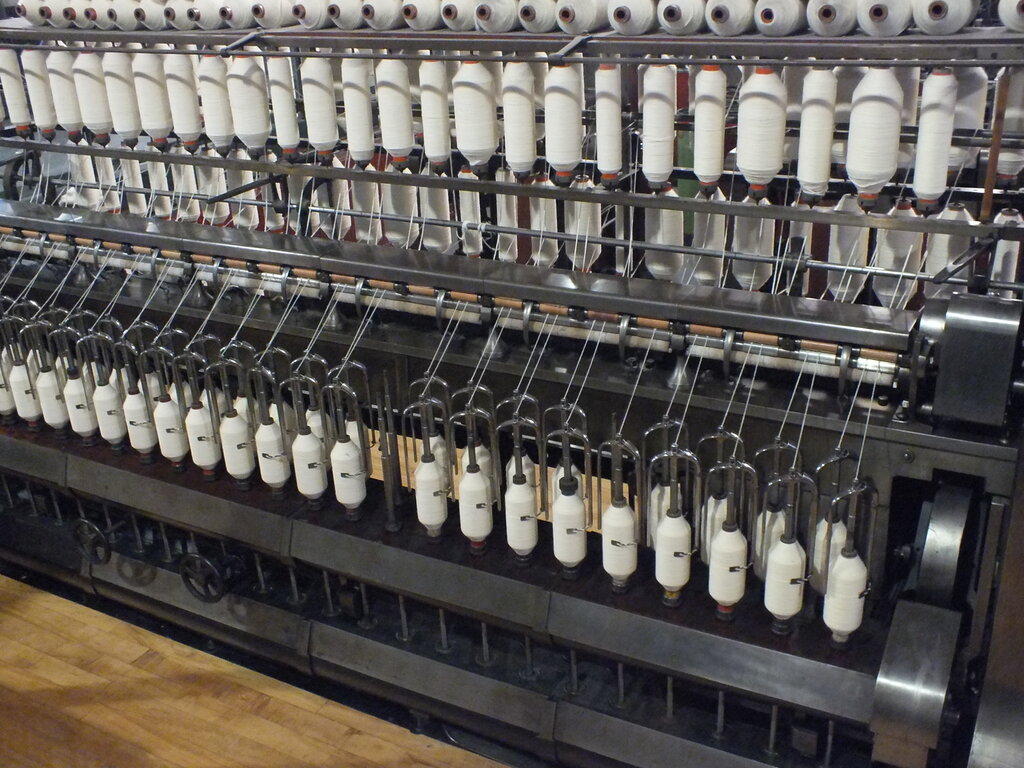
Rotor Spinning, also known as open-end spinning, is much faster. Instead of a continuous process, fibers are blown into a rapidly spinning rotor. Centrifugal force collects them in a groove, and the yarn is pulled out, twisting the newly added fibers onto the open end of the forming yarn. This method is highly efficient for short-to-medium staple fibers, producing weaker but more even yarns ideal for denim and towels.
Air-Jet Spinning is the fastest of all. Two jets of compressed air, spinning in opposite directions, are used to twist the fibers. It's incredibly productive but creates yarns that are weaker and harsher than ring-spun yarns. They are, however, very uniform and resistant to pilling, making them suitable for items like bedsheets and workwear fabrics.
Building Complexity
A single spun yarn can be used as is, but for added strength and balance, multiple strands are often combined. A ply yarn is created by twisting two or more single yarns together, usually in the opposite direction of their original twist (e.g., two Z-twist singles are plied with an S-twist). This balances the yarn, preventing it from kinking, and dramatically increases its strength and uniformity.
This can be taken a step further. Cable yarns are made by twisting two or more ply yarns together. This creates exceptionally strong and stable structures used for ropes, cables, and durable craft yarns.
Finally, synthetic filaments, which are extruded as perfectly smooth, straight fibers, often need more character. Texturizing is a process that introduces crimps, coils, or loops into these filaments. This adds bulk, stretch, and a more natural feel, transforming a slippery polyester filament into the soft, stretchy yarn used for athletic apparel.
With a strong, stable yarn engineered for a specific purpose, the textile lifecycle moves to its next stage: creating a two-dimensional fabric structure.
What is the primary purpose of the combing process in yarn production?
For synthetic filaments like polyester, a higher ______ indicates a thicker, heavier yarn.