Comprehensive Sommelier Foundations
Deductive Tasting Mastery
The Deductive Tasting Grid
You already know how to see, swirl, sniff, and sip. Now, it's time to move beyond simple enjoyment and into structured analysis. Professional sommeliers don't just guess wines; they use a systematic process to break down every element in the glass. This is the essence of deductive tasting.
Think of it as being a detective. Each observation is a clue, and the clues build a logical case for the wine's identity. The framework for this investigation is a tasting grid, most famously used by the Court of Master Sommeliers and in WSET Level 3 programs. It forces you to evaluate each component separately, from color to finish, before drawing any conclusions. This discipline is crucial for avoiding confirmation bias, the tendency to find evidence that supports your first impression while ignoring contradictory clues.
The best sommeliers don’t “guess” wines—they break down the tasting process using logic and structure.
Let's walk through the grid, starting with what you see in the glass.
Sight and Aroma
Your first clues come from the wine's appearance. Tilt your glass against a white background. First, assess clarity. Is it clear and brilliant, or is there a slight haze? Haze might indicate an unfiltered wine or a potential flaw.
Next, evaluate color intensity. This isn't just about red or white; it's about concentration. Is a white wine pale, almost watery, or a deep lemon-gold? Is a red wine a translucent ruby or an opaque, inky purple? This hints at the grape's thickness of skin, the wine's age, and the climate where it was grown.
Finally, look at the rim variation. In red wines, a wide, orange, or brick-colored rim often suggests age, as pigments break down over time. In white wines, subtle green glints can point to youth or a cooler climate grape like Sauvignon Blanc.
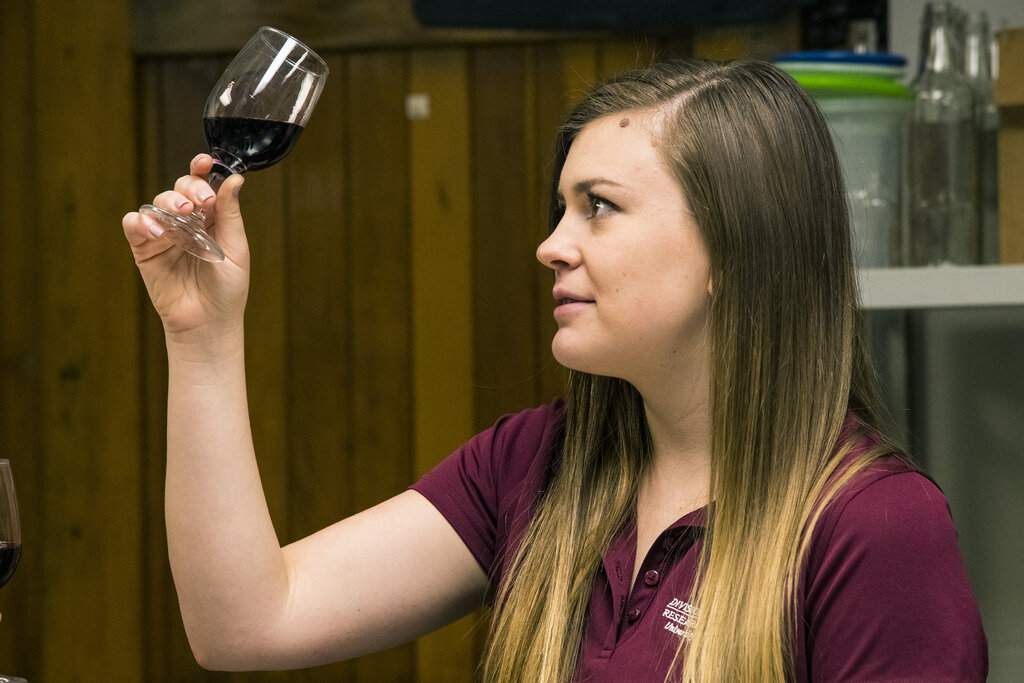
After a thorough visual check, it's time for the nose. Aromas are categorized into three distinct clusters: primary, secondary, and tertiary.
Primary aromas come from the grape itself and its growing environment, or terroir . These are the fruit, floral, and herbal notes. Think lemon and green apple in a young Riesling, or blackcurrant and cedar in Cabernet Sauvignon.
Secondary aromas arise from the winemaking process. The most common are notes from oak aging (vanilla, smoke, spice), malolactic fermentation (butter, cream), or yeast contact (bread, biscuit).
Tertiary aromas, or bouquet, develop with age in the bottle. In red wines, fresh fruit notes can evolve into dried fruit, leather, or earthy mushroom scents. In whites, you might find notes of honey, nuts, or ginger.
Calibrating Your Palate
The palate is where you confirm or challenge the clues from the nose. This is also where you must be most precise. Professionals use a five-point scale (low, medium-, medium, medium+, high) to measure a wine's structural components: acidity, tannin, alcohol, and body. This calibration is what separates an amateur taster from an expert.
Acidity makes your mouth water. Tannin creates a drying, astringent sensation on your gums and tongue. Alcohol can feel warm or hot in the back of your throat. Body is the overall weight and texture of the wine in your mouth, from light like skim milk to full like heavy cream. Learning to consistently rate these elements is a matter of practice and tasting a wide variety of wines.
| Component | Low | Medium | High |
|---|---|---|---|
| Acidity | Tastes soft, flat | Refreshing, balanced | Mouth-watering, sharp |
| Tannin | Smooth, barely noticeable | A gentle grip on gums | Astringent, very drying |
| Alcohol | Feels light, no warmth | Gentle warmth | Noticeable heat, viscous |
| Body | Watery, skim milk | 2% milk | Heavy cream, weighty |
Once you've assessed the structure, you identify the flavor profile on the palate and the length of the finish. Do the flavors match the aromas? Is the finish short (a few seconds) or long and complex (a minute or more)?
Finally, you draw your initial and final conclusions. The initial conclusion is your first guess: grape variety, country, region, and vintage. The final conclusion confirms or amends this after you've considered all the evidence. You'll also make a judgment on the wine's quality (poor, acceptable, good, very good, outstanding) and its potential for aging.
Ready to test your deductive skills?
What is the primary purpose of using a systematic tasting grid in deductive wine tasting?
Aromas of vanilla, smoke, and toast in a wine are typically classified as what type of aromas?
Mastering this grid takes time. The key is to practice consistently and trust the process. Each wine is a new puzzle, and the grid gives you the tools to solve it.