Comprehensive Lucent General Knowledge Mastery
Historical Timelines
Ancient India: Foundations
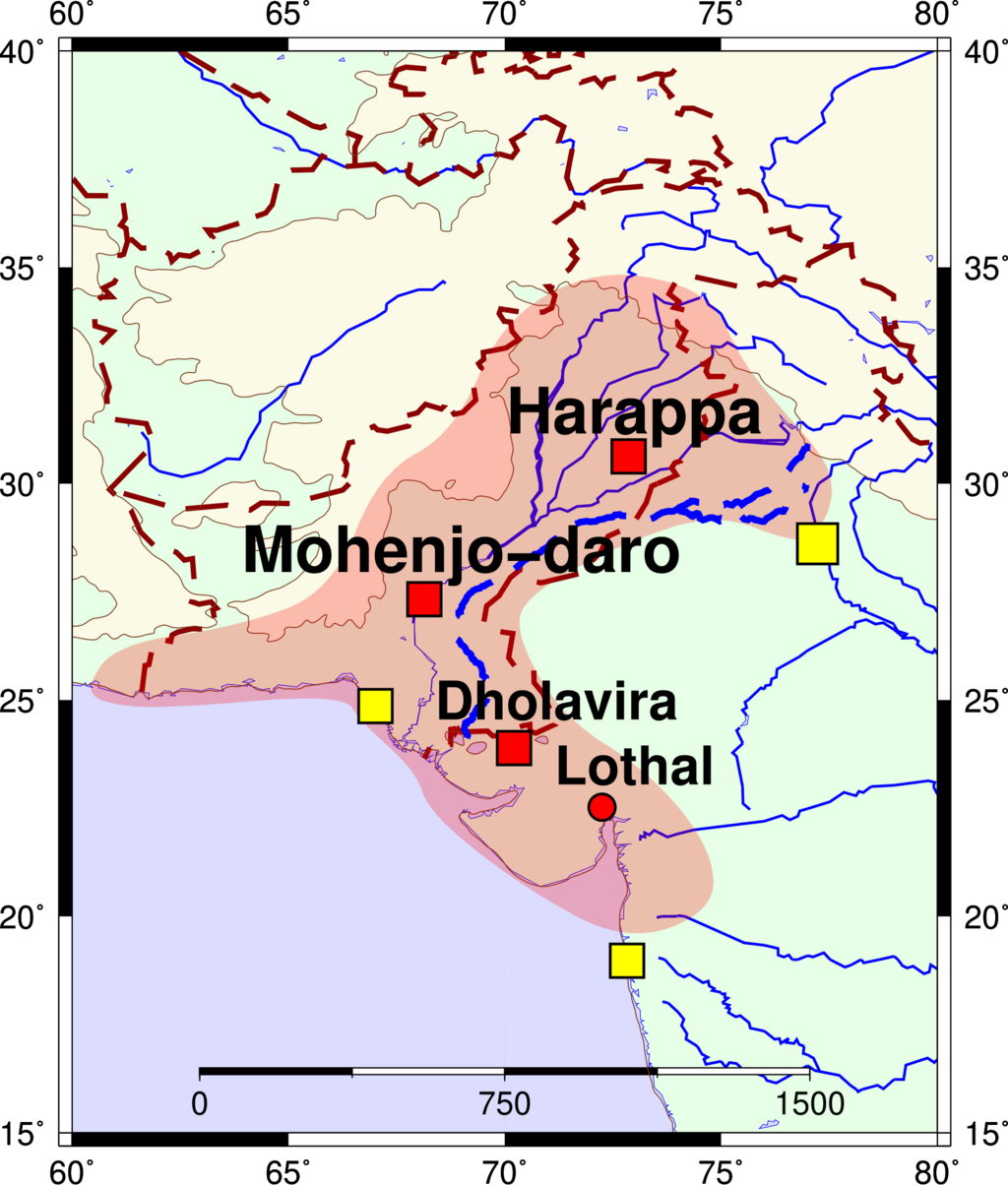
The story of India begins with one of the world's earliest urban civilizations. The Indus Valley Civilization (IVC), flourishing around 2500 BCE, was not a monolithic entity. Its cities were specialized hubs. For example, Harappa and Mohenjo-daro were major urban centers with sophisticated grid-based city planning and impressive granaries. Other sites had distinct functions; in modern-day Gujarat served as a key port, complete with a massive dockyard that connected the civilization to maritime trade routes.
Following the decline of the IVC, the Vedic Age emerged, documented through the Vedas—sacred texts composed in Vedic Sanskrit. Early Vedic society (c. 1500–1000 BCE) was largely pastoral and organized into tribes (janas). Political life revolved around assemblies like the Sabha (an assembly of elders) and the Samiti (a general assembly of the tribe). The shift to the Later Vedic period saw society become more agrarian, complex, and hierarchical.
| Feature | Early Vedic Period (Rigvedic) | Later Vedic Period |
|---|---|---|
| Society | Semi-nomadic, pastoral | Settled, agrarian |
| Polity | Tribal assemblies (Sabha, Samiti) were influential | Kingship became hereditary; assemblies lost power |
| Varna System | Based on profession, flexible | Based on birth, rigid |
| Key Texts | Rigveda | Sama, Yajur, and Atharva Vedas; Brahmanas, Aranyakas |
By the 6th century BCE, territorial states known as Mahajanapadas formed. Among the sixteen major states, Magadha rose to prominence, laying the groundwork for India's first great empire. This culminated in the Mauryan Empire, founded by Chandragupta Maurya. The Mauryan state was remarkable for its highly centralized administration, detailed in Kautilya's Arthashastra. Under Emperor Ashoka, the empire reached its zenith, but his focus shifted from military conquest to the propagation of —a moral and ethical code.
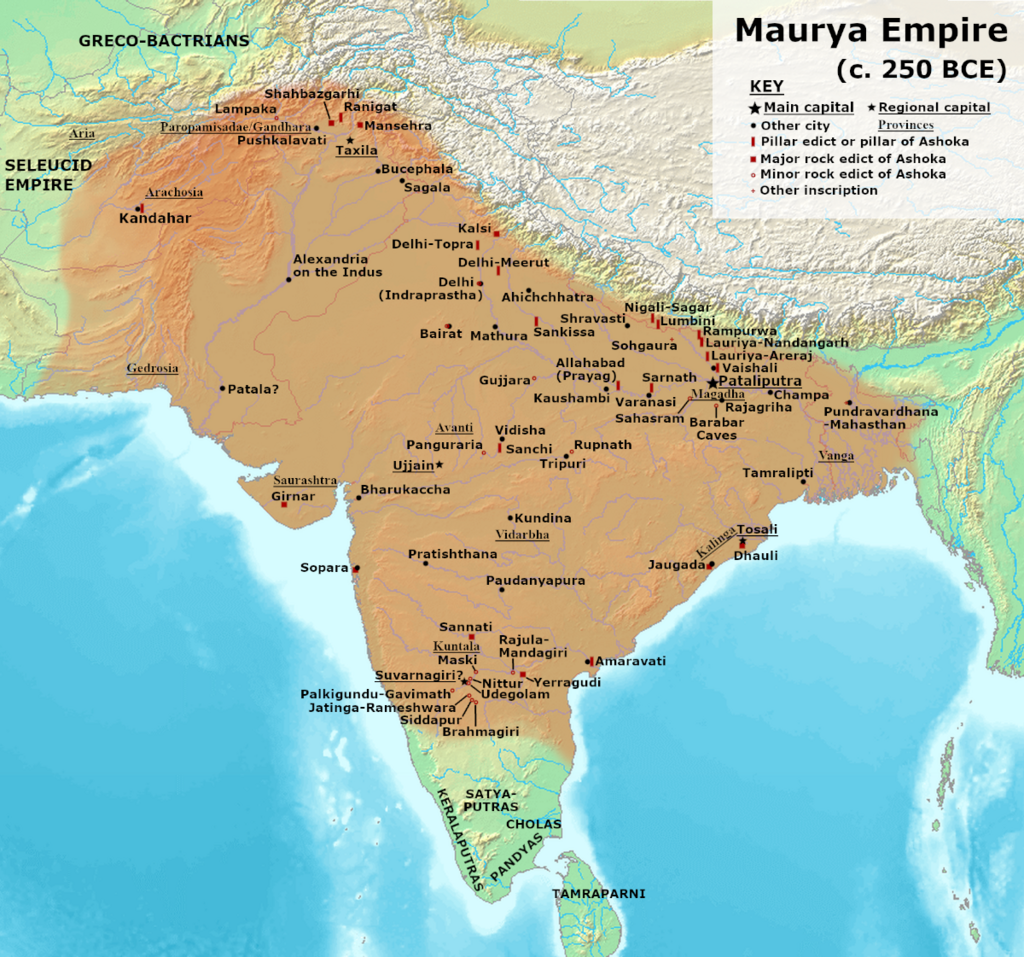
After a period of fragmentation, the Gupta Empire (c. 320–550 CE) emerged, ushering in what is often called India's "Golden Age." This era was marked by significant achievements in science, mathematics (the concept of zero), astronomy, literature (like the works of Kalidasa), and art. The Gupta administration was more decentralized than the Mauryan, granting considerable autonomy to local governors and feudatories.
Medieval India: Sultanates and Empires
The Medieval period began with the establishment of the Delhi Sultanate in 1206. This era, spanning five successive dynasties, introduced new administrative and architectural forms to the subcontinent. A key administrative innovation was the —a land grant system used to pay officials and maintain the army. Architecturally, the period saw the fusion of Indian and Islamic styles, resulting in the iconic Indo-Islamic architecture, with the Qutub Minar in Delhi being a prime example.
| Dynasty | Period | Key Ruler(s) | Notable Contribution(s) |
|---|---|---|---|
| Mamluk (Slave) | 1206-1290 | Qutb-ud-din Aibak, Iltutmish | Establishment of Sultanate, Qutub Minar Complex |
| Khilji | 1290-1320 | Alauddin Khilji | Market reforms, standing army, expansion south |
| Tughlaq | 1320-1414 | Muhammad bin Tughlaq | Token currency experiment, capital shift |
| Sayyid | 1414-1451 | Khizr Khan | Period of political instability |
| Lodi | 1451-1526 | Sikandar Lodi, Ibrahim Lodi | First battle of Panipat led to Mughal rule |
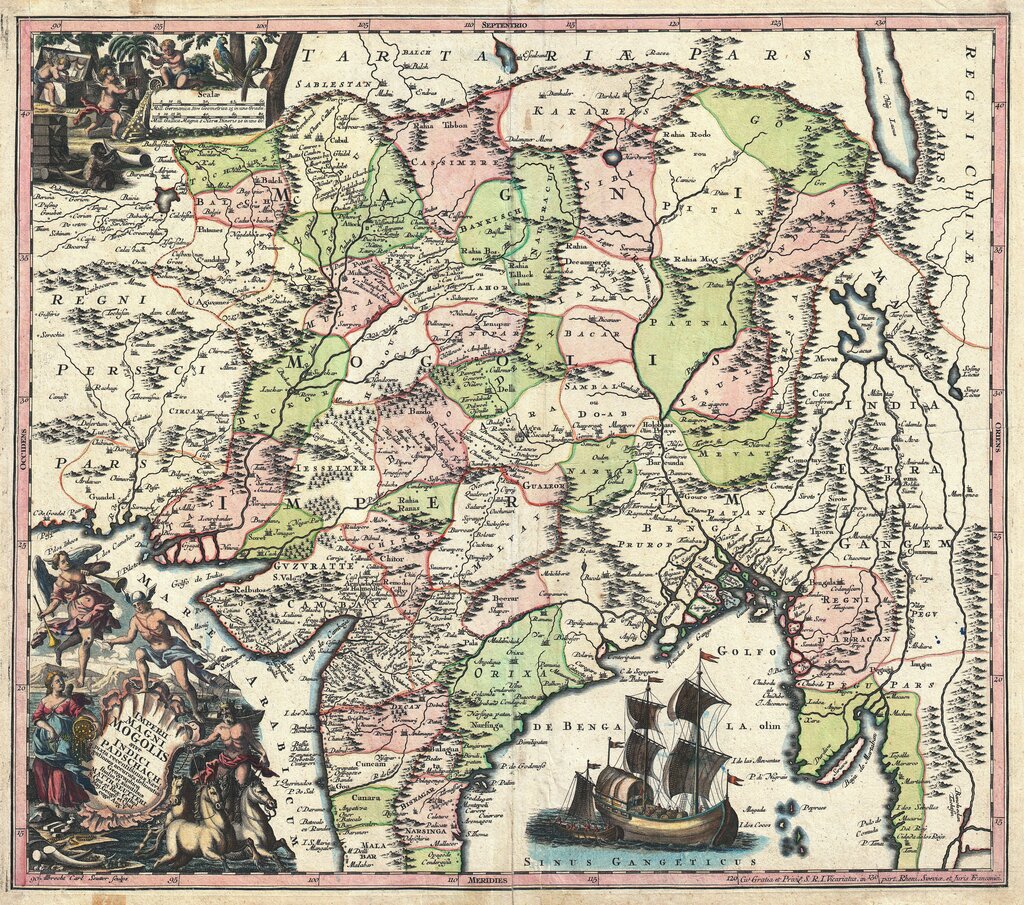
In 1526, the defeat of Ibrahim Lodi by Babur at the Battle of Panipat marked the beginning of the Mughal Empire. The Mughals refined many aspects of administration, particularly land revenue. Akbar's Dahsala system, developed by his finance minister Raja Todar Mal, was a sophisticated method of land assessment based on average crop yields and prices over a ten-year period. This created a more stable and predictable revenue stream for the state.
Modern India: The Road to Independence
The decline of Mughal power coincided with the rise of the British East India Company. British influence was formalized through a series of legislative acts, starting with the Regulating Act of 1773, which first appointed a Governor-General. A crucial turning point was the Revolt of 1857. Though suppressed, it ended the Company's rule and led to the British Crown taking direct control of India in 1858.
The aftermath of the revolt fueled Indian nationalism, leading to the formation of the (INC) in 1885. Early INC sessions were dominated by Moderates who sought constitutional reforms. The movement became more assertive in the early 20th century, particularly after the controversial Partition of Bengal in 1905.
The final phase of the freedom struggle is defined by the Gandhian Era (1917-1947). Mahatma Gandhi's return to India transformed the INC into a mass movement. Key milestones include the Non-Cooperation Movement (1920-22), the Civil Disobedience Movement launched with the Dandi March (1930), and the Quit India Movement (1942). Each event mobilized millions and systematically weakened British authority, culminating in India's independence on August 15, 1947.
To master the timeline, connect each Governor-General to one key policy or event: Cornwallis to the Permanent Settlement, Bentinck to the abolition of Sati, Dalhousie to the Doctrine of Lapse.
Now, let's test your knowledge of these crucial historical periods.
What was the primary function of the Indus Valley Civilization site of Lothal?
How did the administration of the Gupta Empire primarily differ from that of the Mauryan Empire?