Comprehensive AI Journey
Introduction to Artificial Intelligence
What Is Artificial Intelligence?
At its core, artificial intelligence is about teaching machines to learn, reason, and make decisions. Think of it as building a system that can take in information, understand it, and then act on it to achieve a specific goal, much like a person does. It's not about creating a walking, talking robot from a sci-fi movie; it's about building software that can perform tasks that typically require human intelligence.
Artificial Intelligence
noun
The theory and development of computer systems able to perform tasks that normally require human intelligence, such as visual perception, speech recognition, decision-making, and translation between languages.
The fundamental principles driving AI are surprisingly straightforward. An AI system needs to be able to:
- Problem-solve: When faced with a challenge, it must figure out the best path to a solution.
- Learn: It improves over time by analyzing data and outcomes, refining its approach without being explicitly reprogrammed for every new scenario.
- Adapt: It can adjust its actions based on new information or a changing environment.
These three abilities work together to make AI a powerful and flexible tool.
A Quick Trip Through Time
The idea of intelligent machines has been around for centuries, but the actual field of AI officially began in the 1950s. Early researchers were optimistic, believing that a machine with human-like intelligence was just a few decades away. This initial excitement led to significant government funding and exploration.
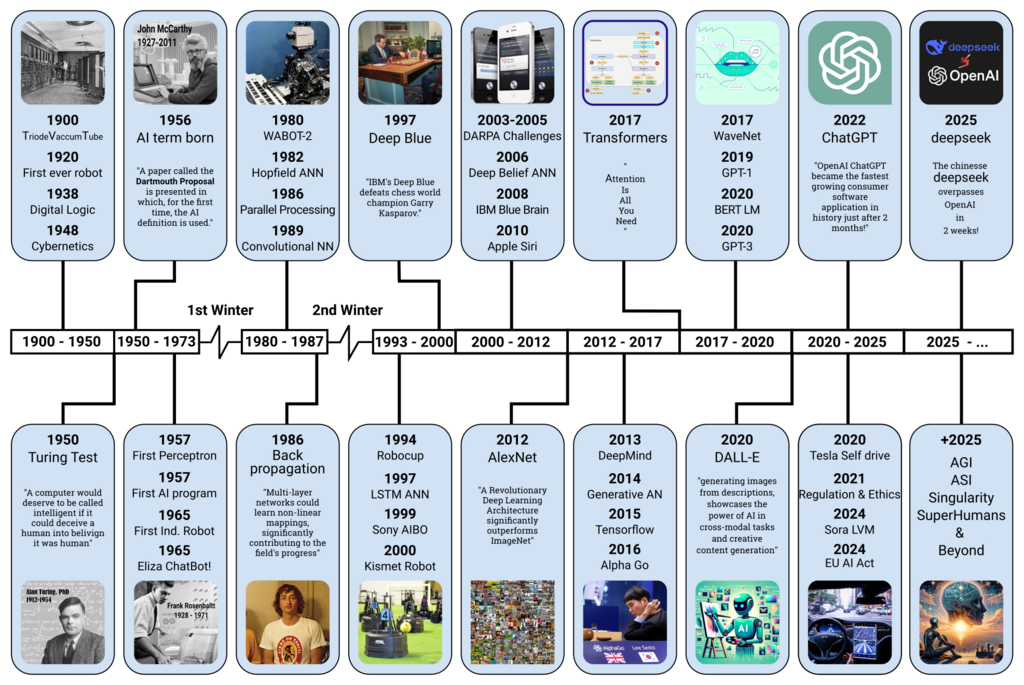
However, progress was slower than expected. The complexity of creating true intelligence was vastly underestimated, leading to periods known as "AI winters" in the 1970s and late 1980s, when funding and interest dried up. But the field didn't die. Researchers kept working, and starting in the late 1990s, a combination of faster computers and the explosion of available data brought AI roaring back. Today, we're in a golden age of AI, with breakthroughs happening at an incredible pace.
The Three Flavors of AI
When people talk about AI, they are usually referring to one of three distinct categories. Understanding the difference is key to cutting through the hype.
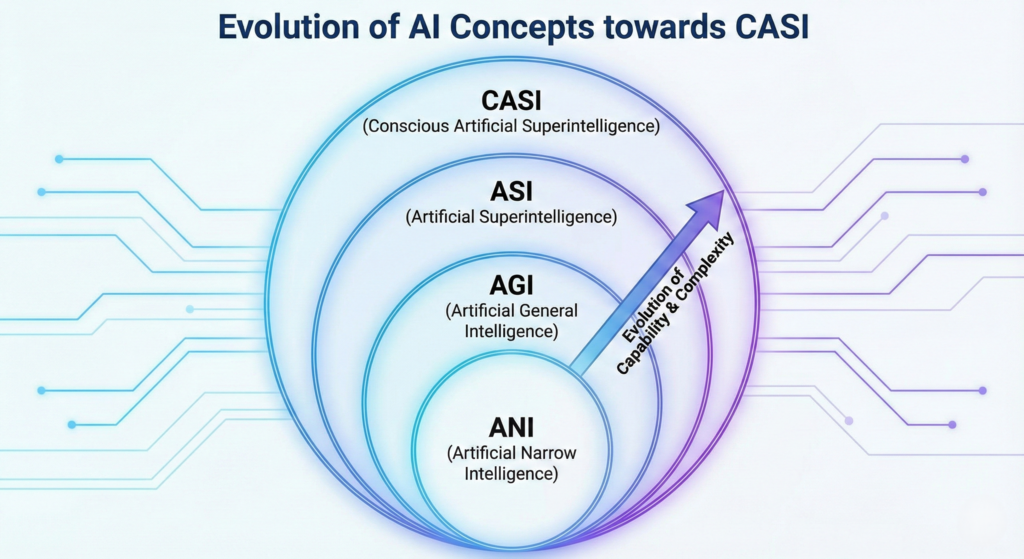
Artificial Narrow Intelligence (ANI) This is sometimes called "Weak AI," and it's the only type of AI that exists today. ANI is designed to perform a single, specific task very well. Your GPS navigation, the recommendation engine on a streaming service, and spam filters in your email are all examples of Narrow AI. They are incredibly useful, but they operate within a limited, pre-defined range. A chess-playing AI can beat any human, but it can't tell you the weather or order a pizza.
Artificial General Intelligence (AGI) This is the AI of science fiction. Also known as "Strong AI," AGI refers to a machine with the ability to understand, learn, and apply its intelligence to solve any problem, just like a human being. An AGI could switch seamlessly between writing a poem, composing music, and solving a complex physics problem. We are not yet close to creating AGI, and it remains a major goal for many researchers in the field.
Artificial Superintelligence (ASI) This is the final, theoretical stage of AI development. ASI would be an intellect that is much smarter than the best human brains in virtually every field, including scientific creativity, general wisdom, and social skills. The concept of superintelligence raises profound questions about humanity's future, but for now, it remains firmly in the realm of speculation.
AI in the Real World
Even though we only have Narrow AI, its impact is already enormous. It's quietly working in the background of many services we use every day.
| Industry | Application of AI |
|---|---|
| Healthcare | Analyzing medical images to detect diseases earlier. |
| Finance | Detecting fraudulent transactions in real-time. |
| Retail | Personalizing shopping recommendations for customers. |
| Transport | Optimizing routes for delivery trucks to save fuel. |
| Entertainment | Curating music playlists and movie suggestions. |
| Agriculture | Monitoring crop health with drones to improve yields. |
From helping doctors make better diagnoses to making our daily commutes more efficient, AI is a tool that is reshaping our world. By understanding its basic principles, history, and different forms, you're better equipped to see how it works and where it might be headed next.
What is the primary goal of artificial intelligence?
A GPS navigation system that calculates the fastest route based on current traffic is a clear example of which type of AI?