Compose a Symphony with Free Software
Music Theory Basics
Reading Music
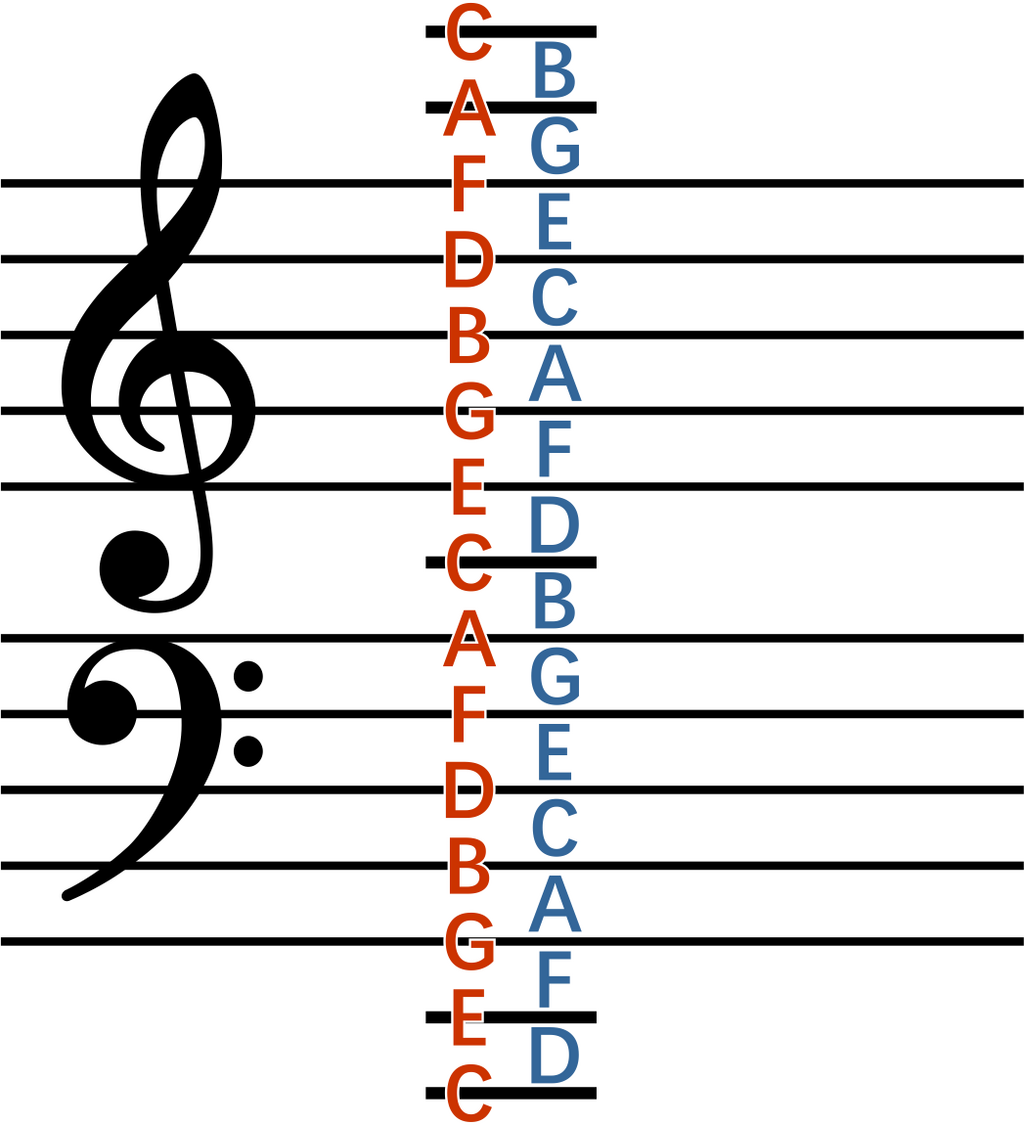
Music has its own written language. The foundation is the staff, which has five lines and four spaces. Each line and space represents a different musical pitch. To know which pitches the lines and spaces refer to, we use a clef at the beginning of the staff.
The two most common clefs are the treble clef and the bass clef. The treble clef is for higher-pitched notes, typically played by instruments like the flute or violin, or a pianist's right hand. The bass clef is for lower-pitched notes, for instruments like the cello or a pianist's left hand.
The shape of a note tells you how long to hold it. A hollow oval with no stem is a whole note. A hollow oval with a stem is a half note. A filled-in oval with a stem is a quarter note. Adding a flag to the stem makes it an eighth note. Each of these is half the duration of the one before it.
Scales and Modes
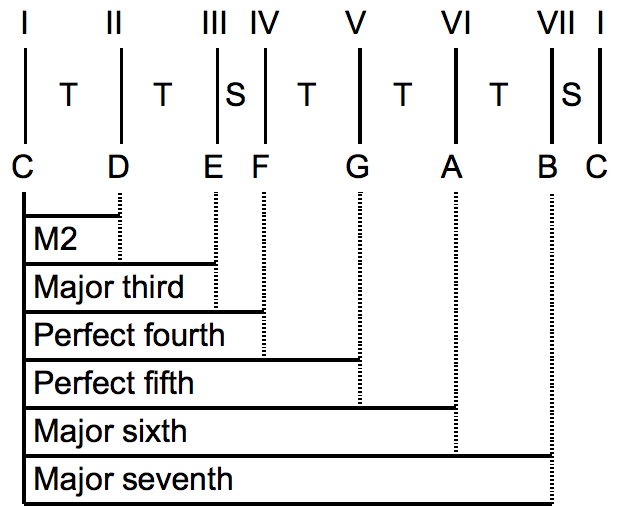
A scale is a sequence of notes arranged in order of pitch. It's the palette of notes you use to create melodies and harmonies. The most common is the major scale, which often sounds happy and bright. It’s built from a specific pattern of whole steps (W) and half steps (H). A half step is the smallest distance between two notes, like from one piano key to the very next one. A whole step is two half steps.
The major scale pattern is: W-W-H-W-W-W-H.
The natural minor scale has a different pattern (W-H-W-W-H-W-W) and tends to sound more sad or dramatic. Every major scale has a relative minor scale that uses the exact same notes but starts in a different place.
Modes are like different flavors of a scale. By starting the same major scale pattern on a different note, you get a new mode with a unique mood. For example, starting on the second note of a C major scale (D) gives you the D Dorian mode, which has a jazzy, contemplative feel.
Intervals
An interval is the distance between two notes. We measure intervals by counting the number of steps between the notes within a scale. For example, the distance from C to D in the C major scale is a second, because D is the second note. From C to E is a third.
Intervals also have a quality, such as major, minor, or perfect. This describes the exact distance in half steps and gives the interval its distinct sound. A major third sounds bright and stable, while a minor third sounds more somber.
| Interval | Sound Characteristic |
|---|---|
| Minor Second | Dissonant, clashing |
| Major Second | Stepping stone, neutral |
| Minor Third | Somber, sad |
| Major Third | Bright, happy |
| Perfect Fourth | Open, stable |
| Perfect Fifth | Strong, foundational |
| Major Seventh | Tense, yearning |
| Octave | Resolution, stable |
Understanding intervals is key to building chords and understanding how melodies move from one note to the next.
Chords and Harmony
When you play three or more notes at the same time, you create a chord. Harmony is the sound that results from playing different chords in succession. The most basic type of chord is a triad, which consists of three notes.
To build a major triad, you start with a root note, add the note a major third above it, and then add the note a perfect fifth above the root. For example, a C major triad is made of the notes C, E, and G.
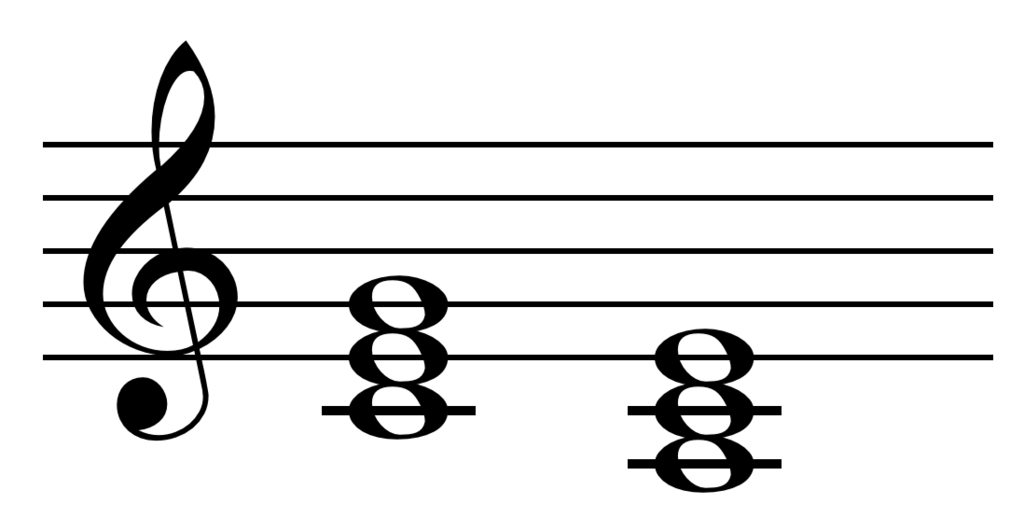
A minor triad is similar, but it uses a minor third instead of a major third. This small change gives the chord a completely different emotional quality. An A minor triad, for instance, is made of A, C, and E.
Chords are often built from the notes of a scale. In any given key, certain chords sound like they belong together. A sequence of chords is called a chord progression. These progressions create the harmonic journey of a piece of music, building tension and providing resolution.
The most common chord progression in Western music is the I-V-vi-IV progression. In the key of C major, that would be C major - G major - A minor - F major.
This is just the start. With these building blocks of notation, scales, intervals, and chords, you have the basic toolkit to start analyzing music and composing your own ideas.