Compiler Design Essentials
Introduction to Compiler Design
What is a Compiler?
Computers don't understand programming languages like C, Python, or Java. They only understand machine code, which is a series of ones and zeros. So, how does the code you write get turned into something a computer can actually run? That's the job of a compiler.
A compiler is a special program that translates code written in a high-level programming language into a lower-level language, like machine code, that the CPU can execute.
Think of it like a human translator. Imagine you write a book in English, but your reader only understands Japanese. You'd need a translator to read your entire English book and produce a complete, standalone Japanese version. The compiler does the same thing for your code, creating an executable file (.exe on Windows, for example) that can be run directly by the computer.
Compilers vs. Interpreters
Compilers aren't the only type of translator out there. There's another kind called an interpreter. While they both achieve the same goal of running your code, they work in fundamentally different ways.
An interpreter translates your code one line at a time and executes that line immediately. It's like having a simultaneous interpreter at a conference. As someone speaks, the interpreter listens to a sentence, translates it, and says it out loud. They don't wait for the entire speech to be finished.
A compiler, on the other hand, translates the entire program at once before the program is run for the first time. It scans all your code, checks for errors, and produces a complete, translated executable file. The key difference is when the translation happens.
| Feature | Compiler | Interpreter |
|---|---|---|
| Translation | Translates the entire program at once, before execution. | Translates the program line by line, during execution. |
| Output | Creates a standalone executable file. | Does not create a separate file; it just runs the code. |
| Execution Speed | Generally faster, as the translation is already done. | Generally slower, as translation happens on the fly. |
| Error Handling | Reports all errors at once after scanning the whole program. | Reports the first error it finds and stops execution. |
The Journey of Compilation
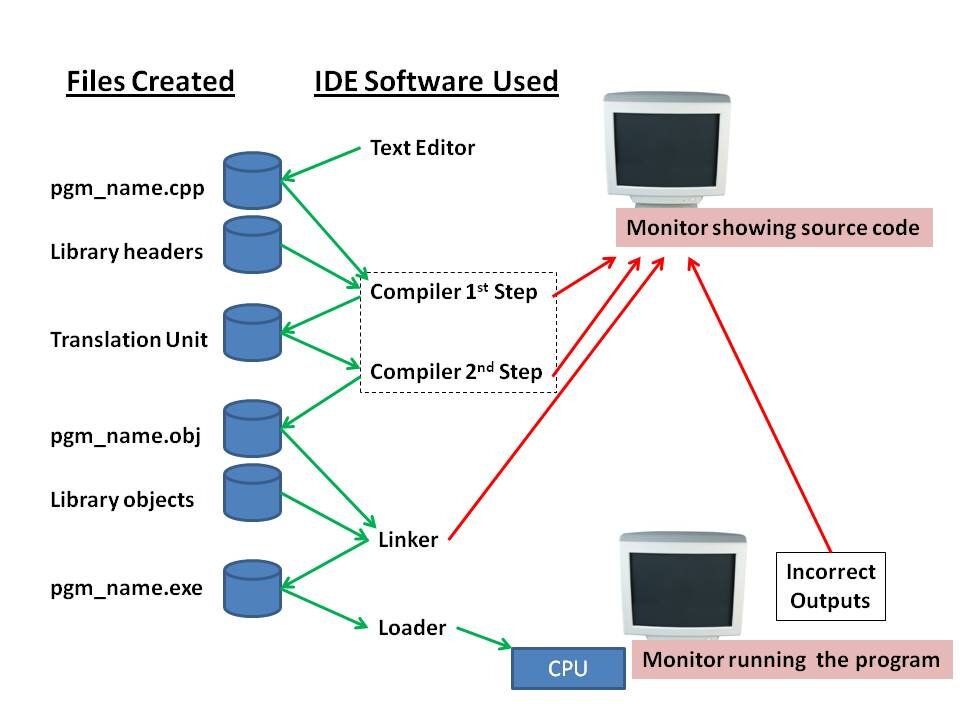
Compilation isn't a single, magical step. It's more like an assembly line, with the source code passing through several distinct phases. Each phase takes the output from the previous one, processes it, and passes it along to the next. This entire process is often called the "compiler pipeline."