Comparing Rational Numbers for 6th Grade
Understanding Rational Numbers
What are Rational Numbers?
The word “rational” contains a clue to its meaning: ratio. A rational number is any number that can be written as a ratio, or fraction, of two integers. This includes a huge family of numbers that you work with every day.
A rational number can be defined as a number expressed by a quotient a/b of integers, where the denominator b is non-zero.
The standard way to write a rational number is , where a and b are integers. The top number, a, is called the numerator, and the bottom number, b, is the denominator. There's one very important rule: the denominator, b, can never be zero.
Why not? Imagine you have a pizza to share. The denominator tells you how many equal slices you're cutting the pizza into. You can cut it into 2, 4, or even 100 slices. But you can't cut it into 0 slices. It just doesn't make sense. Division by zero is undefined in mathematics.
The Rational Number Family
Many different types of numbers are part of the rational number family. You might be surprised by how many of them you already know.
Integers: Every integer (like -3, 0, or 5) is a rational number. You can write any integer as a fraction by putting it over 1.
Fractions: This one is obvious! Any number already written as a fraction, like , is a rational number by definition.
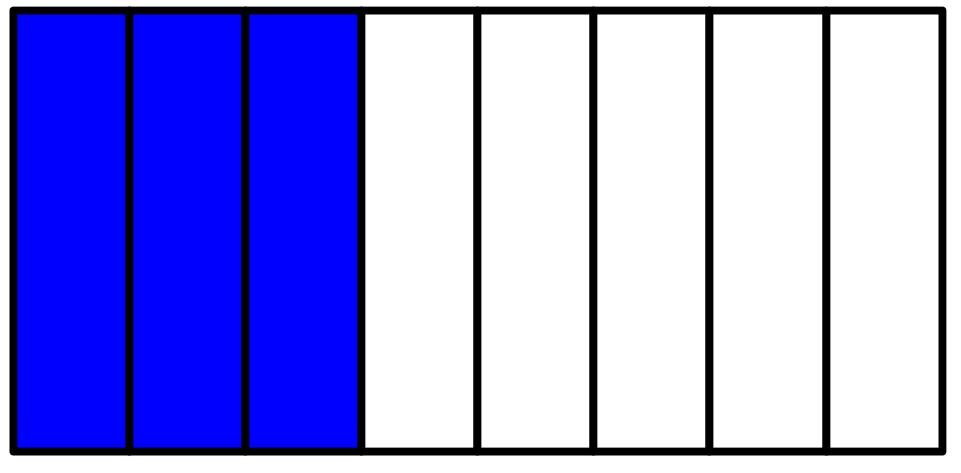
Terminating Decimals: Decimals that end are also rational. You can convert them into fractions where the denominator is a power of 10, like 10, 100, or 1000. For example, 0.75 is seventy-five hundredths.
Repeating Decimals: What about decimals that go on forever in a repeating pattern, like ? These are also rational numbers. The repeating pattern is a sign that the number can be written as a simple fraction.
Finding a Place on the Number Line
Just like integers, every rational number has a specific spot on the number line. This helps us visualize where they are in relation to other numbers. For integers, it's simple. To find the number 2, you just move two units to the right of zero.
Finding the spot for a fraction like is also straightforward. It's exactly halfway between 0 and 1. To place a negative fraction, like , you start at 0 and move three-quarters of the way towards -1.
Every single rational number, whether it's an integer, a fraction, or a decimal that terminates or repeats, has its own unique address on the number line.