Comparing Leading Large Language Models
Introduction to Large Language Models
What Are Large Language Models?
At its core, a large language model (LLM) is a type of artificial intelligence designed to understand and generate human language. Think of it as a super-powered autocomplete. While your phone might suggest the next word in a sentence, an LLM can write entire paragraphs, answer complex questions, translate languages, and even write code.
Their main purpose is to process and generate text in a way that is coherent, relevant, and contextually appropriate. They do this by learning statistical patterns from enormous amounts of text data. By analyzing how words, sentences, and ideas connect, they learn the rules of grammar, facts about the world, and even styles of writing.
Large Language Models (LLMs) are machine learning models trained on vast amount of textual data to generate and understand human-like language.
How They Learn
An LLM isn't explicitly taught grammar rules like a student in a language class. Instead, it learns by observation, much like how a child learns to speak. This process starts with feeding the model a massive library of text and code—essentially, a significant portion of the public internet, digital books, and other text sources.
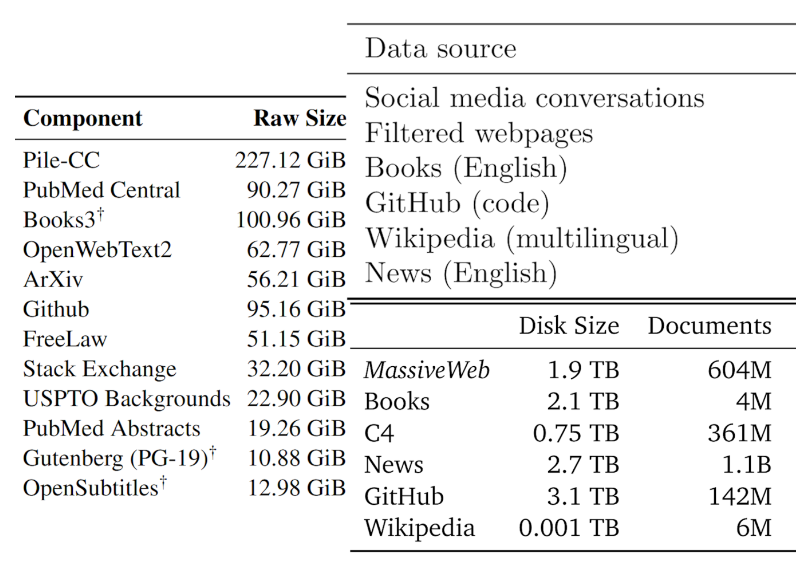
During this initial phase, called pre-training, the model's primary goal is simple: predict the next word in a sentence. It's given a piece of text with a word missing and has to guess what that word is. At first, its guesses are random and mostly wrong. But each time it gets a guess wrong, it adjusts its internal connections to make a better guess next time. After repeating this process billions or trillions of times, the model develops a sophisticated understanding of language.
After pre-training, a general-purpose model can be specialized through a process called fine-tuning. This involves training the model on a smaller, more specific dataset. For example, a model could be fine-tuned on a collection of medical textbooks to improve its performance on medical questions, or on a dataset of customer service conversations to become a better chatbot.
The Language of LLMs
When discussing LLMs, a few key terms come up frequently. Understanding them is crucial to understanding how these models work.
Parameter
noun
A variable inside the model that is adjusted during training. Parameters are the internal 'knobs' the model turns to store the information it learns about language patterns. The number of parameters is often used as a measure of a model's size and complexity.
Think of parameters as the memories and connections in a brain. A model with more parameters has a greater capacity to learn and remember complex patterns, but it also requires more data and computational power to train.
Token
noun
The fundamental unit of text that an LLM processes. A token can be a word, part of a word, or just a single character. For example, the sentence "LLMs are amazing" might be broken down into tokens like ["LLMs", "are", "am", "azing"].
Models don't see words; they see tokens. This allows them to handle punctuation, variations of words, and even languages they haven't explicitly seen before more efficiently.
Prompt
noun
The input text provided by a user to an LLM to elicit a response. A prompt can be a question, a command, or any piece of text that guides the model's output.
Crafting effective prompts, a skill known as prompt engineering, is key to getting high-quality, relevant results from an LLM. By clearly stating your goal and providing context, you can steer the model toward the desired output.
What is the primary function of a Large Language Model (LLM)?
The initial training phase where an LLM learns from a massive, general dataset is called ________.
These foundational ideas—training on vast data, predicting sequences, and adjusting billions of parameters—are the building blocks of modern language AI. They enable a model to do everything from simple text completion to complex reasoning.