Comparative Vertebrate Morphology and Evolution
Vertebrate Origin Shifts
The New Head and the Active Predator
The leap from invertebrate chordates to the first vertebrates was a radical reinvention. While earlier chordates like lancelets were passive filter-feeders, early vertebrates became active predators. This transition wasn't just about getting bigger; it required a complete overhaul of the body plan, starting with a new kind of head.
This evolutionary shift was driven by a remarkable group of embryonic cells called the cells. Think of them as a team of master builders that appear early in development. In protochordates, their role is limited. But in vertebrates, these cells migrate throughout the embryo, forming structures that their ancestors never had.
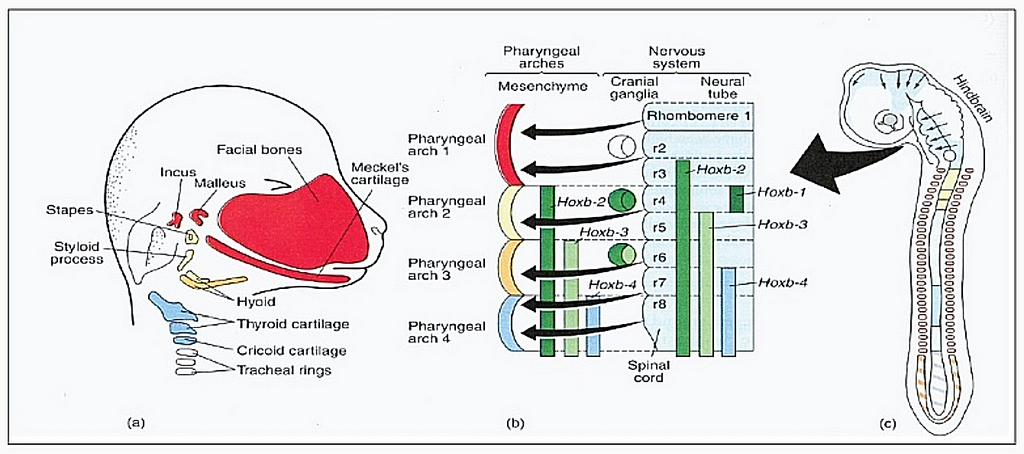
These cells are responsible for building most of the skull, the jaws, and the sophisticated sensory organs needed for hunting. They established the foundation for a predatory lifestyle by creating the tools to find, chase, and consume prey. This wasn't a gradual tweak; it was a developmental revolution that set vertebrates on a completely new path.
A Brain for a Hunter
An active lifestyle demands a more powerful command center. The simple dorsal nerve cord of protochordates expanded at the anterior end, forming a complex, tripartite brain consisting of a forebrain, midbrain, and hindbrain. Each part specialized in different tasks crucial for a predator.
The forebrain became associated with the sense of smell, which is vital for tracking prey. The midbrain processed visual information from newly developed eyes. The hindbrain, which includes the cerebellum, coordinated movement and balance. This division of labor allowed for much faster and more complex processing of the environment, turning the animal from a passive observer into a calculated hunter.
From Filtering to Pumping
Protochordates used their pharyngeal slits for filter-feeding, passively straining food particles from the water. This system is efficient for a sedentary animal but can't support an active predator's high energy demands. Vertebrates repurposed this structure into a powerful muscular pump.
The gills, which were simple openings, became supported by cartilaginous gill arches. Muscles developed around these arches, allowing the animal to actively pump large volumes of water across them. This had two major benefits: it was a far more effective way to extract oxygen to fuel an active body, and it was the first step toward developing jaws. By modifying the first couple of gill arches, early vertebrates eventually evolved the ability to grasp and bite prey, a definitive advantage over filter-feeding.
| Feature | Protochordate (e.g., Lancelet) | Early Vertebrate (e.g., Lamprey) |
|---|---|---|
| Feeding | Passive filter-feeding | Active predation (muscular pump) |
| Brain | Simple dorsal nerve cord | Tripartite brain (Fore-, Mid-, Hindbrain) |
| Skeleton | Notochord only | Notochord + Cranium and gill arches |
| Musculature | Simple V-shaped myomeres | Complex W-shaped myomeres |
| Sensory Organs | Rudimentary light sensors | Complex eyes, olfactory organs, inner ear |
This muscular evolution wasn't limited to the head. The simple V-shaped muscle segments, or myomeres, of protochordates were replaced by more complex, W-shaped myomeres in vertebrates. This new arrangement allowed for more powerful and controlled swimming, enabling the pursuit of prey and the evasion of larger predators. Every piece of the vertebrate body plan—the brain, the head, and the muscles—was being refined for a life in the fast lane.
What was the primary contribution of neural crest cells to the evolution of early vertebrates?
The evolution from a passive filter-feeder to an active predator required a more complex brain. Which part of the new tripartite brain was primarily associated with the sense of smell for tracking prey?