Company Culture for Behavioral Interviews
Understanding Company Culture
What Is Company Culture?
Think of a company’s culture as its personality. It’s the shared set of values, beliefs, and practices that shape how people behave and work together. It’s the office vibe, the unspoken rules, and the way things get done when the boss isn't looking.
Some cultures are formal and structured, while others are casual and flexible. Neither is inherently better, but the right culture can make the difference between a job you tolerate and a career you love.
Why does it matter? Because a strong, positive culture attracts and keeps great employees. It boosts morale, encourages teamwork, and can lead to better performance and innovation. On the flip side, a toxic or mismatched culture can lead to burnout, low productivity, and high turnover.
Your company’s core values, vision, and mission are the building blocks of your culture.
The Building Blocks of Culture
Company culture isn't just one single thing. It’s a combination of several key elements that work together to create a unique environment. Understanding these components helps you see a company for what it truly is.
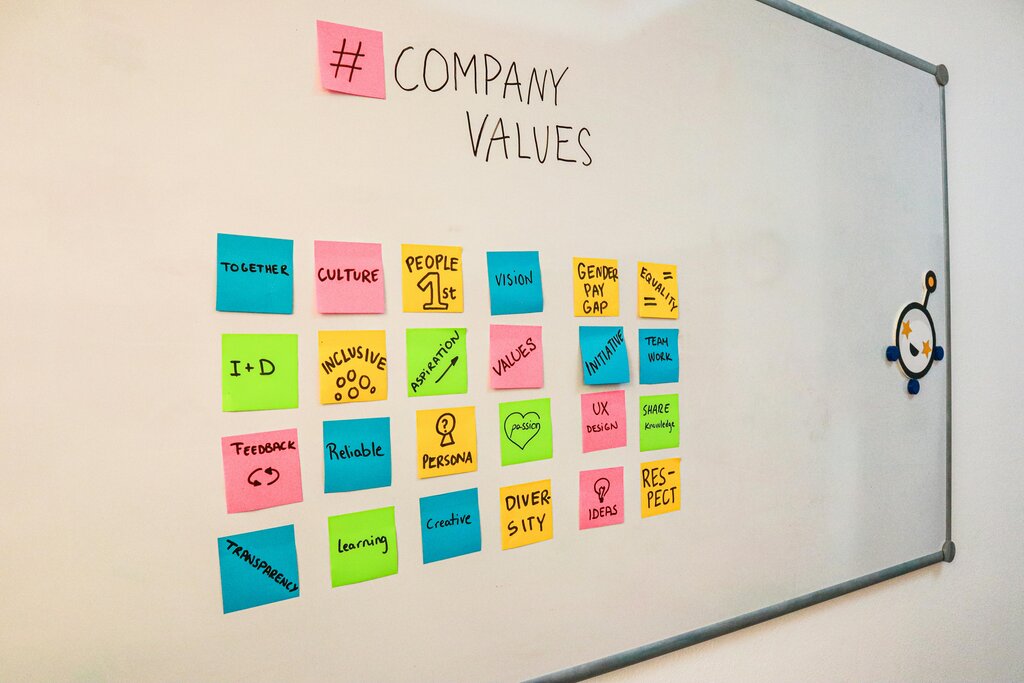
Let’s break down the main parts.
Mission and Values
A mission statement is the company’s “why.” It declares the organization's purpose and its primary objectives. For example, a tech company's mission might be “to organize the world’s information and make it universally accessible.” This statement guides the company’s strategic direction.
Core values are the guiding principles that dictate behavior and action. They are the company's moral compass. Words like “integrity,” “collaboration,” “innovation,” and “customer focus” are common examples. When a company truly lives by its values, they are reflected in everything from hiring decisions to product development.
ethos
noun
The characteristic spirit of a culture, community, or organization as shown in its beliefs and aspirations.
Work Environment
The work environment is the physical and social setting where employees work. This includes everything from the office layout to the company’s policies on remote work.
Is the office an open, collaborative space or a sea of quiet cubicles? Do people work flexible hours, or is everyone expected to be at their desk from 9 to 5? The environment heavily influences how people interact and feel about their work.
Communication Styles
How information flows within a company is another critical piece of its culture. Communication can be formal or informal, top-down or collaborative.
In some companies, important news is delivered through official memos and structured meetings. In others, information spreads quickly through chat channels and casual conversations. The preferred method of communication says a lot about hierarchy, transparency, and how much employee feedback is valued.
These components all weave together to form a company's distinct culture. Recognizing them is the first step to understanding how an organization operates on a human level.