Company Culture for Behavioral Interviews
Understanding Company Culture
What Is Company Culture?
Company culture is the shared set of values, beliefs, and practices that shape how people behave within an organization. Think of it as the personality of a company. It's not something you can find in an employee handbook, but you feel it the moment you walk through the door. It's in the way people talk to each other, the decisions they make, and the stories they tell about the company's past.
culture
noun
The customs, arts, social institutions, and achievements of a particular nation, people, or group.
A company's culture dictates the environment employees work in. Is it a fast-paced, high-pressure sales floor, or a quiet, collaborative workshop? Is failure seen as a learning opportunity or something to be avoided at all costs? The answers to these questions are rooted in the organization's culture.
The Core Components
While every company's culture is unique, they are all built from the same fundamental components: values, norms, and practices. Understanding these building blocks helps you see a culture more clearly.
Values are the guiding principles of an organization. They are the deeply held beliefs about what is good, right, and important. For example, a company might value transparency, which means they prioritize open communication. Another might value customer obsession, putting the customer at the center of every decision.
Your company’s core values, vision, and mission are the building blocks of your culture.
Norms are the unwritten rules of social behavior. They're the shared expectations that guide how people interact. Do people arrive at meetings exactly on time, or is it normal to be a few minutes late? Is it common to challenge a manager's idea in a group setting, or are disagreements handled privately? These are all cultural norms.
Practices are the concrete processes and policies that a company uses to get work done. This includes everything from the hiring process and performance reviews to how projects are managed and how the company celebrates success. If a company values learning, its practices might include a generous budget for professional development and regular knowledge-sharing sessions.
How Culture Shapes a Company
Culture isn't just a feel-good concept; it has a direct and powerful impact on both employees and the organization's bottom line. It influences everything from employee engagement to innovation.
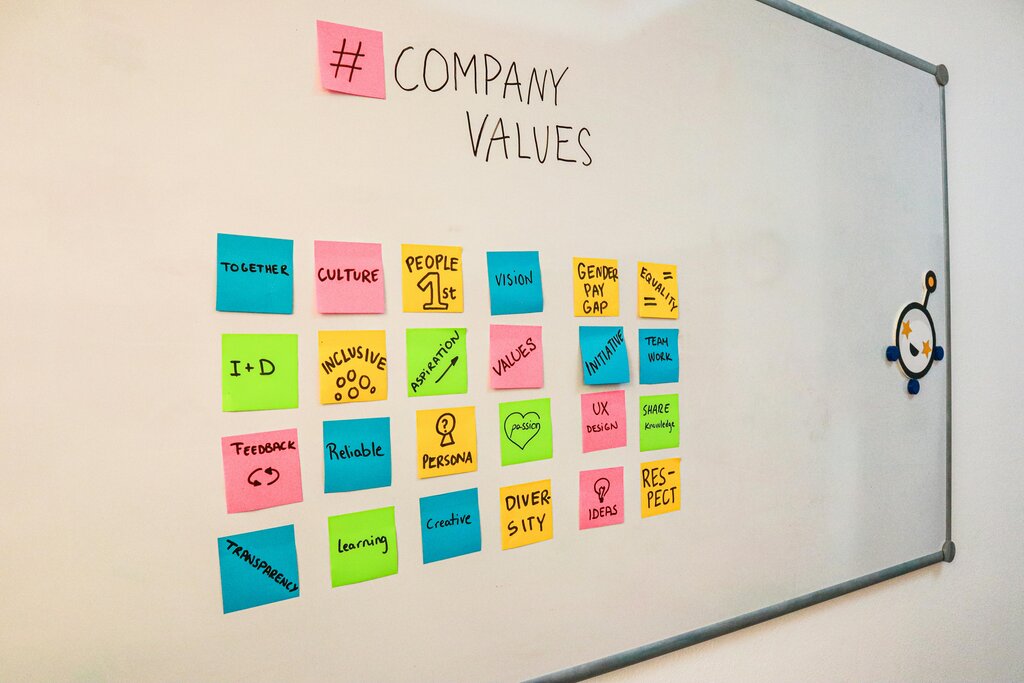
A strong, positive culture acts like a magnet, attracting and retaining talented people who align with the company's values. When employees feel they belong and are valued, they are more motivated, engaged, and productive. They go the extra mile not because they have to, but because they are committed to the organization's mission.
Conversely, a toxic or misaligned culture can be destructive. It can lead to high turnover, low morale, and poor performance. If a company claims to value teamwork but only rewards individual achievement, employees will receive mixed signals and likely become disengaged.
Ultimately, a healthy culture is a strategic advantage. It fosters an environment where innovation can flourish, employees can do their best work, and the business can thrive. It turns a group of individuals into a cohesive team working toward a common goal.
Ready to check your understanding?
Which of the following best describes company culture?
At a software company, it's common for engineers to openly challenge a manager's technical suggestion in a group meeting. This accepted way of interacting is an example of a company ______.
Understanding a company's culture is the first step toward finding a workplace where you can truly fit in and succeed.