Company Culture and Behavioral Interviews
Understanding Company Culture
What is Company Culture?
Think of company culture as the personality of an organization. Just like a person has a unique way of thinking, acting, and expressing themselves, a company has its own distinct vibe. It’s the shared set of values, beliefs, and practices that shape how people work and interact with each other.
Culture isn't just about free snacks or a ping-pong table in the break room. It’s the invisible force that guides everything from how decisions are made to how conflicts are resolved. It's the answer to questions like: Do people collaborate closely on projects, or do they mostly work alone? Is it a formal environment with a strict dress code, or is it casual and relaxed? Is failure treated as a learning opportunity or something to be avoided at all costs?
Company Culture
noun
The collective values, beliefs, attitudes, and behaviors that characterize an organization and guide its practices.
The Building Blocks of Culture
Company culture is made up of several key components that work together. Understanding them helps you see the bigger picture.
Values and Mission: These are the principles a company officially states are important. You’ll often find them on the “About Us” page of a company’s website. They declare what the organization stands for, whether it's “customer obsession,” “sustainability,” or “radical transparency.” These are the guiding stars for the company's decisions and actions.
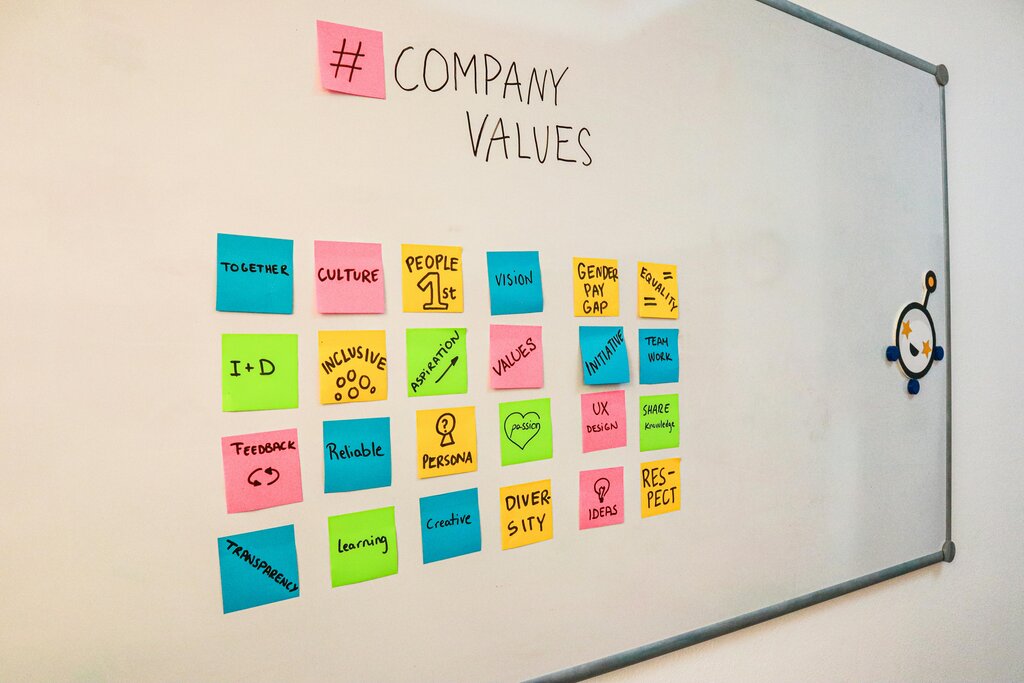
Beliefs and Assumptions: These are the unwritten rules. While a company might state its value is “work-life balance,” the underlying belief might be that you need to be online late at night to be seen as a hard worker. These shared assumptions are often more powerful than the official values because they reflect what is truly valued in practice.
Behaviors and Norms: This is where culture becomes visible. It’s how people actually behave day-to-day. It includes communication styles (email vs. Slack vs. in-person), meeting etiquette (are meetings punctual and focused?), and how feedback is given (is it direct and candid, or indirect and gentle?). It’s the way the mission and beliefs are translated into everyday actions.
A company can state its values, but its culture is defined by the behaviors it rewards and tolerates.
Why Culture Matters
A company’s culture has a huge impact on both its employees and its overall success. For you as a potential employee, it can be the difference between a job you love and a job you dread.
When your personal values and work style align with the company's culture, you're more likely to feel satisfied, motivated, and engaged. You feel like you belong. A cultural mismatch, on the other hand, can be a constant source of stress and frustration, even if you enjoy the actual work you're doing.
For the organization, a healthy culture is a powerful asset. It helps attract and retain top talent, as people want to work in environments where they feel supported and valued. It also drives performance. A culture of collaboration and innovation, for example, can lead to better products and smarter solutions.
A strong, positive company culture fosters collaboration, innovation, and employee satisfaction, while a toxic culture can lead to disengagement and high turnover.
Before we test your knowledge, let's review the key ideas from this section.
Now, let's see what you've learned about company culture.
Which of the following best describes company culture?
A company's website states that one of its core values is "sustainability." However, in practice, the company rarely implements recycling programs and generates a lot of waste. This conflict represents a disconnect between its stated values and its...
Understanding a company's culture is the first step toward finding a workplace where you can truly thrive.