Communicating With Young Children
Understanding Child Development
How Children Think
A child's mind isn't just a smaller version of an adult's. Children think in fundamentally different ways, and their understanding of the world evolves in predictable stages. Understanding this journey is the first step to communicating effectively with them.
From birth to about two years old, babies are in what developmental psychologist Jean Piaget called the sensorimotor stage. They learn about the world entirely through their senses and actions, like tasting, grabbing, and listening. A major breakthrough during this time is understanding object permanence—the idea that things still exist even when they can't be seen. When a baby delights in a game of peek-a-boo, they're actually mastering this complex concept.
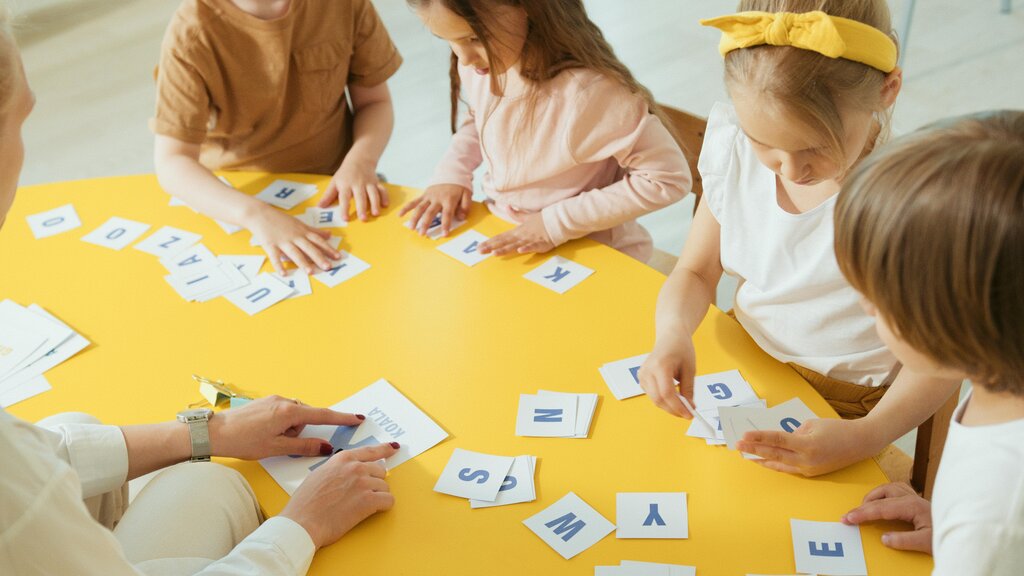
From ages two to seven, children enter the preoperational stage. Their thinking becomes more symbolic. A cardboard box is no longer just a box; it can be a race car, a castle, or a secret fort. This is the magic of pretend play, and it’s crucial for their development.
However, their logic isn't fully formed yet. A child in this stage might think a tall, narrow glass holds more water than a short, wide one, even if they see the same amount of water poured into both. They also tend to be egocentric, meaning they struggle to see things from another person's perspective. It's not selfishness—their brains are simply wired to see the world with themselves at the center.
The World of Feelings
Just as a child's thinking evolves, so does their emotional landscape. Babies start with basic emotions: joy, anger, sadness, and fear. As they grow into toddlers, their feelings become more complex. They start to experience secondary emotions like pride, embarrassment, and empathy.
A toddler having a tantrum in a grocery store isn't trying to be difficult. They are overwhelmed by an emotion they don't yet have the tools to manage. A key milestone in early childhood is the beginning of emotional regulation, the ability to understand and control emotional responses. This is a skill that develops slowly, with a lot of help from patient adults.
One of the most powerful things you can do is help a child name their feelings. Saying, "You seem really frustrated that the blocks keep falling down," validates their emotion and gives them the vocabulary to express it in the future.
Learning to Connect
Social development is about learning to interact with others, and it follows a clear path. A child's social world begins with their primary caregivers and gradually expands to include others. Their style of play is a great window into their social stage.
An infant or young toddler often engages in solitary play. They are absorbed in their own activity and don't seem to notice other children. Later, you'll see parallel play, where two toddlers might play side-by-side with similar toys, but without actually interacting. They are aware of each other, but not yet playing together.
Around age three or four, associative play begins. Children start to interact, perhaps by sharing toys or commenting on each other's activities, but they aren't yet working toward a common goal. This stage sets the foundation for the more complex, cooperative play that will come later.
| Stage of Play | Typical Age | Description |
|---|---|---|
| Solitary Play | 0-2 years | Child plays alone, focused on their own activity. |
| Parallel Play | 2-3 years | Children play alongside each other but not together. |
| Associative Play | 3-4 years | Children start to interact and share, but without a shared goal. |
By understanding these cognitive, emotional, and social patterns, you can meet children where they are. You can see the world through their eyes, appreciate the logic in their thinking, and support them as they learn to navigate their feelings and friendships.
According to Piaget's stages of cognitive development, the ability to understand that an object still exists even when it cannot be seen is known as:
Two toddlers are in a room. One is playing with a stack of blocks and the other is playing with a toy car. They are near each other but do not interact or share toys. What type of play does this scenario describe?