Commercial Techniques in ERP
ERP Fundamentals
What Is an ERP System?
Imagine trying to run a business with a dozen different software tools that don't talk to each other. Your sales team uses one system, your accounting team another, and your warehouse staff a third. Information gets stuck in silos, tasks are duplicated, and getting a clear picture of the company's health is nearly impossible.
Enter Enterprise Resource Planning (ERP). An ERP system is a single, integrated software platform that manages a company's entire business. It acts like the central nervous system, connecting all the different departments and functions—from finance and human resources to manufacturing and sales—into one cohesive unit. Instead of separate databases, everyone works from a single source of truth.
Enterprise Resource Planning ERP systems integrate information across an entire organization that automate core activities such as finance accounting, human resources, manufacturing, production and supply chain management etc. to facilitate an integrated centralized system and rapid decision making resulting in cost reduction, greater planning, and increased control.
The goal is to streamline processes and information across the entire organization. When one department updates a piece of information, it’s immediately available to every other department that needs it. This breaks down communication barriers and makes the whole business run more smoothly.
The Building Blocks of ERP
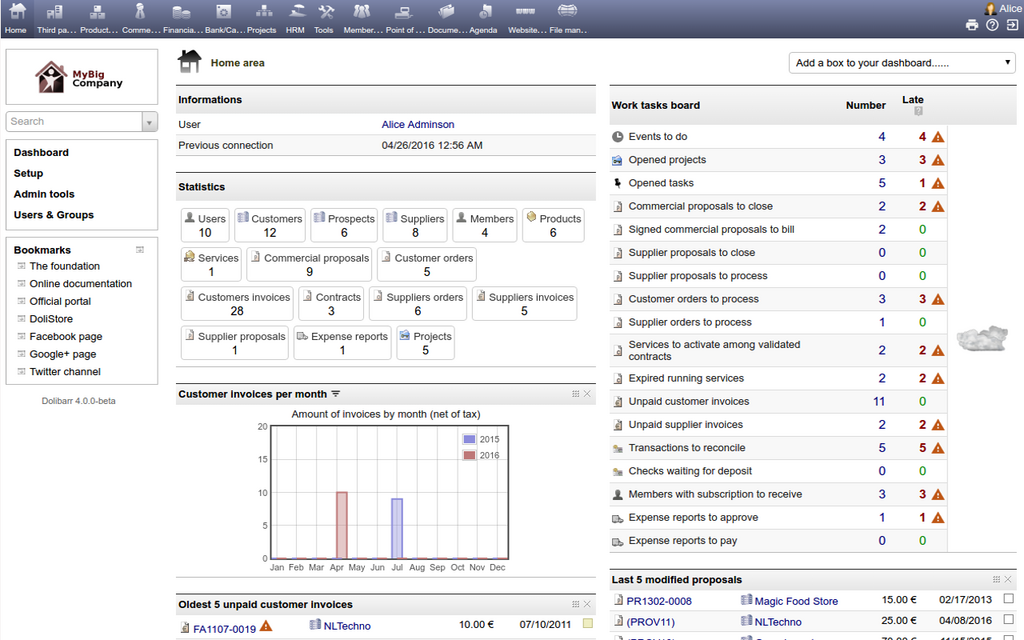
ERP systems are typically modular, meaning they're made up of different components, or modules, that handle specific business functions. A company can choose the modules it needs and add more as it grows. While the specific modules can vary, most ERP systems include a few core components:
- Finance & Accounting: This is often the heart of the system. It manages the general ledger, accounts payable and receivable, budgeting, and financial reporting.
- Human Resources (HR): This module handles everything related to employees, including payroll, benefits administration, recruiting, and performance management.
- Manufacturing/Production: For companies that make physical goods, this module manages the entire production process, from planning and scheduling to quality control.
- Supply Chain Management (SCM): This component tracks the flow of goods from suppliers to customers. It includes inventory management, order processing, purchasing, and warehouse logistics.
- Customer Relationship Management (CRM): While sometimes a separate system, many ERPs include a CRM module to manage interactions with customers, from sales leads to post-sale support.
Why Bother with ERP?
Implementing an ERP system is a major undertaking, but the benefits can be transformative. By centralizing data and automating processes, organizations gain a significant competitive edge.
One of the biggest advantages is improved efficiency. With automated workflows, employees spend less time on manual data entry and repetitive tasks, freeing them up to focus on more strategic work. A unified system also provides a complete, real-time view of business operations, which leads to better, faster decision-making.
| Benefit | Impact on the Business |
|---|---|
| Single Source of Truth | Reduces errors and ensures everyone works with the same, up-to-date information. |
| Increased Efficiency | Automates repetitive tasks and streamlines business processes, saving time and money. |
| Better Decision-Making | Provides real-time data and comprehensive reports for strategic planning. |
| Enhanced Collaboration | Breaks down information silos between departments, fostering teamwork. |
| Improved Scalability | A modular structure allows the system to grow and adapt with the business. |
Bringing It All Together
The true power of an ERP system lies in its ability to integrate all these different functions. Let’s walk through a simple example: a customer places an order.
Without an ERP, the sales team might take the order in their system. They then have to manually email the warehouse to check inventory and the finance department to run a credit check. If the item is out of stock, another message goes to the production team. It's a slow, error-prone process.
With an ERP, the process is seamless. The salesperson enters the order into the system. The ERP automatically checks inventory levels, updates the accounting module to reflect the sale, and notifies the warehouse to ship the product. If inventory is low, it can even trigger a purchase order to a supplier or a work order for the manufacturing floor. Every step is connected and tracked within a single platform.
This integration is what makes ERP systems so valuable. They provide a holistic view of the business, allowing managers to see how decisions in one area affect others, ultimately leading to a more efficient and responsive organization.