Commercial Laser Applications
Laser Fundamentals
What Makes Laser Light Special?
The light from a lamp fills a room, spreading out in a jumble of different colors and wavelengths. It's disorganized, like a crowd of people all walking in different directions. Laser light is the opposite. It’s highly organized, like a column of soldiers marching perfectly in step.
This organization comes from three key properties.
Monochromatic: Laser light is one specific color, or wavelength. A red laser pointer, for example, emits only red light.
Coherent: The light waves are all in phase, meaning their crests and troughs line up perfectly. This is what makes the light so powerful and focused.
Collimated: The light travels in a tight, parallel beam that spreads out very little over long distances.
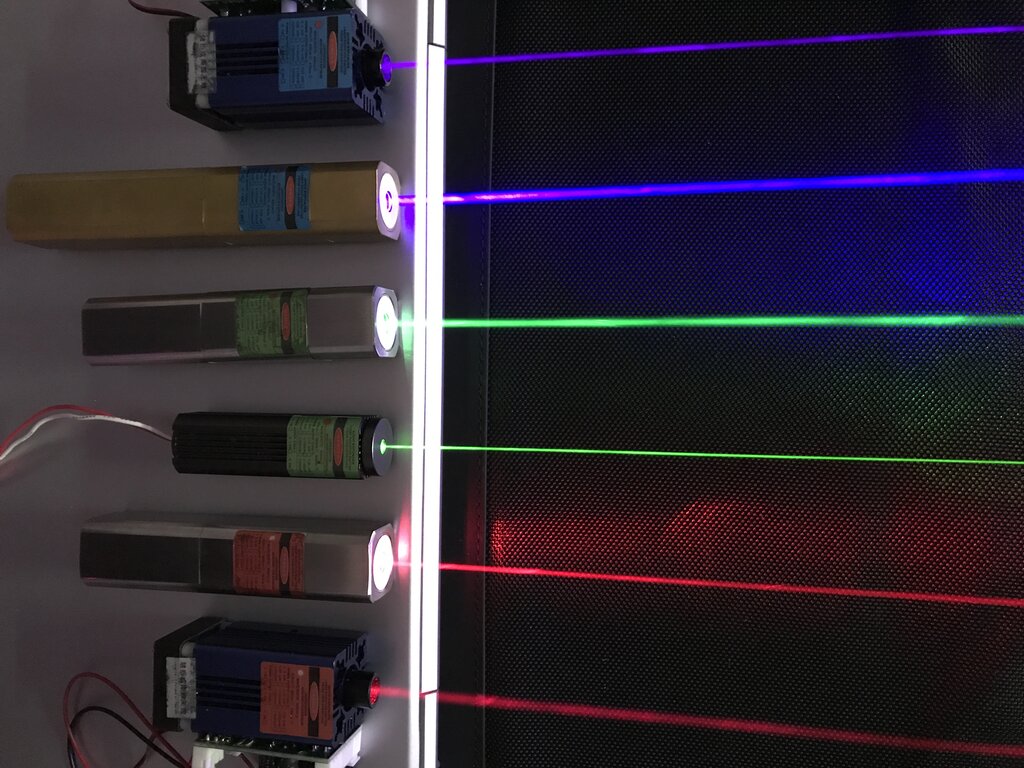
These properties all stem from how lasers generate light, a process fundamentally different from how a light bulb works. It all starts with atoms and energy.
How a Laser Works
At the heart of every laser is a process called stimulated emission. To understand it, let's break down the three essential parts of any laser.
| Component | Role |
|---|---|
| Gain Medium | A material (solid, liquid, or gas) with atoms that can be energized. |
| Pumping Source | An external energy source, like a flash lamp or electricity, that "pumps" energy into the gain medium. |
| Optical Resonator | Two mirrors placed at either end of the gain medium. One is fully reflective, and the other is partially reflective. |
Here’s how they work together:
- Pumping: The pumping source shoots energy into the gain medium, exciting its atoms. This means the electrons in the atoms jump to a higher, unstable energy level.
- Spontaneous Emission: An excited atom will naturally fall back to its stable state, releasing its extra energy as a particle of light, called a photon. This happens randomly, with photons flying off in all directions. This is normal light.
- Stimulated Emission: Here's the magic. If one of these spontaneously emitted photons happens to hit another atom that is still excited, it stimulates that atom to release its own photon. The new photon is an exact clone of the first one: same color, same phase, and same direction.
- Amplification: This process creates a chain reaction. The two identical photons go on to stimulate two more excited atoms, creating four identical photons, and so on. The light is amplified.
- Resonance: The two mirrors at each end bounce this synchronized light back and forth through the gain medium. This builds up the intensity of the light dramatically. The partially reflective mirror allows a fraction of the highly organized, powerful light to escape as a laser beam.
Types of Lasers
Lasers are usually named after the material used for their gain medium. The choice of medium determines the laser's wavelength (color) and power, making different types suitable for different tasks.
gain medium
noun
The source of atoms which are used to create the laser light. It can be a solid, liquid, gas, or semiconductor.
Here are a few common categories:
Gas lasers use a gas or a mixture of gases, like helium-neon or carbon dioxide, as the gain medium. They are often used in scientific research and industrial cutting.
Solid-state lasers use a solid, crystalline material, such as a ruby or a garnet crystal doped with specific atoms. These are powerful and widely used in manufacturing and medicine.
Semiconductor lasers (also called diode lasers) are tiny, electronic devices. They are the most common type of laser, found in everything from barcode scanners and laser pointers to fiber optic communications.
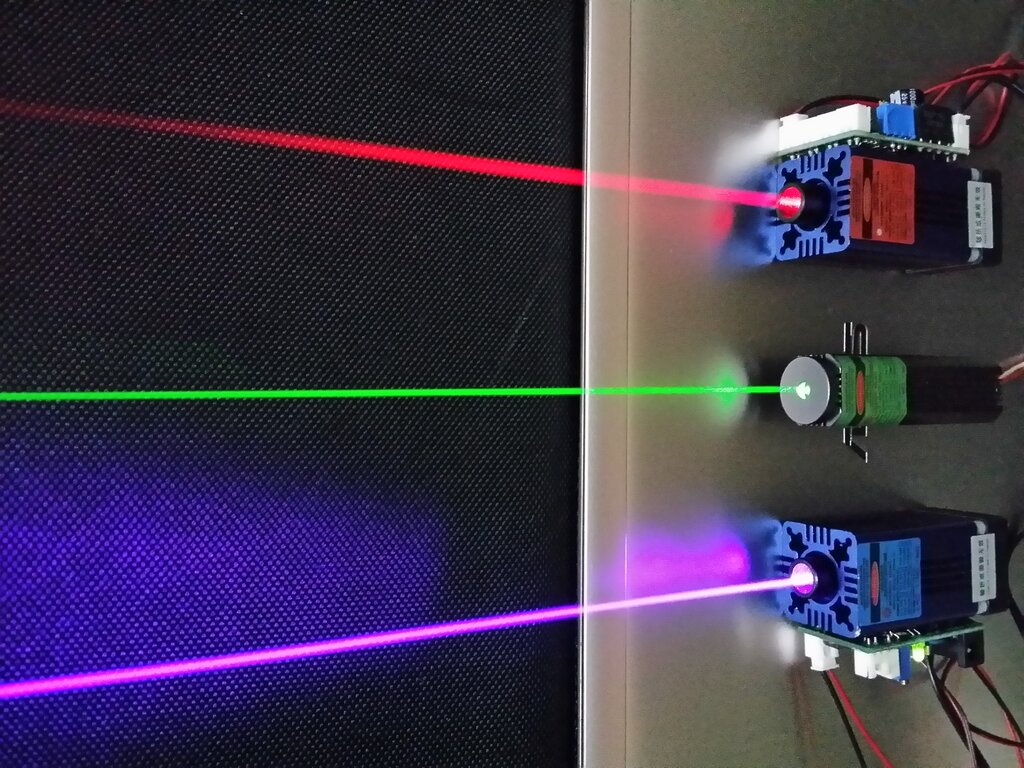
Each type operates on the same principles of pumping, stimulated emission, and amplification, but the specific material of the gain medium gives each laser its unique characteristics.
Ready to check your understanding? Let's see what you've learned.
What is the key process responsible for creating the organized, coherent light characteristic of a laser?
In the structure of a laser, what is the primary role of the gain medium?
Understanding these fundamentals is the first step. By controlling the simple process of stimulating atoms to release light, we can create the powerful and precise beams that have become essential tools in science and industry.