Commercial Aircraft Models and Specifications
Narrow-body Evolutions
The Workhorses of the Sky
Walk through any major airport, and you'll almost certainly see two types of aircraft more than any other: the Boeing 737 and the Airbus A320. These narrow-body jets are the backbone of short to medium-haul travel, flying millions of passengers daily. But the 737 you fly on today is vastly different from the one that first flew in the 1960s. The same is true for the A320. These aircraft families have undergone constant evolution, driven by a relentless pursuit of efficiency, range, and performance.
The Boeing 737 Story
The Boeing 737's journey began with its early models, but the family hit its stride with the "Classic" series (-300, -400, -500) in the 1980s. These were powered by the reliable CFM56-3 engine. As airlines demanded more efficiency, Boeing responded with the 737 Next Generation (NG) in the 1990s. The NG featured a redesigned wing, a modern cockpit, and more efficient CFM56-7 engines. Many NGs also sported blended winglets, curved extensions on the wingtips that reduce drag and save fuel.
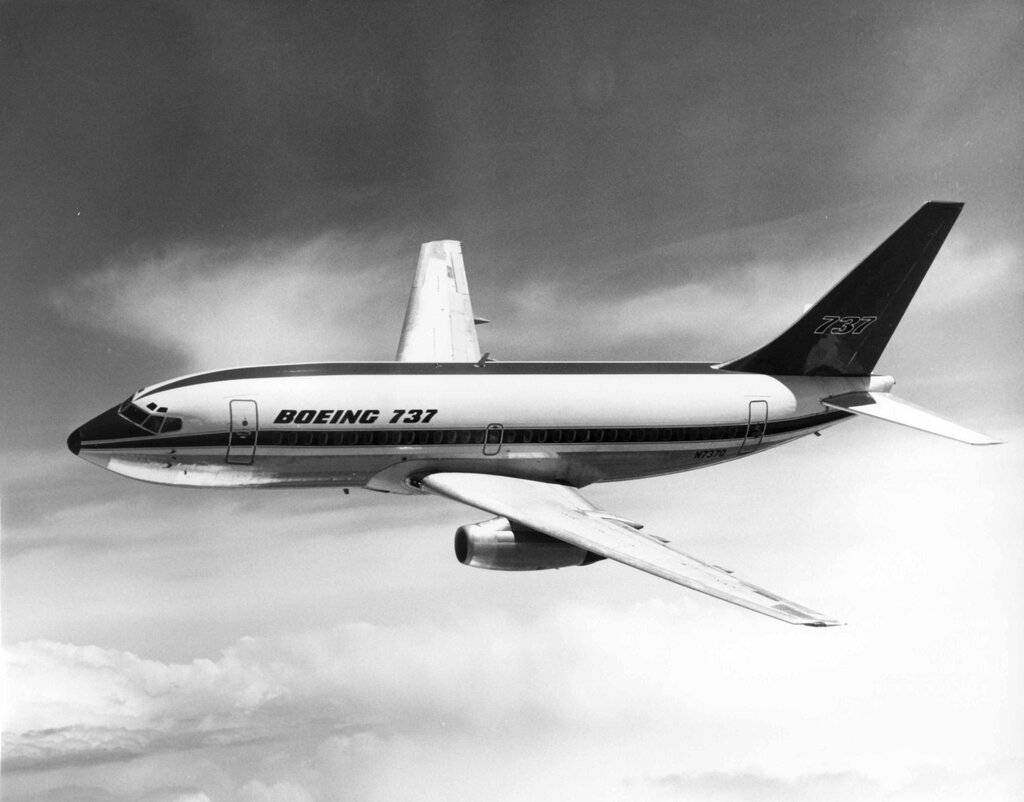
The biggest leap came with the 737 MAX. To compete with Airbus's newer, more efficient planes, Boeing needed a significant upgrade in fuel economy. The solution was the much larger, more powerful CFM LEAP-1B engine. However, the 737's low-to-the-ground design posed a problem. To fit these massive new engines, engineers had to mount them higher and further forward on the wing. This new placement altered the plane's aerodynamics, creating a tendency for the nose to pitch up in certain high-speed maneuvers. To counteract this, Boeing introduced a software system called the Maneuvering Characteristics Augmentation System (MCAS).
The Airbus A320 Response
While Boeing was evolving the 737, Airbus entered the market in the late 1980s with the A320. It was revolutionary, introducing a digital fly-by-wire control system. The initial family is now known as the A320ceo, for "Current Engine Option."
In 2010, Airbus announced a major upgrade: the A320neo, for "New Engine Option." Instead of one engine choice, airlines could now pick between two next-generation powerplants: the CFM LEAP-1A or the Pratt & Whitney PW1100G. This latter engine is a (GTF), a novel design that allows the main fan to spin at a different, slower speed than the internal turbine, dramatically improving efficiency.
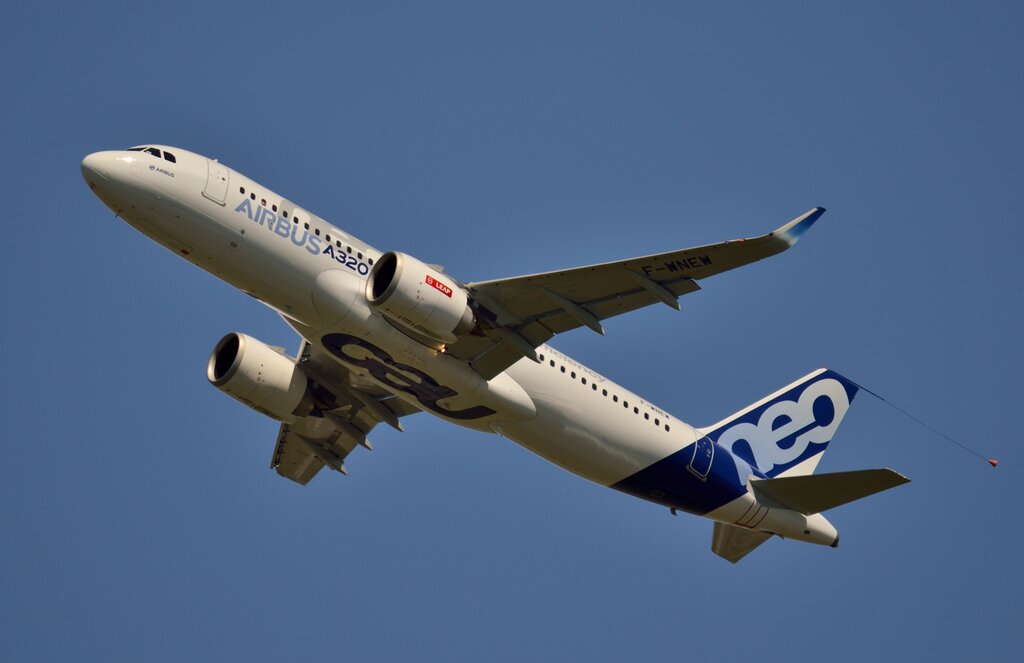
These new engines are significantly larger in diameter than those on the A320ceo. The increased size allows for a higher bypass ratio, meaning more air flows around the engine core than through it. This is a key driver of modern engine efficiency and is what makes the A320neo about 15-20% more fuel-efficient than its predecessor.
Wingtips and Efficiency
One of the most visible signs of this evolution is at the tips of the wings. High pressure air from below the wing tries to spill over to the low-pressure area on top, creating swirling vortices. These vortices cause drag, wasting fuel. Both manufacturers developed unique solutions to mitigate this.
Boeing first introduced blended winglets on the 737 NG. For the MAX, they developed the more complex Advanced Technology (AT) Winglet, which features a split design with a large upward-swept piece and a smaller downward-swept piece. Airbus introduced its version, called Sharklets, on the A320neo. While they look different, they all serve the same purpose: to make the wing behave as if it were longer, reducing drag without physically extending the wingspan, which would make it unable to fit at some airport gates.
These iterative improvements in engines and aerodynamics have had a profound effect. They've drastically lowered fuel burn and noise, making flying more sustainable and less disruptive. More importantly, they have extended the range of these narrow-body aircraft, allowing them to fly routes that were once exclusively the domain of larger, more expensive wide-body jets. This shift has opened up new point-to-point travel possibilities, connecting smaller cities directly and changing the landscape of international air travel.
What was the primary reason Boeing introduced the Maneuvering Characteristics Augmentation System (MCAS) on the 737 MAX?
The Airbus A320neo offers airlines a choice between two different 'New Engine Options'. What are they?
These two aircraft families represent a story of constant competition and parallel evolution, a process that continues to shape the way we fly.