College Degree vs Bootcamp ROI
Understanding ROI
What is Return on Investment?
Return on Investment, or ROI, is a simple way to measure an investment's profitability. Think of it as a financial report card. It answers the fundamental question: For every dollar I put in, how many dollars did I get back?
At its core, ROI compares the gain from an investment to its cost. It's a powerful tool for evaluating the performance of a past investment or for comparing the potential of several different options. Whether you're buying stocks, starting a business, or even just purchasing a new piece of equipment, ROI helps you understand if your money is working hard for you.

Calculating ROI
The formula for ROI is straightforward. You take the final value of the investment, subtract the initial cost to get the net profit, and then divide that net profit by the initial cost. Multiplying by 100 turns this figure into an easy-to-understand percentage.
Let's use a simple example. Say you buy a vintage bicycle for $200. You spend another $50 on new parts to fix it up, making your total investment cost $250.
A few months later, you sell the refurbished bike for $400. To find your ROI, you first calculate the net profit: $400 (current value) - $250 (cost) = $150.
Now, plug that into the formula:
Your return on investment is 60%. For every dollar you invested in the bicycle project, you earned back your dollar plus an extra 60 cents.
A positive ROI means the investment was profitable. A negative ROI means you lost money.
More Than Just a Number
While ROI is useful, it doesn't tell the whole story. One of its biggest limitations is that it doesn't consider time. An ROI of 20% sounds great, but it matters whether it took one year or ten years to achieve it.
Imagine two investments. Investment A earns a 15% ROI in six months. Investment B earns a 20% ROI, but it takes four years. Investment B has a higher ROI, but Investment A delivered its return much faster, freeing up your capital for other opportunities.
ROI also doesn't account for risk. Generally, investments with the potential for higher returns also come with a greater risk of losing money. A speculative stock might promise a 100% ROI, but you could also lose your entire investment. A government bond might only offer a 3% ROI, but it's considered much safer.
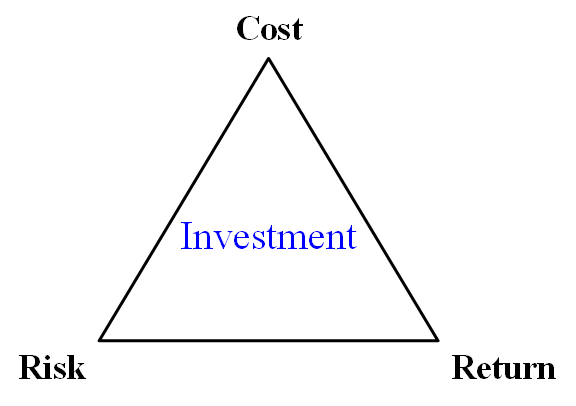
Because of these limitations, it's important to use ROI as one tool among many. Always consider the time frame, the level of risk involved, and what other opportunities you might be giving up. ROI provides a quick snapshot of profitability, but a thoughtful decision requires looking at the bigger picture.
What is the primary purpose of calculating Return on Investment (ROI)?
You buy a piece of art for 200 to have it framed, and then you sell it a year later for $1,500. What is your ROI?
Using ROI helps bring clarity to financial decisions by boiling them down to a simple, comparable percentage.