College Degree vs Bootcamp ROI
Understanding ROI
What Is Return on Investment?
Return on Investment, or ROI, is a simple way to measure an investment's performance. It tells you how much money you made (or lost) compared to how much you put in. Think of it as a grade for your investment—it shows how efficiently your money worked for you.
Essentially, ROI answers the question: For every dollar I invested, how much did I get back?
The calculation is straightforward. You take the net profit from an investment and divide it by the original cost. Multiplying by 100 turns it into a percentage, which is easy to compare.
Where Net Profit is simply the final value of the investment minus its initial cost.
Let's say you buy a vintage bicycle for $200. You spend another $50 fixing it up, making your total investment cost $250. A few months later, you sell it for $400. Your net profit is $150 ($400 - $250).
Let's calculate the ROI:
Your investment in the bicycle earned a 60% return.
More Than Just the Final Number
ROI is powerful because it forces you to consider both costs and returns. It's easy to be impressed by a large profit, but ROI puts that profit into perspective. Earning $10,000 is great, but it's more impressive if it came from a $5,000 investment (100% ROI) than a $500,000 one (2% ROI).
The time it takes to get that return is also crucial. A 20% ROI over one year is fantastic. The same 20% ROI over ten years is far less compelling, as your money was tied up for a long time. When comparing investments, always ask, "Over what period was this return generated?" A shorter timeframe for the same ROI indicates a more profitable use of your money.
The Limits of ROI
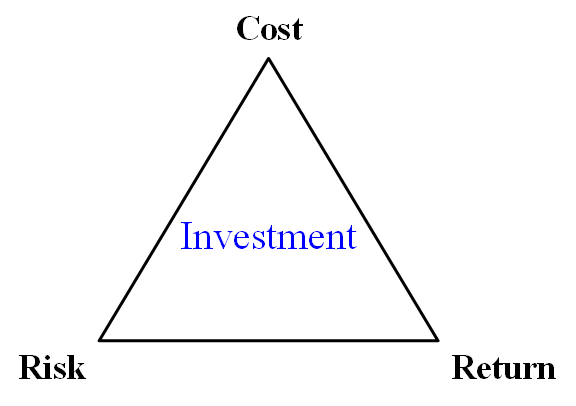
While useful, ROI isn't a perfect metric. It's a single data point that doesn't tell the whole story. One of its biggest limitations is that it doesn't account for risk. A speculative investment might promise a 300% ROI, but it could also have a high chance of losing everything. A safer investment might only offer a 5% ROI, but with much lower risk.
ROI can also be misleading if all costs aren't included. When calculating the cost of an investment, you must account for everything: purchase price, fees, taxes, maintenance, and your own time.
Forgetting to include all costs will artificially inflate your ROI, giving you a false sense of success.
Finally, ROI can't measure benefits that don't have a clear dollar value. How do you quantify the ROI of learning a new skill, improving your health, or building a strong reputation? These are valuable outcomes, but they don't fit neatly into a financial formula.
While ROI is a critical consideration, it shouldn’t be the only factor guiding your choice.
This is where qualitative factors come in. When making an investment decision, whether in business or your personal life, you should also consider things like strategic alignment, market trends, personal satisfaction, and potential risks. These elements provide the context that numbers alone cannot. A good decision balances quantitative metrics like ROI with these qualitative insights.
Ready to test your knowledge?
You buy a stock for 180. What is your Return on Investment (ROI)?
Which of the following scenarios represents the most efficient use of capital, based solely on ROI and time frame?
By understanding both the power and the limitations of ROI, you can make smarter, more informed investment decisions.