College Degree vs Bootcamp ROI
Understanding ROI
What is Return on Investment?
Return on Investment, or ROI, is a straightforward way to measure how successful an investment was. Think of it as a scorecard for your money. It tells you how much profit you made compared to how much you spent. Whether you're buying stocks, starting a business, or paying for an education, ROI helps you understand if it was a good financial decision.
In simple terms, ROI answers the question: For every dollar I put in, how many dollars did I get back as profit?
By calculating ROI, you can compare different opportunities. For example, you could compare the potential ROI of a four-year degree with that of a professional certification to see which might offer a better financial outcome. It's a powerful tool for making informed choices.
The ROI Formula
Calculating ROI is simple. The goal is to compare your net profit to your original cost. The result is expressed as a percentage.
To find the net profit, you just subtract the initial cost from the final value of the investment. So, the formula can also be written like this:
Let's use a simple example. Say you buy a classic bicycle for $200. You spend another $50 on new tires and paint. Your total investment cost is $250. After fixing it up, you sell it for $400.
Your net profit is $400 (Final Value) - $250 (Cost) = $150.
Now, plug that into the ROI formula:
Your return on investment is 60%. This means you earned back your initial $250, plus an additional 60% of that amount as profit.
Interpreting the Numbers
The ROI percentage gives you a quick snapshot of an investment's performance.
-
Positive ROI (> 0%): The investment was profitable. A 60% ROI is good, but a 200% ROI is even better. The higher the number, the more you earned relative to your cost.
-
Zero ROI (= 0%): You broke even. You got back exactly what you put in, but you didn't make any profit.
-
Negative ROI (< 0%): The investment lost money. A -25% ROI means you lost a quarter of your initial investment.
What Influences ROI?
ROI isn't just about the final sale price. Several factors can change the calculation, making it a more nuanced metric.
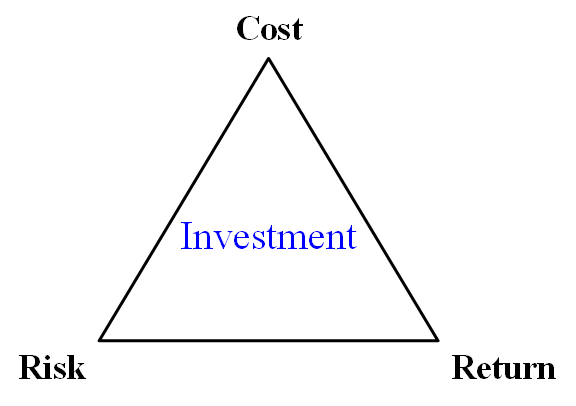
The two main levers of ROI are the total costs you incur and the total returns you gain. A change in either will affect the outcome.
One of the most important factors is time. An ROI of 50% sounds great, but it matters if it took one year or ten years to achieve. A 50% return in one year is much better than a 50% return over a decade. For this reason, ROI is often discussed with a specific time frame in mind, such as the first year's ROI or the five-year ROI.
Another key factor is getting a complete picture of costs. For an educational program, the cost isn't just tuition. It might also include books, fees, and the income you miss out on by not working while you study (this is known as opportunity cost).
Similarly, returns can be more than just a higher salary. A new degree might lead to better benefits, signing bonuses, or career opportunities that are hard to quantify but still add value. Accurately estimating all costs and benefits is key to a meaningful ROI calculation.
Now that you understand the basics of ROI, you're ready to start using it to evaluate different opportunities.
What is the primary purpose of calculating Return on Investment (ROI)?
You purchase a piece of art for 800. What is your ROI?