College Degree vs Bootcamp ROI
Understanding ROI
What is Return on Investment?
Return on Investment, or ROI, is a simple way to measure how well an investment performs. Think of it like planting a seed. You invest a seed (the cost) and some time and water (more costs), and in return, you get a tree that produces fruit (the gain). ROI tells you exactly how much fruit you got back compared to the effort you put in.
It's a powerful tool because it boils down complex outcomes to a single percentage, making it easy to compare different opportunities. Whether you're considering a new skill, a stock purchase, or a business project, ROI helps answer a fundamental question: Was it worth it?
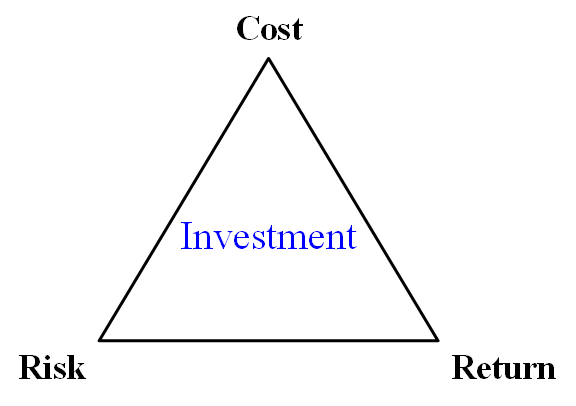
Investment
noun
The action or process of investing money or time for profit or material result.
At its core, ROI compares the net profit you make to the original cost of the investment. A positive ROI means you've made a profit, while a negative ROI means you've lost money.
Calculating ROI
The formula for ROI is straightforward. It’s the gain from an investment, minus the cost of the investment, divided by the cost of the investment. The result is then multiplied by 100 to express it as a percentage.
Net Profit is simply your total earnings minus the original cost. Let's walk through a quick example. Imagine you buy a vintage bicycle for $200. You spend another $50 on new parts to fix it up. Your total investment cost is $250.
After cleaning and repairing it, you sell the bicycle to a collector for $400. Let's calculate the ROI.
First, find the net profit: 💲400 (Final Value) - 💲250 (Total Cost) = 💲150 (Net Profit).
Now, plug the numbers into the ROI formula:
Your return on investment is 60%. This means you earned back your initial $250, plus an additional 60% on top of it.
Interpreting the Numbers
A positive ROI is good, but how good? A 10% ROI might be fantastic for a safe, long-term investment, but disappointing for a risky, short-term venture. Context is key. A negative ROI, on the other hand, is almost always a sign that the investment didn't pan out as hoped.
| ROI Percentage | Meaning |
|---|---|
| Positive (> 0%) | The investment was profitable. You earned more than you spent. |
| Zero (0%) | You broke even. Your gains exactly matched your costs. |
| Negative (< 0%) | The investment resulted in a loss. You spent more than you earned. |
ROI is most powerful when used to compare different options. If Investment A has an ROI of 15% and Investment B has an ROI of 25%, you can quickly see that Investment B was more profitable relative to its cost.
The Limits of ROI
While useful, ROI isn't a perfect metric. It has a few important limitations.
First, ROI doesn't consider time. A 20% ROI achieved in one year is far more impressive than a 20% ROI that took ten years to realize. The simple formula doesn't capture this difference, so it's always important to consider the time frame of an investment.
Second, it can be hard to account for all costs and benefits. An educational course costs money, but what's the value of the network you build or the confidence you gain? These intangible benefits are real, but they don't fit neatly into the ROI equation.
ROI is a great starting point for evaluating an investment, but it doesn't tell the whole story. Always consider factors like time, risk, and non-financial benefits.
Let's review these concepts.
What is the primary purpose of calculating Return on Investment (ROI)?
You purchase a classic video game for 30 on a new case for it. You later sell the game for $150. What is your ROI?
Despite its limitations, understanding ROI is a crucial first step in making smarter financial decisions about your education and career.