Cognitive Science of Digital Learning
Introduction to Learning Theories
How We Learn
How does learning actually happen? It seems simple, but it's a complex process that scholars have debated for centuries. A learning theory is a framework that tries to explain how people absorb, process, and retain information. There isn't one single theory that explains everything, but a few major ones give us powerful lenses for understanding the process.
Learning theories describe the conditions and processes through which learning occurs, providing teachers with models to develop instruction sessions that lead to better learning.
Let's explore three of the most influential theories: behaviorism, cognitivism, and constructivism. Each offers a different perspective on what's happening inside our heads when we learn something new.
Behaviorism: Learning as a Response
Behaviorism views the mind as a "black box." It doesn't try to guess what's happening inside. Instead, it focuses only on what can be observed: a stimulus from the environment and the resulting behavior.
To a behaviorist, learning is simply a change in behavior based on experience. Think about training a dog. You say "sit" (a stimulus) and guide the dog into a sitting position. Then you give it a treat (a reward). After enough repetition, the dog learns to associate the command with the action and the reward. The dog's internal thoughts don't matter in this view; the observable change in behavior is the learning itself.
This theory is all about repetition and positive reinforcement. Correct responses are rewarded, strengthening the connection between the stimulus and the correct behavior.
Cognitivism: Opening the Black Box
By the mid-20th century, some thinkers felt behaviorism was too simplistic. It ignored the crucial mental processes that occur between a stimulus and a response. This led to the rise of cognitivism.
Cognitivism opens the black box and peers inside. It suggests that learning is an internal process of information processing, much like how a computer works. Your brain receives input, processes it, and stores it in memory for later retrieval. Mental processes like thinking, problem-solving, language, and memory are the main focus.
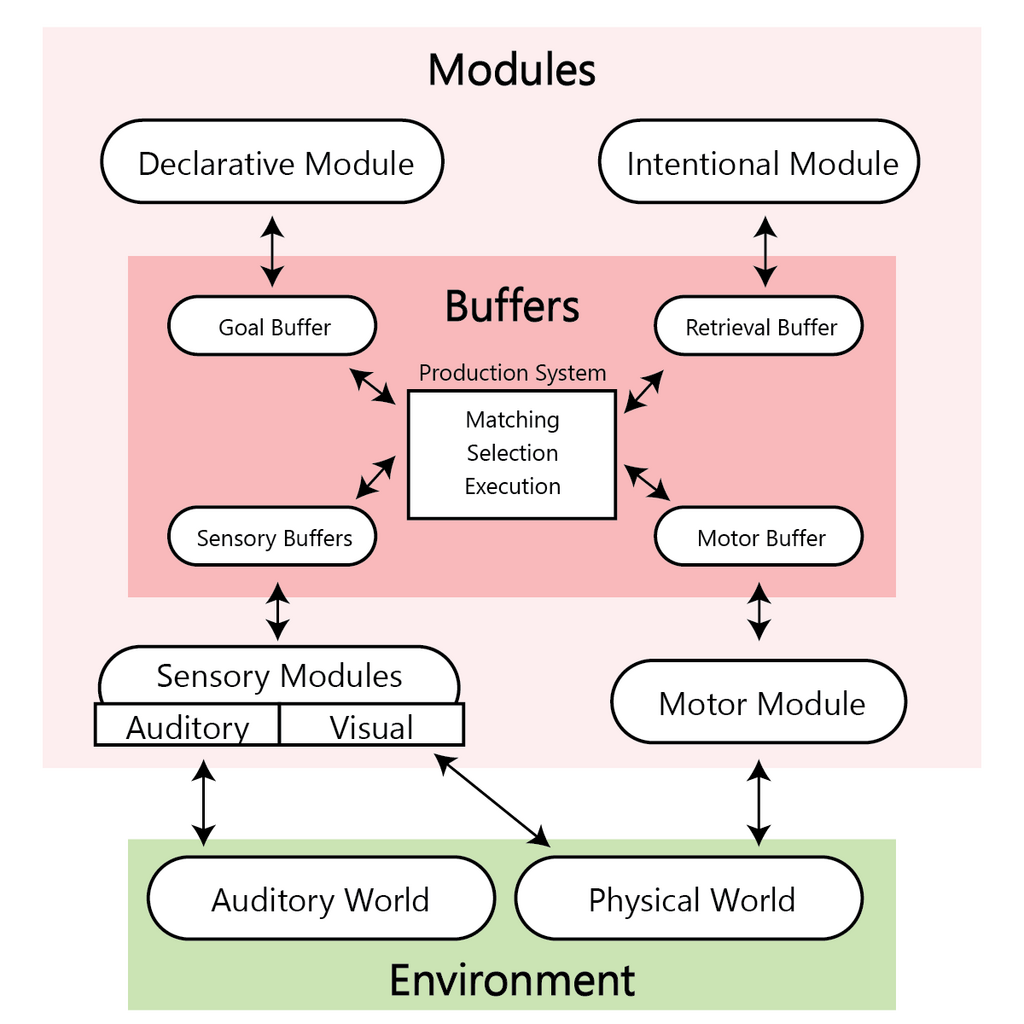
Imagine you're learning to solve a math problem. A cognitivist would be interested in how you understand the question, what strategies you consider, how you access relevant formulas from your memory, and how you organize the steps to reach a solution. Learning isn't just a behavioral change; it's a change in your knowledge and mental structures.
Constructivism: Building Your Own Reality
Constructivism takes the ideas of cognitivism a step further. It argues that learners are not just passive processors of information. Instead, they are active builders of their own knowledge.
According to this theory, each person constructs their own understanding of the world by fitting new information together with what they already know. Learning is an active, social process of making sense of experiences. The same lesson can result in slightly different understanding for each student, because each person filters it through their unique background, beliefs, and prior knowledge.
Think of it like building with LEGO bricks. We all might be given the same set of bricks (information), but we each construct something unique based on our own ideas and plans (our existing knowledge).
A constructivist classroom would involve projects, group work, and real-world problems. The goal is not just to transfer knowledge, but to help students build a deep, personal understanding of the subject.
The Theories at a Glance
These theories offer different ways of looking at the same process. Here's a simple breakdown of their core ideas.
| Theory | View of Learning | Role of the Learner | Analogy |
|---|---|---|---|
| Behaviorism | A change in observable behavior | Passive; responds to environment | A black box |
| Cognitivism | Information processing | Active processor of information | A computer |
| Constructivism | Active construction of knowledge | Active creator of understanding | A builder |
No single theory holds all the answers. In reality, learning often involves elements of all three. A good educational approach might use repetition (behaviorism) to memorize facts, clear explanations to aid information processing (cognitivism), and collaborative projects to help students build their own understanding (constructivism). By understanding these foundational ideas, we can better analyze how we learn and design more effective ways to teach.
Which learning theory views the mind as a "black box," focusing only on observable stimuli and responses?
A teacher has students work in groups to design a sustainable city, integrating concepts from multiple subjects. The goal is for them to build their own understanding through this hands-on, collaborative project. This approach is most aligned with which learning theory?