Cognitive Computing Memory Analogies
Computer Memory Basics
The Computer's Workspace
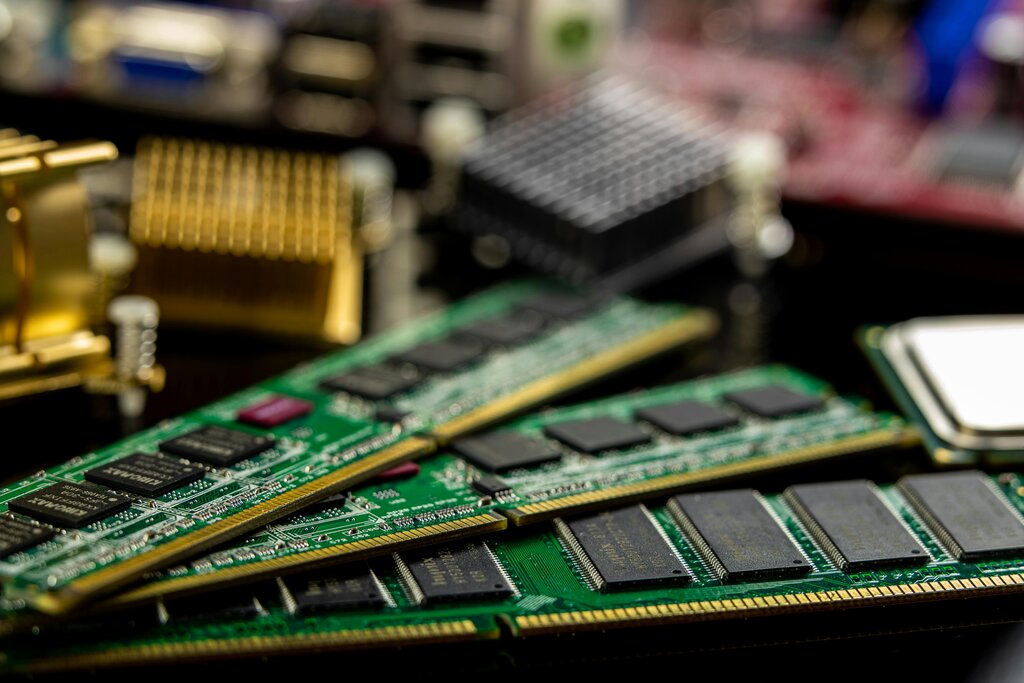
Think of your computer's memory like a workshop. You have a workbench for your current project and a large storage room for all your tools and materials. The workbench is for things you need right now, while the storage room holds everything else. In a computer, this workbench is called primary memory, or RAM.
RAM
noun
Stands for Random Access Memory. It's a type of computer memory that can be read and changed in any order, typically used to store working data and machine code.
RAM is where your computer holds the applications and data you're actively using. When you open a web browser or a document, the computer loads it from its long-term storage into RAM. This is because RAM is incredibly fast, allowing the Central Processing Unit (CPU) to access the information it needs almost instantly. The CPU has a direct, high-speed connection to RAM, like having your tools right at your fingertips on the workbench.
The most important thing to know about RAM is that it's volatile. This means it needs power to hold onto information. If you turn off your computer, everything in RAM disappears. It’s a temporary workspace that gets wiped clean every time the power is cut.
Long-Term Storage
If RAM is the workbench, the storage room is your computer’s secondary storage. This is where all your files, applications, and the operating system are kept permanently. Common examples include hard disk drives (HDDs) and solid-state drives (SSDs).
Unlike RAM, secondary storage is non-volatile. It holds onto data even when the computer is turned off. This is why you can save a document, shut down your computer, and find the file exactly where you left it the next day.
While secondary storage can hold vast amounts of data, it’s much slower than RAM. The CPU doesn't access it directly. Instead, when you need a file or program, it's copied from secondary storage into the fast, temporary workspace of RAM.
Key Differences
RAM and secondary storage work together, but they serve very different roles. RAM is for the now, and storage is for the forever. Understanding their trade-offs is key to understanding how a computer functions. One isn't better than the other; they're both essential parts of a balanced system.
| Feature | Primary Memory (RAM) | Secondary Storage |
|---|---|---|
| Volatility | Volatile (data lost without power) | Non-volatile (data retained) |
| Speed | Very Fast | Slower |
| Capacity | Smaller (e.g., 8-64 GB) | Larger (e.g., 256 GB - 4+ TB) |
| CPU Access | Direct | Indirect (via RAM) |
| Cost per GB | High | Low |
RAM prioritizes speed, while secondary storage prioritizes capacity and permanence.
Now, let's review these concepts.
Time to check your understanding.
Using the provided workshop analogy, what does the "workbench" represent?
What is the key characteristic of volatile memory?
By balancing the speed of RAM with the capacity of secondary storage, computers can run complex software and manage large amounts of data efficiently.