Coding Fundamentals
Introduction to Programming
What Is Programming?
At its heart, programming is simply the process of giving a computer a set of instructions to follow. Think of it like writing a recipe for a chef who follows every step with perfect, literal precision. If you write "add a pinch of salt," the chef will do exactly that. But if you forget to write "put the cake in the oven," you'll end up with a bowl of batter, not a cake. Computers are the same; they do exactly what you tell them to, and nothing more.
Programming
noun
The act of writing instructions and commands for a computer or a computing device to perform a specific task.
You can't write these instructions in plain English, though. Computers have their own way of thinking, based on billions of tiny on-or-off switches, represented by 1s and 0s. This is called binary code, and it's the only language a computer's processor truly understands. Writing instructions directly in binary would be incredibly slow and difficult for humans.
This is where programming languages come in. They act as a bridge, allowing us to write instructions in a way that's readable for us, which can then be translated into the binary code the computer understands.
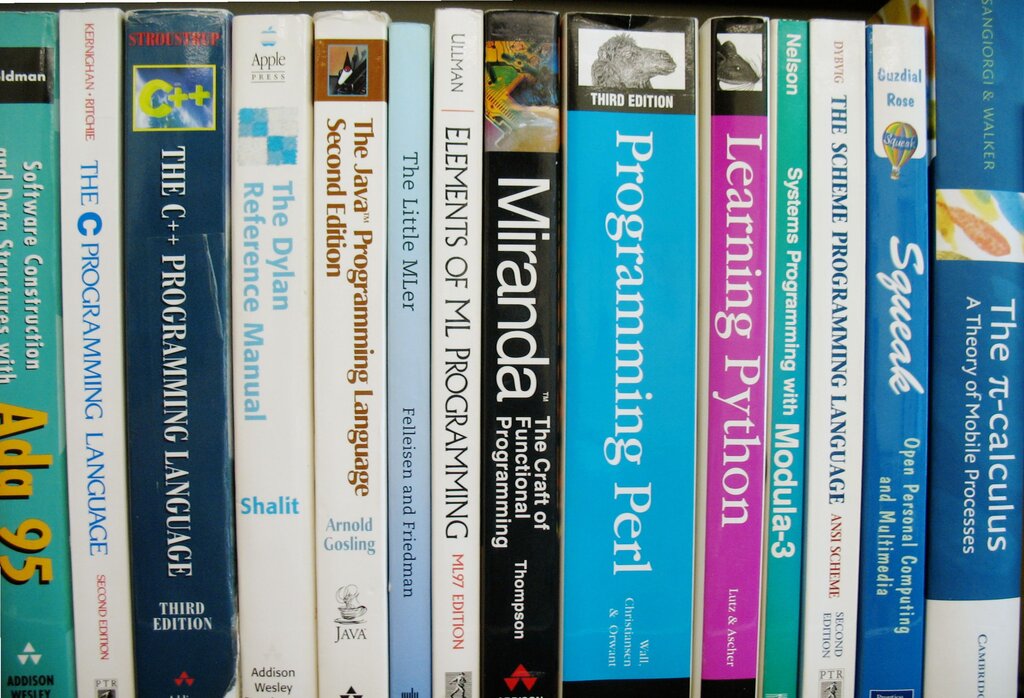
There are hundreds of different programming languages, each with its own syntax (grammar rules) and strengths. Some, like Python, are praised for being easy to learn and read. Others, like C++, are known for their speed and are used to build high-performance applications like video games. JavaScript is the language of the web, running in your browser to make websites interactive. The specific language you use often depends on what you're trying to build.
Your First Program
When learning a new programming language, it's a tradition to start with a very simple program that just displays the text "Hello, World!" on the screen. It's a quick way to confirm that your setup is working correctly and to see the basic structure of the language.
Here’s what a "Hello, World!" program looks like in Python, a popular language for beginners:
# This line is a comment. The computer ignores it.
# The line below tells the computer to display something.

print("Hello, World!")
Let's break that down. print() is a function, which is a named block of code that performs a specific action. In this case, its action is to display whatever you put inside the parentheses. The text inside the quotation marks, "Hello, World!", is called a string. It's how programmers represent plain text. When you run this code, the computer executes the print function and shows that string on the screen.
From Code to Action
Writing the code is just the first step. To get the computer to follow your instructions, you need to execute or run the program. This is the moment when the programming language code you wrote gets translated into the binary machine code the computer can understand.
This translation is handled by a special program. Depending on the language, this translator can be either a compiler or an interpreter.
An interpreter reads your code line by line, translating and running each line as it goes. It's like having a live translator for a conversation.
A compiler reads all of your code at once, translates the entire thing into a separate executable file, and then runs that file. It's like translating a whole book before anyone reads it.
For a beginner, the difference isn't critical, but it's good to know that this translation step is what turns your human-readable instructions into computer-executable actions.
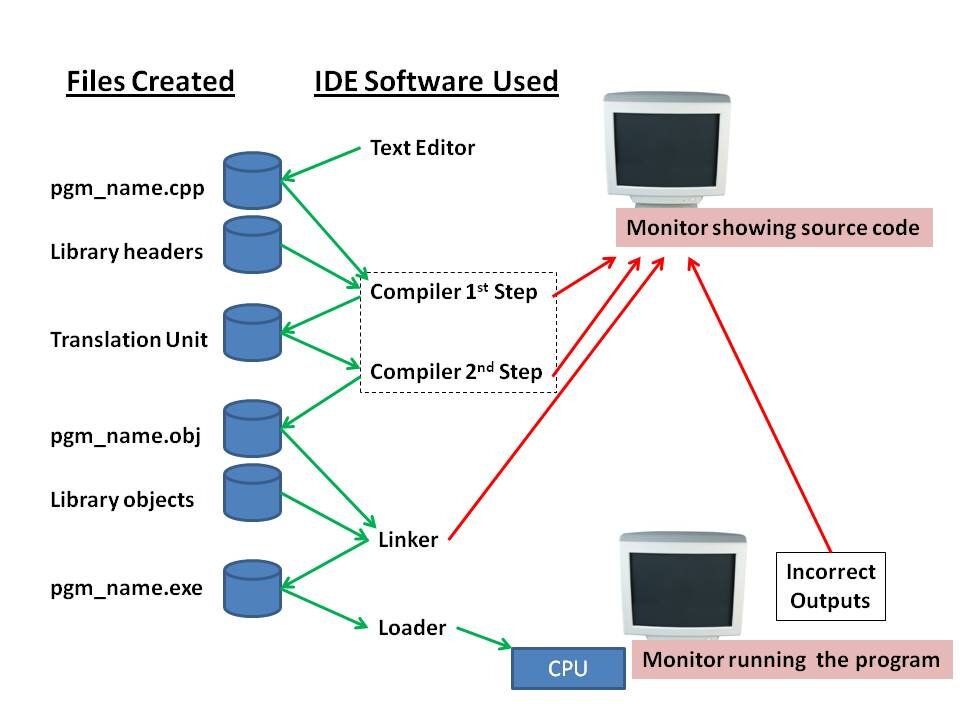
That's the core idea of programming: you write instructions in a specific language, a translator converts them into machine code, and the computer carries out those instructions to accomplish a task. Now it's time to check your understanding.
What is the fundamental idea behind programming?
The only language a computer's processor directly understands is binary code.