Codex Mastery for the Digital Alchemist
Optimizing Codex Environment
The Alchemist's Wand
Your OpenAI API key is the conduit for your digital alchemy. It's not just a password; it’s what connects your local environment to the vast intelligence of the language model. For the kind of high-throughput, fluid coding we're aiming for, managing this key properly is non-negotiable.
The most secure and efficient way to handle your key is to set it as an environment variable. This prevents it from being accidentally committed to a version control system like Git. Hardcoding keys into scripts is a recipe for disaster. By using an environment variable, any application on your system can access the key without you having to paste it everywhere.
# Add this to your ~/.zshrc or ~/.bash_profile
export OPENAI_API_KEY='your-api-key-here'

# Then, run this in your terminal to apply the changes
source ~/.zshrc
# or source ~/.bash_profile
Tuning the Ghost Text
The magic of modern AI-assisted coding isn't a chatbot in a side panel. It's the near-instantaneous, grayed-out that appears as you type, anticipating your next move. This is a far cry from the original, slower OpenAI Codex. Today's completions are powered by models like GPT-4o, which are designed for extremely low-latency responses that feel like a direct extension of your thoughts.
This isn't just about speed; it's about context. The model reads the active file and sometimes other open tabs to predict what you're trying to do. It completes not just single lines but entire blocks of code, from closing a curly brace to writing a full function body based on its name and comments. The key is that the completions are suggestions, not commands. You can ignore them and keep typing, and the ghost text will simply vanish and re-evaluate.
Tools such as GitHub Copilot, powered by OpenAI Codex, or Amazon CodeWhisperer can analyze the context of a developer’s work and suggest relevant code completions in real-time.
Managing the Context Window
The AI doesn't see your entire project at once. It operates within a "context window," a finite buffer of information it can consider when generating a response. This window is measured in tokens, which are pieces of words or code. For a large project, managing what fits into this window is crucial for getting relevant suggestions.
This is where becomes important. Code is token-heavy. Punctuation, indentation, and special characters all consume tokens, often more than plain English. A single line of code might use as many tokens as a full sentence. Understanding this helps you realize why the AI might lose track of a variable defined hundreds of lines away. The most relevant files and functions need to be in the model's immediate attention span.
Modern IDEs with AI integration are getting smarter about this. They use techniques like Retrieval-Augmented Generation (RAG) to find the most relevant snippets from your codebase and feed them into the context window, even if those files aren't open. This gives the illusion of a much larger memory.
IDE and System Integration
To make Codex a true partner, it needs to be integrated directly into your primary tool: your code editor. For most, this means an extension for an editor like VS Code. However, newer, AI-native editors like Cursor are built from the ground up around this workflow. They often provide more seamless features for chatting with your codebase, requesting refactors, and debugging with AI assistance.
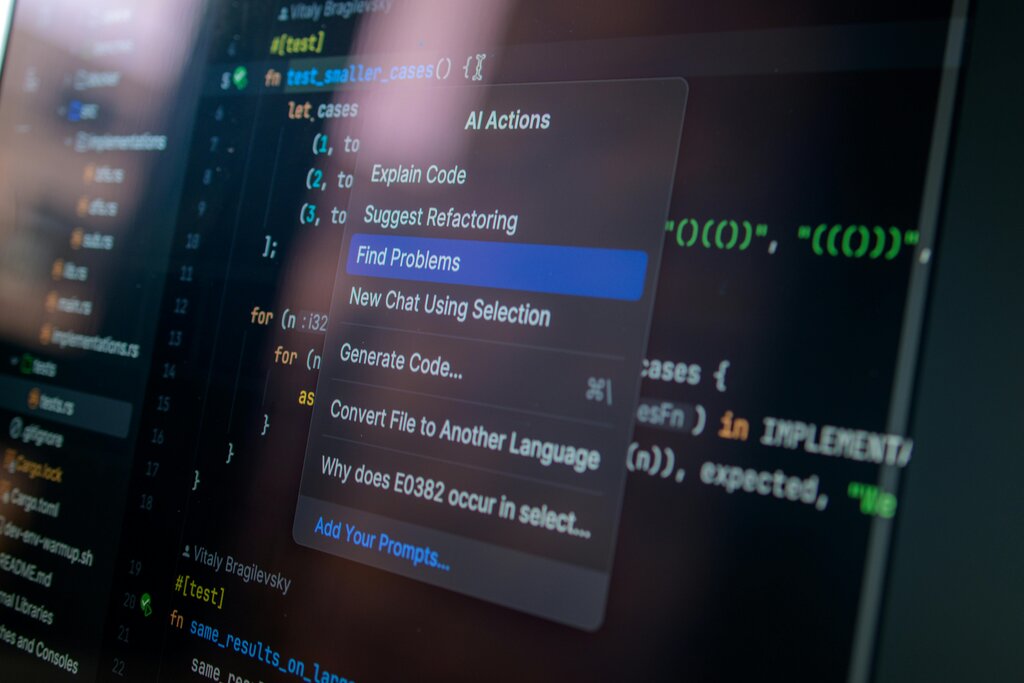
Beyond the editor, you can make the model accessible system-wide. Tools like Raycast allow you to create custom commands and shortcuts that invoke the OpenAI API from anywhere in macOS. You could create a shortcut to refactor selected text, explain a shell command, or generate boilerplate for a new file without ever leaving your current application. This setup turns the AI from a tool you visit into an assistant that's always at your fingertips.
What is the most secure and recommended method for managing your OpenAI API key for a local development project?
The "context window" in an AI model refers to the finite amount of information, measured in tokens, that the model can consider at one time when generating a response.