Codex and Claude for Code
Introduction to Large Language Models
What Are Large Language Models?
At their core, Large Language Models (LLMs) are advanced AI programs trained to understand and generate human-like text. Think of them as incredibly sophisticated pattern-recognition machines for language. They learn the statistical relationships between words, phrases, and ideas from a vast amount of text data.
A Large Language Model (LLM) is a type of artificial intelligence program designed to understand, generate, and work with human language.
Their main purpose isn't just to parrot back information. It's to process language in a way that allows them to perform a wide range of tasks, from translating languages to answering complex questions and even writing creative stories or code. They achieve this by predicting the next word in a sequence, building up coherent and contextually relevant responses one word at a time.
The Architecture of an LLM
Modern LLMs are built on a specific type of neural network architecture called the Transformer. A neural network is a computing system inspired by the human brain, composed of interconnected nodes or "neurons" that process information. The Transformer architecture, introduced in 2017, was a breakthrough because it allowed models to handle long sequences of text more effectively than ever before.
A key innovation within the Transformer is the attention mechanism. This allows the model to weigh the importance of different words in the input text when it's producing an output. For example, when translating a sentence, the model can "pay attention" to the subject of the sentence to ensure verbs are conjugated correctly, even if they are far apart.
This architecture allows the model to keep track of context over long passages of text, which is crucial for generating coherent and relevant responses.
Training and Datasets
The "large" in Large Language Model refers to two things: the size of the model (billions of parameters or variables) and the size of the dataset it's trained on. These models learn by analyzing an enormous corpus of text data from the internet and digital books. This includes websites, articles, books, scientific papers, and code repositories.
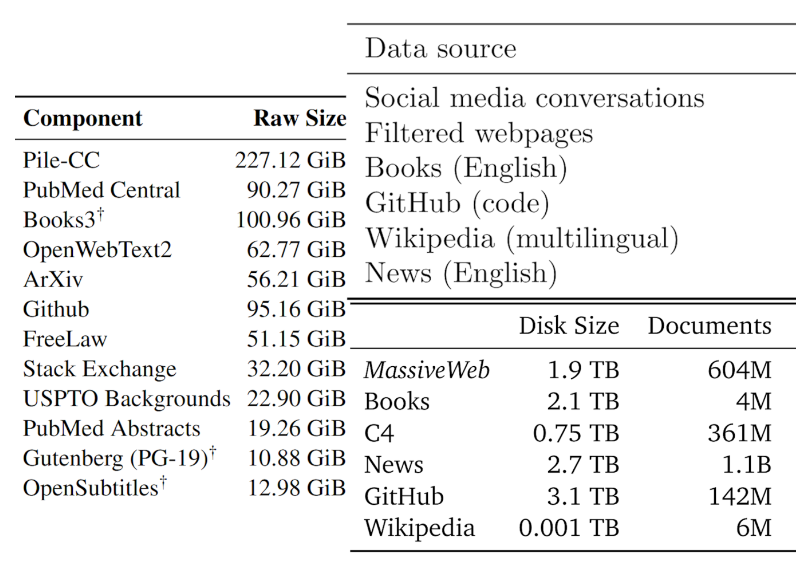
The training process is mostly self-supervised. The model is given a piece of text with a word missing and has to predict the missing word. By doing this billions of times, it learns grammar, facts, reasoning abilities, and even some biases from the training data. It's not learning to understand in the human sense, but rather to predict what word is most likely to come next in any given context.
General Applications
Because they are so versatile, LLMs have a wide range of applications across many industries. They act as a general-purpose language engine that can be adapted to specific tasks. Some common uses include:
| Application | Description |
|---|---|
| Content Creation | Writing drafts of emails, articles, reports, and marketing copy. |
| Question Answering | Acting as a conversational search engine to answer complex questions. |
| Summarization | Condensing long documents or articles into key points. |
| Translation | Translating text between different languages. |
| Code Generation | Assisting developers by writing snippets of code or entire functions. |
These models serve as powerful tools that can augment human capabilities, automate repetitive language-based tasks, and make information more accessible.
Ready to test your knowledge? Let's see what you've learned about the fundamentals of LLMs.
What is the core, underlying task an LLM performs to generate coherent text?
The breakthrough neural network architecture, introduced in 2017 and foundational to modern LLMs, is known as the...
Understanding these core concepts provides a solid foundation for exploring more specific applications of LLMs, such as generating code.