Code of Hammurabi
Babylonian Political Context
Forging an Empire: Hammurabi's Vision
The shift from isolated city-states to a unified Mesopotamian empire was not just a military conquest, but a profound transformation in governance and society. In this chapter, we will explore how Hammurabi consolidated his power and why his ambitious imperial project demanded a revolutionary, standardized legal framework. By the end, you will understand how the transition to a centralized code fundamentally reshaped justice and authority across the ancient world.
Fractured Kingdoms and Administrative Chaos
Before the rise of Babylon's dominance, the Mesopotamian landscape was a chaotic mosaic of competing city-states. Prominent centers like , Mari, and Eshnunna shared deep cultural roots and religious traditions, yet they remained fiercely independent and politically distinct. Ruling such a fragmented territory was an administrative nightmare. An emperor attempting to manage these diverse lands didn't just face the threat of rebellion; he faced the quiet, grinding friction of conflicting local customs.
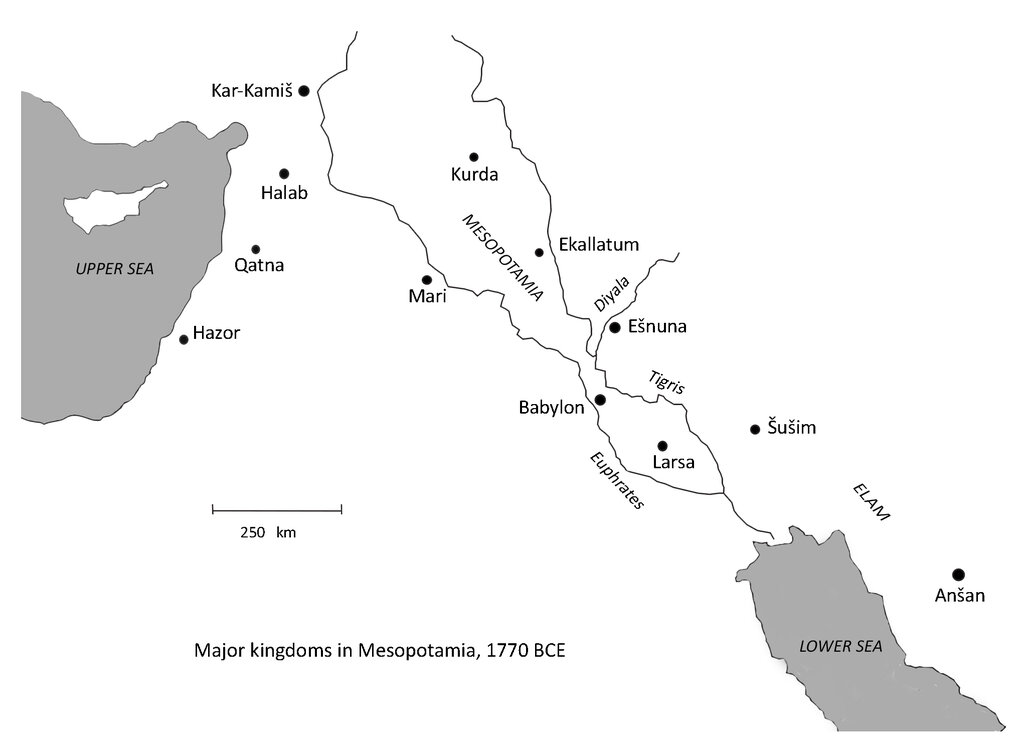
Justice in this era was localized and often arbitrary. If a merchant from Babylon traded in a distant territory, he might find himself subject to laws he didn't recognize or judges who favored their own kin. These jurisdictional headaches made tax collection, property disputes, and social order nearly impossible to maintain at scale. While the sword could win the land, it was clear that only a singular, authoritative legal voice could hold it together.
Hammurabi’s Code, therefore, had to present a set of laws that transcended any national legal traditions or understandings people may have arrived with as well as any traditional law practices observed in the various Mesopotamian city-states and kingdoms.
The Cost of Consolidation
Moving from localized to a centralized code was a trade-off. For the common citizen, a unified law provided a sense of predictability and stability that hadn't existed before. No longer was justice entirely at the whim of a local chieftain. However, this shift also eroded the autonomy of smaller communities. Local traditions were paved over by the imperial will of Babylon, a tension between central authority and local identity that would define the period.
The Code of Hammurabi eventually functioned as both a practical administrative device and a powerful piece of royal propaganda. By carving his laws into stone, Hammurabi ensured his voice reached every corner of his empire, signaling that the era of the fractured city-state was over and the age of the unified empire had begun.
With the foundations of his empire secured through both military force and legal standardization, Hammurabi turned his attention to the specific mechanics of the laws themselves, forever changing how humanity viewed the relationship between the ruler and the ruled.