Cloud Water Transport
Water Cycle
Earth's Water on the Move
The water you drank today might have once been inside a dinosaur. That's because the total amount of water on Earth stays fairly constant. It just moves around in a continuous process called the water cycle.
The water cycle is the continuous movement of water within the Earth and its atmosphere.
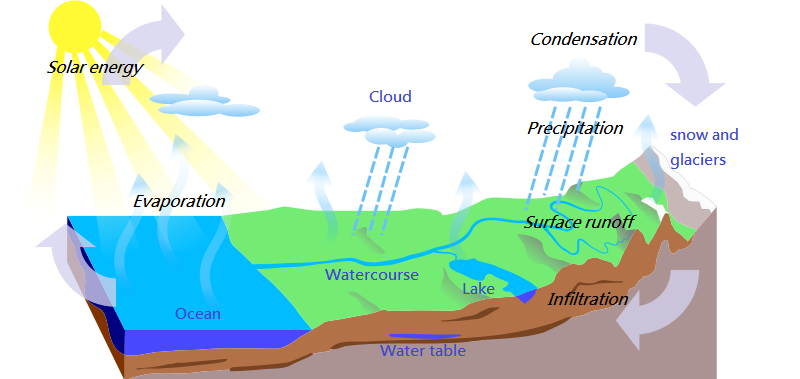
This cycle is a giant system powered by the sun's energy and gravity. It involves water changing states between liquid, gas (vapor), and solid (ice) as it travels from the planet's surface to the atmosphere and back again. Let's trace the journey of a water molecule.
From Surface to Sky
The journey usually begins when the sun's heat shines on water in oceans, lakes, and rivers. This energy causes the water to transform from a liquid into a gas called water vapor. This process is known as evaporation. You've seen this happen when a puddle dries up on a sunny day. The water doesn't disappear, it just moves into the air as vapor.
Evaporation
noun
The process by which a liquid turns into a gas.
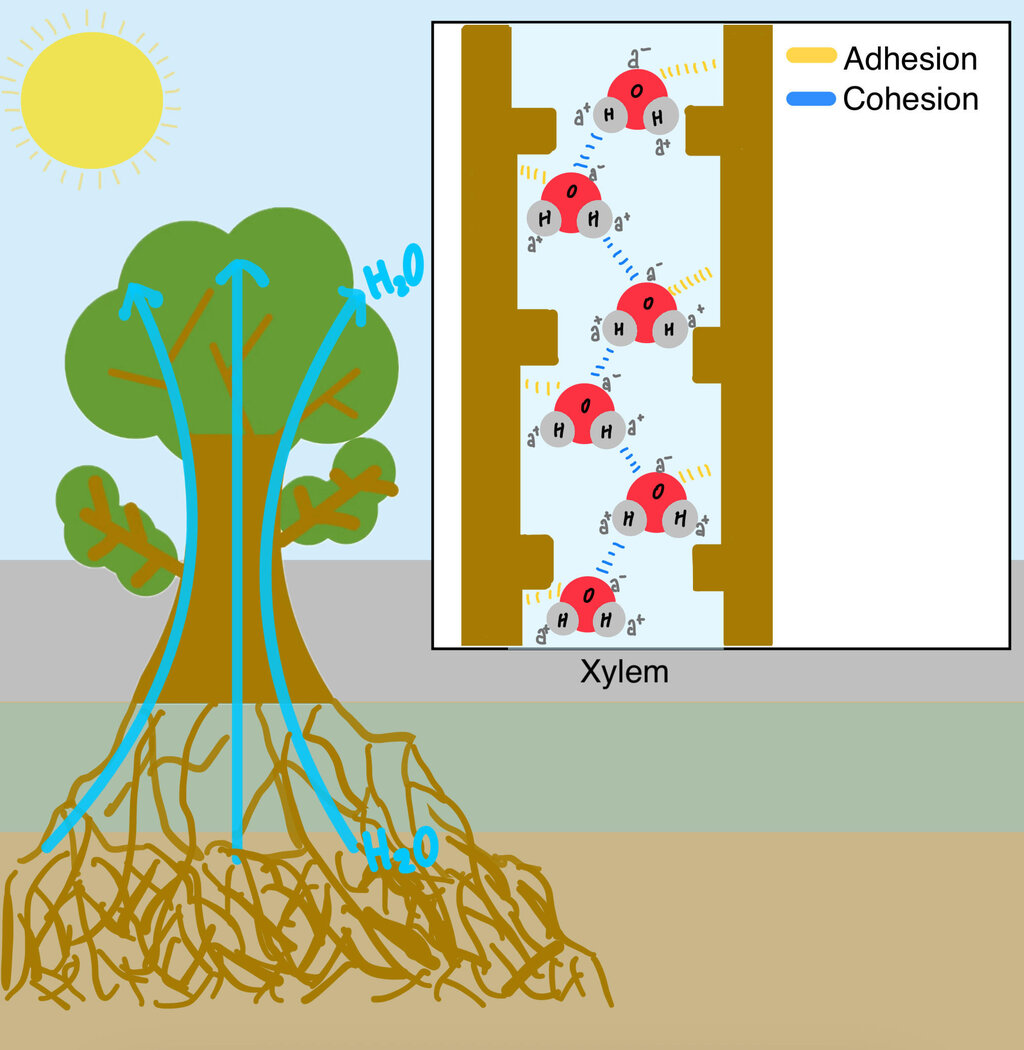
Plants also release water vapor into the air through their leaves. This is called transpiration. It's like plants are sweating, adding more moisture to the atmosphere.
Sometimes, water can skip the liquid phase entirely. When ice or snow turns directly into water vapor without melting first, it's called sublimation. This is why snowbanks can shrink even when the temperature stays below freezing.
From Sky to Surface
As moist air rises, it cools. This cooling causes the water vapor to change back into tiny liquid water droplets. This is condensation. It's the same thing that happens when you see water droplets form on the outside of a cold glass on a humid day. In the atmosphere, these tiny droplets gather to form clouds.
Condensation is the opposite of evaporation. It turns water vapor back into liquid water.
When these droplets in the clouds become too heavy, they fall back to Earth. This process is called precipitation. Depending on the temperature, precipitation can be rain, snow, sleet, or hail.
Once the water reaches the ground, it starts the final leg of its journey. This is collection. Water gathers in rivers, lakes, and oceans. Some of it soaks into the ground and becomes groundwater. This collected water is now ready to evaporate again, starting the entire cycle over.
Ready to test your knowledge of the water's journey?
What is the primary energy source that powers the water cycle?
When you see water droplets forming on the outside of a cold glass of water, which part of the water cycle does this represent?
This constant cycling of water is essential for all life on Earth, shaping our weather, climate, and the very landscapes we live in.