Cloud Security Essentials
Introduction to Cloud Computing
What Is Cloud Computing?
Think about how you listen to music or watch movies. A decade or two ago, you probably owned physical CDs, DVDs, or digital files stored on your own computer. Today, you're more likely to stream them from services like Spotify or Netflix. You don't own the files or the powerful servers that store and deliver them. You just access them over the internet, whenever you want.
That's the core idea behind cloud computing. Instead of buying, owning, and maintaining your own physical data centers and servers, you can access technology services from a cloud provider.
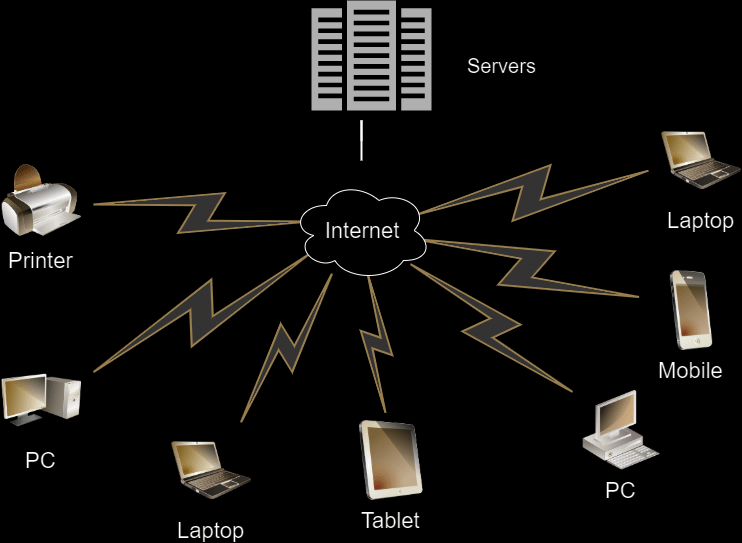
Cloud computing is the delivery of computing services—servers, storage, databases, networking, software, analytics, and intelligence—over the internet (“the cloud”).
These services include everything from raw computing power and data storage to software applications and artificial intelligence tools. A cloud provider, like Amazon Web Services (AWS), Google Cloud, or Microsoft Azure, owns and manages the hardware and infrastructure, and you rent access to it through the internet.
The Three Service Models
Cloud services are typically broken down into three main categories, or models. Each model represents a different level of control and management. A great way to understand them is by thinking about pizza.
Imagine you want to serve pizza to your friends. You have a few options.
On-Premises (The Traditional Way): This is the "make it from scratch" option. You buy the flour, tomatoes, cheese, and toppings. You also need to own an oven, a pizza pan, and a cutter. You're responsible for everything, from making the dough to cooking the pizza and cleaning up.
In the tech world, this is like a company buying its own servers, installing the operating system, and managing all the software and hardware itself in its own data center.
Now let's see how the cloud models change things.
IaaS
noun
Infrastructure as a Service. Provides fundamental computing resources like virtual machines, storage, and networking.
In our pizza analogy, IaaS is like using a shared community kitchen. You bring your own ingredients (your data and applications), but you use the provider’s oven and workspace (their servers and network). You don’t have to buy or maintain the expensive hardware, but you still control what you cook and how you cook it.
PaaS
noun
Platform as a Service. Offers a platform for developers to build, test, and deploy applications without worrying about the underlying infrastructure.
This is like ordering a take-and-bake pizza kit. The pizza place provides the dough, sauce, cheese, and toppings. They've done the prep work. All you have to do is take it home and put it in your oven. You manage the final product, but not the platform or ingredients it was built on.
SaaS
noun
Software as a Service. Delivers ready-to-use software applications over the internet, typically on a subscription basis.
SaaS is like going out to a pizza restaurant. You just order what you want, and it’s delivered to your table, ready to eat. You don't manage the ingredients, the oven, or even the cooking process. The restaurant handles everything.
In the same way, SaaS products like email services or customer relationship management (CRM) software are fully managed by the provider. You just log in and use them.
| Service Model | What You Manage | Pizza Analogy |
|---|---|---|
| IaaS | Applications, Data, Runtime, Middleware, OS | Using a shared kitchen to make your own pizza. |
| PaaS | Applications, Data | Using a take-and-bake pizza kit. |
| SaaS | Nothing | Ordering a pizza at a restaurant. |
Cloud Deployment Models
Just as there are different service models, there are also different ways to deploy cloud resources. These models determine who can access the cloud infrastructure.
Public Cloud: The cloud infrastructure is owned and operated by a third-party cloud provider, and services are delivered over the public internet. It's a multi-tenant environment, meaning you share the same hardware with other organizations, known as "tenants." This is the most common deployment model.
Private Cloud: The cloud infrastructure is used exclusively by a single business or organization. It can be located at the company’s on-site data center or hosted by a third-party provider. This offers more control and privacy but comes at a higher cost.
Hybrid Cloud: This model combines a private cloud with one or more public cloud services, allowing data and applications to be shared between them. This gives businesses greater flexibility, letting them keep sensitive data on a private cloud while using the public cloud for less critical tasks.
Benefits and Challenges
Adopting the cloud offers significant advantages, but it's not without its hurdles.
Key Benefits
- Cost Savings: You avoid the huge capital expense of buying hardware and software. Instead, you pay only for what you use, which can significantly lower operating costs.
- Scalability: Cloud services can scale elastically. This means you can get more resources when you need them and scale back when you don't, almost instantly.
- Performance: Major cloud services run on a worldwide network of secure data centers, which are regularly upgraded to the latest generation of fast and efficient hardware. This provides better performance than a single corporate data center.
- Speed & Agility: Most cloud services are self-service and on-demand. Vast amounts of computing resources can be provisioned in minutes, giving businesses a lot of flexibility and taking the pressure off capacity planning.
Common Challenges
- Complexity: Managing a cloud environment can be complex. It requires new skills and expertise to configure and maintain services correctly.
- Vendor Lock-in: Migrating from one cloud provider to another can be difficult and costly. Businesses can become dependent on a single vendor's proprietary tools and services.
- Governance and Control: While cloud providers manage the infrastructure, the customer is still responsible for managing their data, users, and access. It can be challenging to maintain visibility and control in a sprawling cloud environment.
- Cost Management: The pay-as-you-go model is a benefit, but it can also be a challenge. Without careful monitoring, costs can spiral out of control if resources are left running unnecessarily.
Now that you have a foundational understanding of what cloud computing is, let's test your knowledge.
What is the core idea behind cloud computing?
Using the pizza analogy from the text, which cloud service model is most like ordering a take-and-bake pizza, where the pizza place provides the pre-assembled pizza but you handle the final baking?
Understanding these core concepts is the first step in navigating the world of cloud technology.