Cloud Computing Fundamentals
Introduction to Cloud Computing
What is Cloud Computing?
Think of cloud computing like using your city’s power grid instead of owning a personal generator. You don't have to buy, maintain, or fuel a massive generator for your house. You just plug into the wall and pay for the electricity you use. The power company handles all the complex infrastructure, ensuring you have a reliable supply whenever you need it.
Cloud computing works the same way for data and software. Instead of buying and managing your own powerful servers, you can access computing services—like storage, databases, and software—over the internet. A cloud provider owns and maintains the hardware, and you rent access to it.
Cloud computing is the delivery of computing services (servers, storage, databases, networking, software, and more) over the internet (the cloud), offering faster innovation, flexible resources, and economies of scale.
This model shifts the heavy lifting of IT management from individual businesses to large-scale providers like Amazon Web Services (AWS), Google Cloud, and Microsoft Azure. These companies operate enormous data centers around the world, filled with powerful servers that anyone can use on demand.
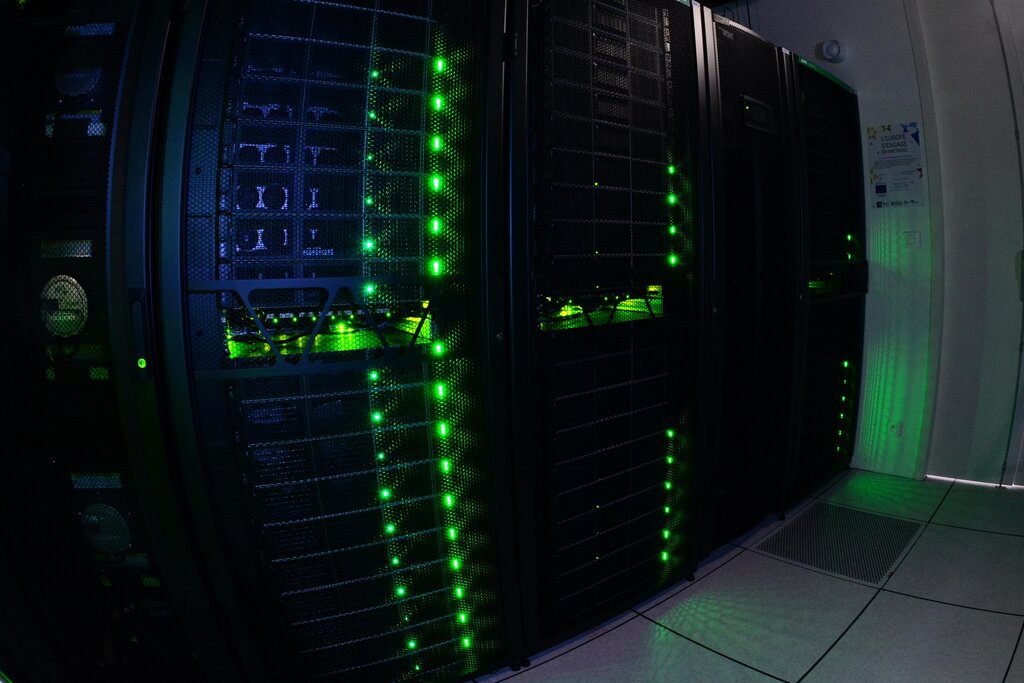
The Old Way vs The New Way
Before the cloud, if a company wanted to launch a website or a new application, it had to follow a slow and expensive process. First, they’d need to predict how much computing power they’d need. Then, they would buy physical servers, install them in a dedicated room (a data center), and hire a team to maintain them.
This traditional approach had major drawbacks. The upfront costs were huge. If the company's prediction was wrong and traffic surged, their servers could crash. If traffic was lower than expected, they were stuck with expensive hardware sitting idle. Scaling up or down was a manual, time-consuming effort.
Cloud computing flipped this model. It introduced the idea of treating computing power as a utility. Companies no longer needed to own their infrastructure. Instead, they could access it instantly over the internet and pay only for what they used, scaling resources up or down in minutes.
Five Defining Traits
What makes a service true cloud computing? There are five essential characteristics that define it.
| Characteristic | Description |
|---|---|
| On-Demand Self-Service | Provision computing resources automatically, without human interaction. |
| Broad Network Access | Access services over the network through standard mechanisms (e.g., phones, laptops). |
| Resource Pooling | The provider's resources are pooled to serve multiple customers at once. |
| Rapid Elasticity | Scale resources up or down quickly and automatically to meet demand. |
| Measured Service | Resource usage is monitored, controlled, and reported, providing transparency. |
Let’s break these down. On-demand self-service means a developer can spin up a new server with a few clicks on a website, just like ordering a product online. Broad network access means you can get to your data and applications from anywhere with an internet connection.
Resource pooling is the engine that makes the cloud economical. Providers serve many customers (or "tenants") from the same physical infrastructure, dynamically assigning and reassigning resources according to demand. You don’t know or care which specific server is running your application, just that it works.
Rapid elasticity is perhaps the most powerful feature. Imagine a small online store that gets featured on a major news site. Its web traffic might spike from a few hundred visitors an hour to hundreds of thousands. With traditional IT, its servers would crash. In the cloud, the system can automatically add more computing power to handle the load and then scale back down when the traffic subsides. Finally, measured service ensures you only pay for what you consume, like an electricity meter.
Benefits and Common Uses
The characteristics of cloud computing deliver powerful benefits. The most significant are cost savings, speed, global scale, and flexibility.
- Cost Efficiency: You avoid the huge capital expense of buying hardware and running data centers. You trade that for a smaller, predictable operating expense.
- Scalability & Flexibility: You can scale resources to precisely match your needs. This allows businesses to grow quickly or adapt to changing market conditions without being locked into infrastructure decisions.
- Productivity: Cloud computing removes the need for many IT management chores like hardware setup and software patching, freeing up teams to focus on building products.
You interact with the cloud every day. Streaming services like Netflix and Spotify use the cloud to deliver vast libraries of content to millions of users simultaneously. Online collaboration tools like Google Docs and Microsoft 365 run in the cloud, allowing you to access your files from any device. Many businesses also use the cloud to back up their data, run complex data analysis, and develop and test new software.
Ready to check your understanding? Let's see what you've learned.
What is the primary financial shift that occurs when a company moves from traditional IT infrastructure to cloud computing?
An e-commerce website experiences a massive, unexpected surge in traffic during a flash sale. The cloud-based system automatically provisions more servers to handle the load and then removes them when the sale is over. Which essential characteristic of cloud computing does this demonstrate?
By replacing physical hardware with on-demand services, the cloud has fundamentally changed how we build and use technology, making powerful tools accessible to everyone from individual developers to global enterprises.