Cloud Computing Fundamentals
Introduction to Cloud Computing
What is the Cloud?
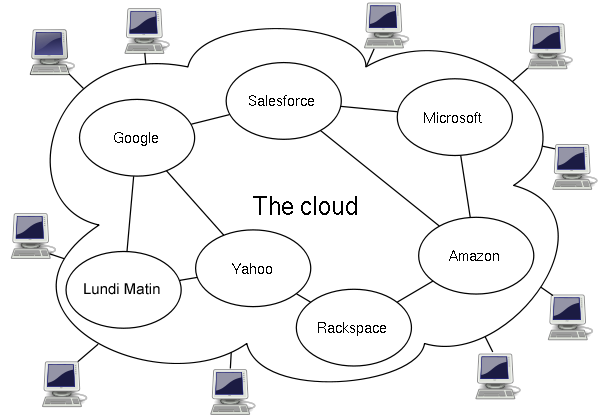
The “cloud” isn’t a physical place in the sky. It’s a way of delivering computing services over the internet. Instead of owning and maintaining your own computing infrastructure, you can access services like servers, storage, and databases from a cloud provider like Amazon Web Services (AWS), Google Cloud, or Microsoft Azure.
Think of it like electricity. You don't build your own power plant to light your home. You just plug into a grid and pay for what you use. Cloud computing works the same way for computing power.
This model allows businesses to rent access to everything from applications to storage from a cloud service provider. This frees them from the costly and complex task of managing their own hardware and software.
From Local Servers to Global Networks
Before the cloud, if a company needed a new website or application, they had to buy physical servers, install them in a dedicated room, and hire a team to maintain them. This was a slow and expensive process. They had to guess how much capacity they'd need. If they guessed too low, their services would crash during busy periods. If they guessed too high, they wasted money on idle hardware.
Cloud computing changed this. It introduced a model where computing resources are treated like a utility. This shift was made possible by advancements in virtualization, which allows one physical server to be divided into multiple virtual machines, and high-speed internet, which makes accessing these remote resources seamless.
Core Characteristics
Not all internet services are “cloud computing.” To qualify, a service typically needs to have five specific traits.
| Characteristic | What it means |
|---|---|
| On-demand self-service | You can get computing resources automatically, without needing to talk to a human. |
| Broad network access | You can access services from anywhere with an internet connection, using any device. |
| Resource pooling | The provider's resources are shared among many customers, with resources dynamically assigned as needed. |
| Rapid elasticity | You can quickly scale your resources up or down to match demand, like stretching or shrinking a rubber band. |
| Measured service | You only pay for what you use. Resource usage is monitored, controlled, and reported, like a water meter. |
These characteristics work together to create a flexible, efficient system. For example, a streaming service can use rapid elasticity to handle a surge in viewers for a live event, and the measured service ensures they only pay for the extra capacity during that peak time.
Benefits and Challenges
Adopting the cloud offers significant advantages. The most obvious is cost savings. Companies swap large upfront hardware expenses for smaller, ongoing operational costs. This pay-as-you-go model makes powerful computing accessible even to small startups.
Cloud services also offer global scale. With a few clicks, a company can deploy their application in data centers around the world, reducing lag for users and improving reliability.
However, moving to the cloud isn't without its challenges. Security is a primary concern. When your data is stored on someone else's servers, you're trusting them to keep it safe. Companies must understand the shared responsibility model, where the cloud provider secures the infrastructure, but the customer is responsible for securing their own data and applications within it.
Another challenge is managing costs. While the pay-as-you-go model is a benefit, it can also lead to surprise bills if resources are not carefully monitored. Finally, relying on a single provider can lead to “vendor lock-in,” making it difficult and expensive to switch to a competitor later on.
To help you test what you've just learned, here is a quick quiz.
What is the core concept of cloud computing?
What major problem did cloud computing solve for businesses compared to the traditional model of owning servers?
Cloud computing represents a fundamental shift in how we access and use technology, offering powerful tools with unprecedented flexibility and scale.